Eminent Domain & Compensation
Posted by Virginia Public Radio in Daily Capitol News Updates on February 14, 2012
 Proposed amendments to the state Constitution to clarify when governments can take private property in Virginia have passed each house of the General Assembly. But companion legislation to redefine the “just compensation” that’s given to property-owners in cases of eminent domain has also advanced. State lawmakers are concerned about how to make the law tough enough to be fair to property-owners.
The constitutional amendment makes clear that land taken for public use cannot be for private gain—and payments to owners must be for its true value, lost profits, and lost access to nearby property. Two House and Senate bills define those terms. Some lawmakers were concerned that these conditions could result in a multi-million dollar fiscal impact. But bill sponsor and Senator Mark Obenshain said that’s only fair when you consider schools, roads, and other projects.
“Why on earth should that property-owner alone bear the burden of the losses occasioned for the benefit of the community in general?” asked Obenshain.
But bill supporter Senator Chap Peterson was concerned it might not be fair to small-business owners who don’t report profits on their tax forms.
“This thing needs some work because right now it is screwed down so tight that the small businesses I represent in Fairfax County—they’re never going to recover,” said Peterson.
All of the measures still must cross over to the opposite chambers for votes there. If the constitutional amendment passes, voters will have the final say in November.
–Anne Marie Morgan
Cuts to the Safety Net
Posted by Virginia Public Radio in Daily Capitol News Updates on February 14, 2012
 Virginia is one of the 10 richest states in the country, but it ranks 23rd in the number of people who don’t have health insurance. When it comes to state payments for poor children and families on Medicaid, Virginia ranks 48th. As a result, many doctors refuse to treat them. Often poor patients turn to one of 59 clinics in the state known, collectively, as the safety net, but some of those clinics could be forced to close as Sandy Hausman reports.SafetyNetCuts.
The Loving Story
Posted by Virginia Public Radio in Virginia's News on February 13, 2012
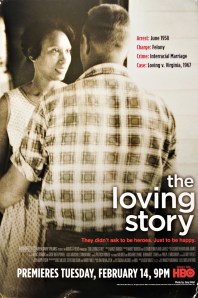 For Valentine’s Day, HBO will show a new film about a Virginia couple who broke the law by getting married. Sandy Hausman reports on their case and why it made history.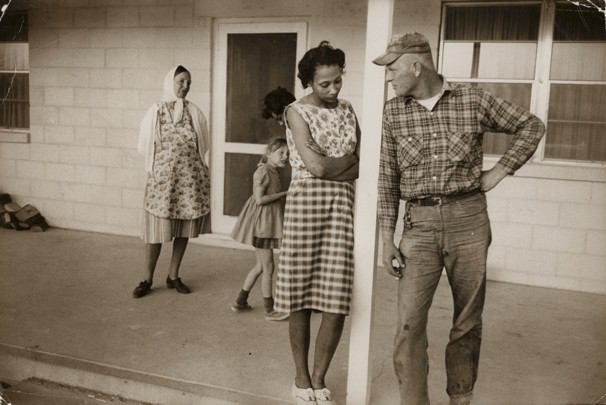
Teacher Contract Legislation
Posted by Virginia Public Radio in Daily Capitol News Updates on February 13, 2012
 Public school teachers would gradually transition from continuing status to more limited term contracts under legislation that has passed the House of Delegates. Bill supporters say that it is needed to improve education accountability.
The bill had required annual contracts for all teachers but was revised so that teachers with continuing contracts can retain them. But new teachers would be on probation for five years, then be eligible for three-year contracts. Principals and teachers would be evaluated each year. Delegate and teacher Kirk Cox said this is essential to improve education. He added that everyone has known bad teachers who weren’t fired, including this example.
“I taught next to one teacher who, seriously, would let the kids do whatever they wanted to do. He told them that if an administrator walked in, you turn to page 400 in your book and you pretend like you’re working,” said Cox.
But Delegate Kaye Kory said the bill removes decisions from locally elected officials. She criticized the timing of evaluations, then firing teachers in June—after they could have transferred in April.
“This is not the way to retain or attract good teachers. This is the way to drive them out of Virginia,” said Kory.
The bill, which is part of Governor McDonnell’s education agenda, now heads to the Senate.
–Anne Marie Morgan
DNA Proves Wrongful Conviction
Posted by Virginia Public Radio in Virginia's News on February 12, 2012
 In 2005, when DNA analysis had become a routine part of criminal investigation, the state’s crime lab announced it had evidence in hundreds of cases that had never been tested. Governor Mark Warner ordered a spot check of 15 cases. In two of them, someone who had been convicted was found to be innocent, so Warner said all of the samples gathered between 1973 and 1988 should be reviewed. Today, lawyers with the Innocence Project say it’s not clear how many tests have been done, how many people have been cleared and whether they’ve been notified. Sandy Hausman has more on that story.
Juvenies on Virginia’s Sex Offender Registry
Posted by Virginia Public Radio in Daily Capitol News Updates on February 12, 2012
 The Virginia Senate has approved several bills that send a message that the state is getting tougher on crime. Those include legislation to give repeat drug dealers much more time in prison and to increase penalties for exploiting elderly or incapacitated adults. Most of the criminal justice bills that moved forward Friday did so with little debate. But a bill to get tougher on juvenile sex offenders did cause a stir before senators adjourned for the weekend.
Under Senator Bill Stanley’s legislation, any juvenile over the age of 13 who’s convicted of a sex crime must be placed on the sex offender registry.
The measure passed by a wide margin and now heads to the House of Delegates.
The Marshall Expedition (originally aired April 12, 2012)
Posted by Virginia Public Radio in Spotlight on WVTF Public Radio 2012, Virginia's News on February 12, 2012
 This year marks the 200th anniversary of the Marshall Expedition, an important event in the history of Virginia commerce.
Andrew Shaw and his six-man crew from Lynchburg are setting out to re-trace the expedition in a flat bottomed boat, called a batteau. They worked together to build the 43-foot wooden boat that will carry them up nearly 360 miles of waterway. They’ll travel up the James River from Richmond, through the Allegheny Mountains, and downriver to the Great Falls of the Kanawha in West Virginia.
They’re backed by a National Geographic Young Explorer’s Grant, which Shaw says allows them to retrace Chief Justice John Marshall’s 1812 expedition– a little-known river survey that proved essential to Virginia’s economic growth.
Roger Nelson, President of the Virginia Canals and Navigations Society, says the survey was done in support of George Washington’s plan for westward expansion. “That was his vision, to build this canal system that linked the Eastern Seaboard with the Mississippi River Valley. He could envision the riches that lay out there,” says Nelson.
John Marshall and his crew of about a dozen commissioners journeyed up the James River and through the mountains to see if this canal system could actually be completed. They made their month-long voyage with a boat designed just for the task– a batteau. Poling the boat up and down the river, the crew essentially transformed the Piedmont from a rough frontier to a thriving agricultural region.
Today’s crew will primarily use the tools of Marshall’s time, spending much of their journey upstream, through rocks, swift water and rapids. To follow the progress of the Mary Marshall and her crew, you can check out their blog at vacanals.org/marshall.
–by Kelley Libby
Fact Checking & Public Schools
Posted by Virginia Public Radio in PolitiFact Virginia on February 10, 2012
 Over the past few years the Virginia General Assembly has made some adjustments in the state’s financial support for Standards of Quality in public schools. Those changes have drawn some sharp criticism from some quarters, especially from the Virginia Education Association, and that’s why Politifact Virginia has been checking on them this week. Fred Echols reports.
Private Adoption Legislation
Posted by Virginia Public Radio in Daily Capitol News Updates on February 9, 2012
 Two Senate Democrats prevented a split party-line vote and helped pass a bill that opponents say infringes on the right of gays and lesbians to adopt children in Virginia. The conscience clause, which now moves to the House, would prevent a private agency from being forced to place a child in foster care or adoptive home if the agency believes the placement would conflict with its written religious or moral convictions.
The Senate spent two days debating the legislation and proposing amendments. Senator Adam Ebbin, who is openly gay, argued prior to the vote that passing this bill is a step to the far right–and ultimately, the wrong direction.
Ebbin and several other senators asked their colleagues to vote against the measure. The bill’s sponsor, Senator Jeff McWaters, countered that the conscience clause protects the religious rights of private organizations. He also said the bill is consistent with current Virginia and federal law and does not change current state policy, but simply codifies it. Senators Charles Colgan and Phillip Puckett were the only two Democrats who voted for the bill.
–Tommie McNeil
Ignition Interlock Systems
Posted by Virginia Public Radio in Daily Capitol News Updates on February 8, 2012
 A bill that cracks down on drunk driving has more momentum now that both Governor McDonnell has weighed in and there’s bipartisan support in both houses of the General Assembly. The legislation to place ignition interlock systems on vehicles for a first DUI offense has failed in previous years.
The House has previously supported the measure but the Senate had rejected it. This year, identical bills are carried by Republican Delegate Salvatore Iaquinto and Democratic Senator Donald McEachin. The legislation requires someone convicted of a DUI with a blood alcohol level of .08 up to a .15 to keep an ignition interlock device on their vehicle for the sixth months that they have a restricted driver’s license for the first offense.
One change allows a driver who believes he’ll be convicted of drunk-driving to pre-qualify for the interlock device rather than wait for a trial and potential backlog from the device manufacturer. Bill opponents say it’s just too tough on first-time offenders.
–Tommie McNeil
Assembly Conversations: Transportation
Posted by Virginia Public Radio in Assembly Conversations on February 7, 2012
On this edition of Assembly Conversations a discussion of the all-important transportation issues confronting this year’s General Assembly. Lawmakers have been wrestling with the dilemma of how to fund pressing infrastructure repair and maintenance as well as new roads for congested areas, without taking money away from other needs and local programs. Here’s Libby Fitzgerald and her guests.
Part One:
Part Two:
‘Tebow Bill’ Advances to Final Vote
Posted by Virginia Public Radio in Daily Capitol News Updates on February 7, 2012
 Homeschooled students may have an opportunity to join public high school sports or other interscholastic teams under legislation given preliminary approval by the House of Delegates. The bill would still allow school divisions to set strict eligibility requirements …but many of the state’s 32,000 homeschooling families say they would like the chance to try.
Schools would be prohibited from joining organizations such as the Virginia High School League which do not allow homeschoolers to participate in athletic or other competitions.
The bill stipulates minimum eligibility rules and allows schools to charge fees. House Education Committee Chairman Bob Tata warned that homeschoolers could take some slots now filled by public school students.
“The superintendents, the principals, and the school boards of Virginia are all opposed to this particular bill. I think that we really need to think through this. We’re not ready for this type of incursion into our school system,” said Tata.
But Delegate Bob Marshall said homeschooled students are counted in the census to set taxpayer-funded allocations for school districts.
“So what the Virginia High School League is saying is: ‘We want your money when it comes to bringing it in. We just don’t want to honor you and recognize you as a beneficiary of the money that we’re exacting from your parents’ pockets,’” said Marshall.
The bill is informally named after pro football quarterback Tim Tebow, who was homeschooled.
–Anne Marie Morgan
Repealing One Gun Per Month
Posted by Virginia Public Radio in Daily Capitol News Updates on February 6, 2012
 A similar bill has already passed the House of Delegates, but now the state Senate has approved legislation to repeal Virginia’s law that limits the purchase of handguns to one per month. As Virginia Public Radio’s Anne Marie Morgan reports, the bill’s passage in the previously skeptical Senate means the two-decades-old policy will almost certainly be eliminated.
George Huguely: CharlottesvilleTrial Logistics
Posted by Virginia Public Radio in Virginia's News on February 5, 2012
 Jury selection began Monday, February 6th in the trial of George Huguely, the University of Virginia lacrosse player who’s accused of killing his girlfriend, Yeardley Love.
Charlottesville’s communications director, Ric Barrick, knew there would be big interest in this case when a preliminary hearing brought nine satellite trucks to town. He says 17 are now expected along with 150-175 reporters:
“Part of that crowd will include NBC, CBS and ABC, the Morning Show, 20/20, Dateline, several court TV shows as well as ESPN,” said Barrick, and aknoweldges there isn’t enough room for all those reporters, family and friends of the defendant and his alleged victim:
“It’s a relatively small courtroom, and the defense and the prosecution have asked for at least three rows, which leaves us with about 20-30 media and about 50 public seats.”
The city has set-up a satellite feed to a nearby building, where reporters and members of the public can watch the case on TV. Aside from that feed, no cameras will be allowed in the courtroom, and reporters will not be allowed to take cell phones or audio recorders inside. Planners will also try to shield the defendant from view as he enters the courtroom on day one.
Outside, Barrick says, traffic is likely to be a problem with reporters, lawyers, police, sheriff’s deputies, and the public converging on courthouse square.
All of this is contained in a 15-page media plan issued by the city after consulting with Chesapeake, where the DC sniper Lee Malvo was tried in 2003. When this trial ends, Barrick says, Charlottesville will be happy to share its media plan with other cities facing high profile trials.
–Sandy Hausman
Debate Over Abortion Bill
Posted by Virginia Public Radio in Daily Capitol News Updates on February 5, 2012
 Virginia’s House of Delegates moves another abortion bill forward after contentious debate. The legislation repeals state funding for poor women who opt to terminate a pregnancy after learning that the child would be mentally or physically incapacitated.
Delegate Jennifer McClellan said this is not a bill that sends a message to promiscuous women who have an abortion because they don’t want a child but, instead, it cuts funding for those who DO want children but are advised of undesirable circumstances after birth”Let’s be real. That child will then become the financial burden of everybody,” said McClellan.
Delegate Joe Morrisey told the House GOP that it’s the type of overreaching Governor McDonnell warned against last month.
“When I say I’m pro-life and I’m Democrat, I’m proud of both, but Mr. Speaker, with this bill, the majority party has gone too far,” said Morrisey.
But Delegate Mark Cole said the bill merely conforms state law to longstanding federal policy. He said it’s not about the lawmakers, but their constituents.
“You start a charity instead of reaching into the tax payers’ pockets and forcing people who think this is morally wrong to pay for something that is against their conscience.” Cole added that it does not ban abortions, but shifts the financial burden to private entities such as Planned Parenthood who could choose to foot the bill.
–Tommi McNeil
PolitiFact Virginia: Gun Legislation
Posted by Virginia Public Radio in PolitiFact Virginia on February 3, 2012
 Virginia Congressman Jim Moran can often be found at the center of the debate over federal gun legislation. Politifact Virginia-dot-com has checked out one of the Democrat’s recent claims about gun violence. Fred Echols reports.
The Castle Doctrine
Posted by Virginia Public Radio in Daily Capitol News Updates on February 3, 2012
 Homeowners in Virginia will soon have further protections against being sued in the event they use deadly force during a home invasion. The expanded “Castle Doctrine” will now head to the House after overcoming its greatest hurdle in the State Senate by a comfortable margin.
The bill’s sponsor, Senator Richard Stuart, admits this measure does not absolutely prevent a person who kills an intruder with a firearm or other deadly force from being sued, but it does deter most trial lawyers looking for a big payday.
“If this statute is codified and it’s very clearly a defense to that suit, there are very few lawyers who are going to take these cases on a contingent fee knowing they’re not going to get paid,” said Stuart.
But Senator Creigh Deeds argued that this is simply a jury instruction during a lawsuit, it aggregates current common law, and deceives homeowners into believing they cannot be sued should they use deadly force.
“He is leaving a world of discretion up to an individual court to decide what’s left, if anything, of the common law with respect to defense within curtilage and the common law with respect to self defense itself,” said Deeds.
Another bill related to the use of firearms streamlines the process to obtain concealed-carry permits by eliminating the need for fingerprinting. The bill passed the Senate by a comfortable margin and without discussion.
–Tommie McNeil
Handgun Purchases
Posted by Virginia Public Radio in Daily Capitol News Updates on February 2, 2012
 Both the House and Senate have advanced legislation to repeal a law that limits how many handgun purchases a Virginian can make each month. If the measure succeeds in its final vote in the Senate, former Governor Doug Wilder’s signature “One-Handgun-A-Month” law, which has been on the books for nearly two-decades, will meet a near-certain end when sent to Governor McDonnell.
The bill has passed the House. During debate, Delegate Joe Morrisey argued that repealing the law opens Virginia up to black market firearms-trading that will help drug addicts to feed their addiction.
“He will go into a place and he will buy nine or 10 glocks, or 357’s, or whatever. Not making it up but it is what happened 20-years ago. And we will return to the days where we are the gun capitol of the South,” said Morrisey.
Delegate Scott Lingamfelter countered with three points. He first said the law has been obviated by the passage of many exceptions—including thousands of concealed carry permit-holders.
“Data point number two—the technology exists today, and it’s good folks, and I can show you how good it is–where the State Police and the ATF have actually intercepted many people who have tried to buy firearms in violation of the law,” said Lingamfelter.
He also said it’s about the right of law-abiding citizens to buy as many guns as they choose. Although Governor McDonnell supported the limit as a Delegate, he has said he’ll side with those who want it repealed.
–Tommie McNeil
Assembly Conversations: Bolling as Tie Breaker
Posted by Virginia Public Radio in Assembly Conversations on February 1, 2012
The Virginia General Assembly continues to work through hundreds of bills and coming up with a new two-year budget. And for this session, Lieutenant Governor Bill Bolling is casting some tie-breaking votes in an evenly divided Virginia Senate. Bolling joins host Bob Gibson as our guest on Assembly Conversations to answer your questions about the General Assembly, politics and public policy.
Part One:
Part Two:
Labor Agreements
Posted by Virginia Public Radio in Daily Capitol News Updates on January 31, 2012
 The House of Delegates has given preliminary approval to legislation that seeks to ensure neutrality in labor agreements for public infrastructure and transportation construction projects. Virginia Public Radio’s Anne Marie Morgan reports that under the bill, contractors could not be discriminated against for refusing to enter into such agreements, but also not prohibited from doing so.
Bill supporters want to prevent requirements for mandatory labor union agreements to qualify for jobs. They also believe the bill would save money because such mandates can drive up costs. But several delegates offered amendments. Charlottesville Delegate David Toscano said his revision would clear up ambiguous language—so that the state did not violate the Virginia and federal constitutions by impairing existing contracts.
“The way this bill is structured, it allows various contractors not to adhere to obligations they’ve already signed. This makes clear that Virginia is going to stand by its constitution and the United States constitution,” said Toscano.
The bill’s sponsor, Fairfax Delegate Barbara Comstock, persuaded the House that the amendments were not necessary.
“The intent of the bill and the structure of the bill is that it is neutral. And it is for dealing with not having a mandate where you’re forced into a project labor agreement on the front end of it. So again, I urge rejection of the amendment,” said Comstock.
The bill and a similar Senate measure are scheduled for final votes on Tuesday, 1/31/12.
–Anne Marie Morgan
Decline of the Death Penalty
Posted by Virginia Public Radio in Virginia's News on January 30, 2012
 Capital punishment remains popular in some political circles, but the use of the death penalty in this country is in decline. Sandy Hausman reports on why more prosecutors are asking for life without parole.
Legal Aid & House Bill 100
Posted by Virginia Public Radio in Virginia's News on January 29, 2012
 Each year, thousands of people who can’t afford a lawyer turn to Legal Aid for help. Some are trying to collect child support. Others are desperate to save their homes or keep abusive spouses away. Legal Aid, offers free or low cost assistance, but its funding is now in serious doubt.
For one Virginia woman, who asked us to conceal her identity, the last few years have been a nightmare. She separated from an abusive husband who divorced her and demanded joint custody of their 13-year-old daughter. To protect the child, she says, she turned to the courts.
“I had used some attorneys the year before, and it cost me like $3,000 for two small little court appearances, and they wiped me out of everything I had saved. I had been middle class, owned my own businesses and everything, and I married this man, and he ruined my credit. He ruined everything,” she said.
Unable to find a private lawyer who would take her case without charge, she went to legal aid to keep her x-husband from having unsupervised visits and to get child support. Now, her attorney may be laid off, because legal aid – like so many of its clients – has fallen on hard times. Its revenues from various sources have dropped by more than $6 million a year since the recession hit.
“At the same time the funding’s been going down, the poverty population in Virginia has increased by over 30%,” says David Beidler, General Counsel for the Legal Aid Society of Roanoke Valley. He says 120 lawyers work for legal aid in Virginia, but without help from Richmond, many will lose their jobs.
“The poor are going to be trying to resolve their problems by going through the courts without attorneys. What that is going to do is place a very heavy burden on the courts as these people sort of wallow through the procedural mischief that one who’s not trained is going to encounter,” says Beidler. That’s why he’s asking the state to require that lawyers use special accounts that generate interest which has, historically, paid legal aid.
“The trust accounts themselves are bank accounts that lawyers put their clients’ money in, usually, for a very short period of time. For example, during the sale of a home, the funds for the sale go into an account for maybe a day or two days, and then they’re dispersed out, but when you do this day in and day out over the course of a year, it potentially generates a huge amount of interest.”
Virginia is one of only a few states that does not require so-called IOLTA accounts, but if House Bill 100 is approved by the legislature, Beidler says, that could provide enough cash to give the poor a shot at justice equal to that of those who can afford private lawyers.
–Sandy Hausman
Privileges and Elections Committee
Posted by Virginia Public Radio in Daily Capitol News Updates on January 27, 2012
 Several election-related bills have made it through a key House committee—but not without contention. Much of the discussion by Privileges and Elections Committee members centered on whether or not to pass new laws to be proactive rather than reactive.
One bill limits who can be present when the electoral board meets for provisional ballot certification following an election. There was also disagreement over identification requirements to ensure the integrity of elections. House bill 9 allows voters who cannot provide the proper identification to cast a provisional ballot instead of an official ballot. Some though argue the bill further complicates the voting process and isn’t necessary.
Another bill would have allowed local candidates to be identified by party affiliation on the ballot, but it was defeated.
— Tommie McNeil
PolitiFact Virginia: New Mandate?
Posted by Virginia Public Radio in PolitiFact Virginia on January 27, 2012
 Governor McDonnell has pledged to reduce unfunded mandates on local governments in Virginia and he’s had legislation introduced in the General Assembly to start the process. But some city and county officials say the governor is handing them a new mandate in the form of required payments into the retirement fund for teachers. McDonnell says that’s not the case. As we hear from Fred Echols, Politifact Virginia decided to investigate.
HPV Vaccinations
Posted by Virginia Public Radio in Daily Capitol News Updates on January 27, 2012
 Once again, a battle over requiring young girls to receive HPV vaccinations in Virginia took center stage with Republican Delegate Kathy Byron sponsoring a bill to repeal the mandate. Two doctors in the House of Delegates are against the proposal…but most of the House did not agree.
The bill responds to concerns that the vaccine has caused harmful side effects in some girls… so as a health issue, the state should eliminate the requirement. But others argue that the vaccine protects women from cancer, and without state funding, those with lower incomes would not be able to afford it. Byron said this bill addresses that.
“This bill does not prevent young girls from receiving the vaccine, nor does it take away the funding for the vaccine. The bill’s intended to remove the state from a decision that should rightfully be the sole prerogative of a family and their physician,” said Byron.
Democratic Delegate Jennifer McClellan argued that repealing the law treads on the health of women… and she supported an amendment to give parents more options even if the bill passes. The bill has now advanced to its final reading.
–Tommie McNeil
Access to Guns
Posted by Virginia Public Radio in Daily Capitol News Updates on January 26, 2012
 Gun control advocates converged on the State Capitol to speak out against several bills that extend certain rights to firearms owners. But a new Senate committee that is considering the legislation may not be as receptive as those in the past to the idea of reducing gun accessibility.
One bill simplifies the application process for criminal history record checks through State Police, while another eliminates the need for fingerprints for concealed handgun permits. A third measure excludes rifle purchases from background checks, and another lifts civil liability for using deadly force on an intruder with the intent to cause harm.
Bill supporters say that criminals will disregard campus gun laws …and that Virginians with concealed-carry permits could help protect lives in the event of a public safety-emergency.
–Tommie McNeil
Lawmakers Postpone Judicial Elections
Posted by Virginia Public Radio in Daily Capitol News Updates on January 24, 2012
 Legislative business in the Virginia Senate ground to a halt today, 1/24/12, over a measure to re-elect nearly four dozen judges who are currently serving on the bench. But the resolution also added two new jurists to fill vacancies before the Senators parted company.
The House had approved the judges without dissent—including the new ones, former Democratic Delegate Bud Phillips and former GOP Delegate Clay Athey. When Senate Republicans could not get a motion approved to vote on the measure, Majority Leader Tommie Norment explained that the Senate must work with the House… and the rules forbid any further business until the matter is resolved. He noted other consequences. “A number of these judges are going to have their terms expire and they are in many of your jurisdictions,” said Norment.
Democratic Leader Dick Saslaw countered that his caucus was not at fault. “All he needs to do is just remove those two names and we’re back to business. That’s all he has to do. We’re not holding it up. We’ve announced for days what our situation is,” said Saslaw.
The Senate took a recess, then met and failed to pass it again. The House approved a rule change to postpone final action until Thursday, 1/26/12. The Senate also voted to change the rule and postpone the final vote on judges until Thursday–so that it could conduct other legislative business in the meantime.
–Anne Marie Morgan
Assembly Conversations: The General Assembly & Local Government
Posted by Virginia Public Radio in Assembly Conversations on January 24, 2012
This week on Assembly Conversations we examine the relationship between the General Assembly and local government. With mandates handed down from Richmond and cuts in state funding for a range of services, many Virginia cities and counties are being squeezed financially. Governor McDonnell has recognized the problem and promised to help. But some localities wonder if that will be enough.
Join us now for a conversation with Shaun Kenney, Chairman Fluvanna Co Board of Supervisors; Pat Lacey from the Va. School Board Association; and Mike Amyx, Executive Director of the Va. Municipal League. Libby Fitzgerald hosts.
Part 1:
Part 2:
VEA & School Funding
Posted by Virginia Public Radio in Daily Capitol News Updates on January 23, 2012
 Teachers and parents rallied on the grounds of the State Capitol Monday (1/23/12) to urge the General Assembly to restore funds to public education. The Virginia Education Association sponsored the event, which was held after members spent the morning lobbying state lawmakers about their concerns.
VEA President Kitty Boitnott told the crowd that some people who talk today about creating jobs are also cutting school funding—but educators are the best job creators since they prepare students for tomorrow’s workforce. She said the budget introduced by Governor McDonnell underfunds the Standards of Quality by more than $300-million … and that teachers are now paid 12% below the national average. Boitnott then directly addressed legislative leaders who will have a great deal of influence over the state spending plan:
The President of the Virginia PTA, Anne Carson, also spoke—and told participants that more than 300,000 PTA members are standing behind the teachers. The Governor has said that his introduced budget and amendments include additional education funding, but a major focus of that is shoring up the underfunded Virginia Retirement System for state employees and teachers.
–Anne Marie Morgan
Parental Notification & School Discipline
Posted by Virginia Public Radio in Daily Capitol News Updates on January 23, 2012
 Parental notification would be required close to the beginning of a public school disciplinary process under legislation that has been introduced at the Virginia General Assembly. The bipartisan bills differ somewhat, but all would require more parental involvement than the status quo. And as Virginia Public Radio’s Anne Marie Morgan reports, the measures were prompted by a tragedy.
Congressional Redistricting Vote
Posted by Virginia Public Radio in Daily Capitol News Updates on January 22, 2012
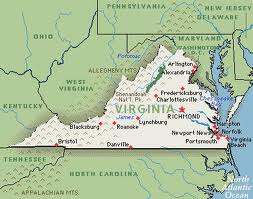 Virginia Senate Democrats have lost another contentious battle—this time over Congressional redistricting. But its passage did not require a tie-breaking vote by Lieutenant Governor Bill Bolling due to the absence of one of the Democratic Senators.
Republicans advanced a plan that does not include another dominant minority district as Democrats had hoped.
Democratic Senator George Barker questioned the constitutionality of addressing redistricting since the state constitution implies that it should have been resolved last year. He also said the bill does not comply with the Voting Rights Act.
“African Americans are 19% of the state population and yet they are limited in terms of significant influence to only one district which represents 9.1% of the 11 districts that we have. Should there be two seats in which there was a significant African-American voice that would be heard, that would comply with the distribution of the population and it would represent 18.2% of the population,” said Barker.
GOP Senator Mark Obenshain countered that lawmakers wrestled with this for 10 months last year, and the Democrats, who were in control, offered no solution. He said the bill DOES comply with the Voting Rights Act, and there’s nothing to prohibit the Assembly from finishing the job this year.
“I would respectfully submit that the Supreme Court of Virginia has long taken a position that is at odds with the position articulated by my friends on the other side,” he said.
A suit has been filed arguing that the redistricting law cannot be passed this year. The bill now heads to the Governor.
–Tommie McNeil
PolitiFact: Sales Tax & Transportation
Posted by Virginia Public Radio in PolitiFact Virginia on January 22, 2012
 Governor McDonnell’s plan to shift additional sales tax revenues into transportation is drawing plenty of criticism from Democrats who say it takes money away from public schools. That’s the focus of this week’s PolitiFact Virginia report, as we hear from Fred Echols.
Public Safety in Virginia
Posted by Virginia Public Radio in Daily Capitol News Updates on January 19, 2012
 Strengthening public safety will be one of Governor McDonnell’s top priorities this legislative session. The Governor, Attorney General Ken Cuccinelli, and several lawmakers have outlined an aggressive plan to toughen penalties for violent sex offenders, repeat drug dealing convictions, juvenile offenders who commit violent crimes, and more.
The Governor and his team aren’t only proposing tougher laws, but they’re seeking extra funding for law enforcement and additional officers. McDonnell also says the state must provide more resources to help ex-prisoners and prevent them from becoming repeat offenders. But if they do, he says the state will come down even harder on criminals—and 11-million dollars to confront drug dealers will help do that.
“First, that the legislation set a five-year mandatory minimum sentence for a second time drug dealer, and that excludes marijuana but all the other scheduled substances, and then a mandatory 10-year punishment for a third time or other repeat drug dealer. We know they’re dangerous–we know there’s usually weapons associated with this. And so, if you’re going to deal drugs in Virginia, be on notice, you’re going to prison for a lot longer period of time,” he said.
The bills would strengthen anti-bullying efforts—and impose tougher penalties for financially exploiting elderly or incapacitated adults, and using electronic messaging for criminal gang recruitment. They also broaden the focus for cracking down on cyber crimes, Medicaid and other fraud, and drunk driving.
–Tommie McNeil
Bill Seeks Justice for Wrongly Convicted Juveniles
Posted by Virginia Public Radio in Virginia's News on January 18, 2012
 Lawmakers in Richmond will consider hundreds of bills over the next several weeks, including one of special concern to a Mineral, Virginia man who’s been in legal limbo since he was 15. He was wrongly convicted of a crime but is still being punished for it.
Edgar Coker’s nightmare began in 2008, when he agreed to hang out with a young woman he had known since childhood.
“And the mom came home, and Edgar was in the kitchen having a snack, and the mom went upstairs, and her daughter didn’t have a shirt on, was angry and said, “What has happened here? And she immediately said, ‘He raped me. ‘ ”
Deirdre Enright is with the Innocence Project in Charlottesville. She blames Edgar’s lawyer for giving him bad advice:
“The lawyer encouraged him to plead guilty, said that he would be certified as an adult and sent to an adult correctional center almost immediately, and the family pled guilty to a juvenile offense to avoid the possibility of him being in prison.”
Eventually, the alleged victim admitted she was not raped but that she feared getting in trouble with her mom. But Matthew Engel, Legal Director of the Innocence Project, says it was too late.
“Any new evidence of innocence has to be brought to the court’s attention within 21 days of the final judgment. Edgar was adjudicated delinquent in September, and the young woman came forward in November.”
After 17 months, the boy was freed from a juvenile jail, but when he tried to clear his name, the Stafford County Court said it did not have jurisdiction, and the matter was moot since Edgar Coker was no longer behind bars. Matt Engel disagreed:
“He has to register annually with the state police. He has to submit a DNA sample, he has to be photographed every two years. His name, picture, address, a map to his home are all posted on the sex offender registry website. Just a couple of months ago Edgar went back to a football game at his alma mater and the deputy who was present recognized him from the sex offender registry and arrested him, and he spent five hours in jail until his mother was able to bail him out, because he was a sex offender on school grounds.”
He made that case before Virginia’s Supreme Court and is now awaiting a decision. In the mean time, he and others at the Innocence Project are pushing for passage of a bill that would change state law so juveniles who pled guilty to crimes they did not actually commit could later establish their innocence.
-by Sandy Hausman
Proposal Aimed at Stimulating Economy, Saving Lives
Posted by Virginia Public Radio in Daily Capitol News Updates on January 18, 2012
 A Democratic lawmaker has introduced a car-tax relief bill with a new twist: It would also tackle a major public health concern that costs Virginians $2 billion per year in healthcare expenditures.
Arlington Delegate Patrick Hope says his bill would cut the remaining car-taxes that Virginians still pay in half. “This is the only proposal that is being made in this session that will actually give money back to taxpayers. So, we need to do this. We need a shot in the arm for Virginia’s economy. And I think working families are demanding it.”
Hope says re-prioritizing the tax code would fund it.
“We rank 50th in the nation in funding in cigarette and tobacco tax. And what this would do is bring our cigarette and tobacco tax to just the national average. And the residual of those funds, which would raise about $300 million, would be directly applied to the car tax. And it would give real Virginia families real relief when they need it the most.”
That would raise the tax on cigarettes to $1.45 per pack, and on other tobacco products to 50% of the wholesale price. The Campaign for Tobacco-Free Kids says the higher cost would prevent nearly 54,000 Virginia children from becoming smokers, prompt 56,000 adults to quit, and save more than 32,000 residents from a premature death. Opponents say it would hurt retailers struggling in a tough economy.
–Anne Marie Morgan
Proposal to Cut Mandates
Posted by Virginia Public Radio in Daily Capitol News Updates on January 18, 2012
 Twenty state mandates imposed on Virginia’s cities and counties would be eliminated under legislation unveiled by Governor McDonnell.
The proposals were the recommendations of a gubernatorial Task Force for Local Mandate Review. The goal is to give localities a break from the red tape as well as to save the costs of implementing the mandates each year.
The proposals are just the first round since the panel will continue its work through the year. The wide-ranging provisions include eliminating: a Circuit Court’s ability to mandate a new local courthouse, a rule to publish requests for procurement proposals in local newspapers, and a requirement that the state approve locations of red-light cameras. They would also repeal a new mandate to require most teachers to learn about civics. McDonnell said giving localities some relief right now is essential.
“We’ve seen some steady, although small recovery in state sales and income taxes. But we see the burden on localities increase because property tax values have plummeted over the last five years—that is, real estate taxes—and are stable at best, starting to recover in some areas. But they’re facing some unusual situations with their own tax base.”
The Governor also directed state education officials to identify ways to reduce local reporting requirements by 15%. The provisions will be rolled into an omnibus bill.
-by Anne Marie Morgan
Assembly Conversations: Governor Bob McDonnell
Posted by Virginia Public Radio in Assembly Conversations on January 18, 2012
The Virginia General Assembly is in its first full week of a long 2012 session. Lawmakers are working on this year’s legislation and a new two- year budget. Listen now as host Bob Gibson talks with Governor Bob McDonnell about the Assembly, public policy, and Virginia politics.
Part One:
Part Two:
NASA’s Past & Future in Virginia
Posted by Virginia Public Radio in Virginia's News on January 17, 2012
 When you think of NASA and space travel, you probably think of Cape Canaveral or Houston. While those may be the most iconic representations of the Space Agency, one Virginia facility is part of NASA’s past and future.
When the Space Shuttle program came to an end last year, many wondered just how NASA planned to go on. The fact is that NASA has been working on it for years.
Called the Orion Multipurpose Crew Vehicle or MPCV, this next generation spacecraft will enable America to explore beyond low earth orbit for the first time in more than 40 years.
NASA Langley in Hampton is a major contributor to the project.
“Once Orion decided to do water landings, they had to find a facility that could do water landings to simulate the same kind of landing commission. The only way you can simulate is by swinging, swinging and dropping the test article to get the right loads into the astronauts spines or any impact type of scenario you want to get the right loading into the vehicle, in this case it’s the Orion spacecraft.”
That’s Lynn Bowman, project manager for the Orion SPLASH Project
“It stands for Structurally Passive Landing Attenuation for Survivability of Human Crew.”
We will stick with SPLASH. It turns out NASA Langley has something very special. It’s the place where the Apollo astronauts trained, called:
“The gantry, it’s whole purpose in the beginning was all about landing on the moon, and that’s why the gantry was built. And it also turns out it’s a unique facility, it’s a national historic landmark, and the gantry is the only facility in the world that can do these kinds of swings and drops. There’s a lot of facilities out there that do vertical drop testing, and vertical drop testing, we can do that here too, but if you want to get the right loads onto your vehicle your structure, you’ve got to swing it and drop it.”
So last year, NASA Langley built , or better yet, dug the Hydro Impact Basin, a 115 feet long, 90 feet-wide and 20 feet-deep pool next to the gantry where, today, engineers are going to swing and drop a scale model of the MCPV. It is one of many tests required to certify Orion for water landings, as gantry technician Troy Merrifield explains:
“The first was proof of concept that we could actually swing it and hit the target that we needed to hit. Now we’re into actual good data-gathering mode. There’s a hundred- something channels of data on that, everything from accelerometers to string gauges, checking to see how the materials pull apart and compress and pressure transducers that are measuring how hard it’s hitting the water.”
The capsule hits hard, but remains upright. Before Merryfield goes to help recover the vehicle, he is reminded of the gantry’s legacy.
“It really is neat when you tell people why this was built and they go ‘huh?’ ” And then you take them inside the building and you show them the pictures of Neil Armstrong doing the different things and standing in the different places you can walk around. I’m a history buff. It’s like, man, this is really neat. So now I’m working here, don’t get much cooler. The only way it would be cooler is if I were an astronaut.”
NASA Langley must now prepare for another round of testing at the Basin using the next generation of the Orion capsule, what’s called the ground test article. It is currently being built by Lockheed Martin and will arrive in Virginia in 2013.
-by Sondra Woodward
House Wrangles Over Redistricting
Posted by Virginia Public Radio in Daily Capitol News Updates on January 13, 2012
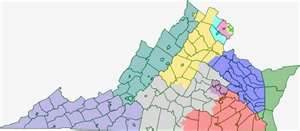 Day two of the General Assembly session was once again filled with contentious debate.
The House of Delegates controversy was not centered around control as in Wednesday’s Senate session. Instead, it concerned Congressional redistricting.
Delegate Rob Bell is continuing the push by a former Delegate to draw congressional lines that only include one minority-majority district, and he motioned to move the bill to its final reading. Delegate Jennifer McClellan contended that one such district is not enough and the current bill, which is the same plan that passed the House last year, aggregates black voters into one district:
Bell says the current plan complies with the Voting Rights Act, and there is no reason to delay moving forward.
The bill was sent to its final reading and is expected to be sent to the Senate where Democrats last year contested it. But they have fewer members, so it could pass both chambers in its current form.
-by Tommie McNeil
PolitiFact: Pensions
Posted by Virginia Public Radio in PolitiFact Virginia on January 13, 2012
The Virginia Retirement System is a prominent item in Governor McDonnell’s plans for the 2012 General Assembly session. This week, PolitiFact Virginia looked into one of the Governor’s claims related to the pension fund. Fred Echols reports.
2012 General Assembly Session Convenes
Posted by Virginia Public Radio in Daily Capitol News Updates on January 12, 2012
 New Virginia state lawmakers took the oath of office as the 2012 General Assembly session convened.
The veterans and freshmen were quite cordial early yesterday, apparently avoiding discussion over power-sharing in the evenly-divided Senate. After several recesses in both chambers, business at the Capitol came to a halt late in the afternoon while interested parties on both sides of the political aisle sparred over the issue.
The very first vote in the Senate resulted in a tie. It was a Democratic motion to replace a resolution which determined how power should be shared. That motion failed and a lengthy debate followed. In one volley, Democratic Senator John Edwards reminded Republican Senator Tommy Norment of a memorandum sent by Lt. Governor Bolling about his limitations:
“Which he acknowledges he is not a member of the Senate and indeed cannot be both Lt. Governor and a member of the Senate at the same time and was not elected to the Senate of Virginia. Is the Senator aware of that memorandum of the Lt. Governor?”
Norment countered:
“I would say to you, I am aware of what the Constitution says and I just respectfully have a different understanding than the interpretation that you are trying to bootstrap through your VERY decisive and incisive questioning.”
Senator Donald McEachin, who filed a power-sharing lawsuit, then asked for yet another recess to discuss a resolution with his caucus.
-by Tommie McNeil
Assembly Conversations: The 2012 Session Begins
Posted by Virginia Public Radio in Assembly Conversations on January 11, 2012
The Virginia General Assembly begins its 2012 session this week. Lawmakers will enact a new 2-year budget, consider whether to allow uranium mining, and work their way through some 3,000 pieces of legislation. Listen here as Assembly Conversations begins, with a look at some of the issues likely to be at the center of attention this year.
Part 1:
Part 2:
Virginia Career VIEW May Be Eliminated
Posted by Virginia Public Radio in Daily Capitol News Updates on January 11, 2012
 Funding for a career development and academic planning program used by educators, parents, and students would be eliminated under the proposed new state budget.
The Web-based “Virginia Career VIEW” provides job and related educational information for all students statewide in kindergarten through 8th grades. But school counselors say the resources are vital to assist students in developing career pathways.
Counselors rely on the site to help students plan career goals and the courses they must take to achieve them. Becky Bowers-Lanier, who represents the Virginia Counselors Association, opposes eliminating Career View, especially in light of a new state mandate.
“Starting in grade 7, in the fall of 2012, all children will have to have an Academic and Career Plan in place by the time they are finished with grade 8.”
The site provides children with age-appropriate material and engaging activities that help them learn about many occupations and career-readiness skills. Bowers-Lanier says VIEW, delivered through Virginia Tech, also trains counselors, who are required by the state to do career education.
“Once they have the training, the pick-up in the schools increases exponentially. In the last five years we’ve had close to 400-million hits on the Website for VIEW. That’s pretty remarkable.”
She adds that VIEW costs 1/3 of a cent per student, while private programs would range up to 20 dollars per student. Counselors are asking for an amendment to restore the program.
-by Anne Marie Morgan
Virginia Democrats Want Health Insurance Exchange
Posted by Virginia Public Radio in Daily Capitol News Updates on January 11, 2012
 House of Delegates Democrats say they will push for creation of a state health insurance exchange during the 2012 General Assembly session that began this week.
The Democrats believe such a marketplace for insurance policies will inevitably come … but they also want to choose which government would run it.
The federal health care law mandates an exchange for each state—but each could be overseen by the state or the federal government. House Democrats say that even if the U.S. Supreme Court strikes down part or all of the law, a state-run exchange is just good public policy and will produce more competition between insurance companies and perhaps lower prices. Arlington Delegate Patrick Hope is sponsoring one of the bills to expedite its creation.
“Is it going to be housed here in Richmond—overseen by our Department of Health and Human Resources? Or is going to be overseen in the Hubert Humphrey Building on Independence Avenue in Washington, D.C.? I think that’s the real threat. And waiting and not sending a strong signal to the Secretary of Health and Human Resources that we intend to do this is dangerous because we really are threatening the fact whether Virginia has sole control of operating this exchange.”
Some Republicans have said they will file their own legislation, but GOP lawmakers have not yet reached a consensus on whether or when to create an exchange.
-by Anne Marie Morgan
Giving Incentives to Colleges and Universities
Posted by Virginia Public Radio in Daily Capitol News Updates on January 9, 2012
 As states establish new ways for funding institutions of higher education, Virginia finds itself moving forward with incentivizing colleges and universities instead of only providing across-the-board- base funding each year.
Governor McDonnell mentioned the reform recently as he unveiled his proposed $200 million higher education funding increase. This year, each institution can benefit from a pool of more than $20 million for improved performance in areas with an associated point value. That amount will grow in the future. Virginia Secretary of Education Laura Fornash says the model promotes more degrees in Science, Technology, Engineering, Math, and Healthcare.
“STEM-H majors graduating in less than four years or in the number of credit hours you need for a degree, and in the under-represented populations, the institutions get points associated with those behaviors. The points are tallied and then those points are divided by the number of dollars that you have to spend. So what’s nice about this model is that it can be flexible depending on how much money is available to put towards this effort.”
Other performance measures include increased use of facilities year-round, technology, and enrolling more Virginians. Fornash says budget language will require institutions to allocate funds according to goals in their six-year plans and the Governor’s Top Jobs Higher Education Reform law.
-by Tommie McNeil
PolitiFact: Small Business & the Economy
Posted by Virginia Public Radio in PolitiFact Virginia on January 6, 2012
There’s no doubt that small businesses make up an important part of the US economy. But how important? We learn something about that this week from PolitiFact Virginia. Fred Echols reports.
Virginia Democrat Thinks Some Voters Ignored
Posted by Virginia Public Radio in Daily Capitol News Updates on January 5, 2012
 The Democratic Senator who filed a lawsuit against Lieutenant Governor Bill Bolling over his constitutional authority in a split Senate says there are no concessions to be made now that the Lieutenant Governor has asked the judge presiding over the case to dismiss it entirely.
Bolling’s memorandum clarified that although he has the authority to break ties, including on Senate rules, he does not have authority on everything. But the Democrat who filed the lawsuit says the voters who chose a split Senate last fall are being ignored. Senator Donald McEachin adds that polls show most voters want power-sharing. The judge has said she cannot rule until there is a tie-breaking vote, which McEachin says leaves unanswered questions.
Bolling thinks the lawsuit is not in the best interest of Virginians. He says Democrats forget that when there was an equal split in the 1990s with a Lieutenant Governor of their party, they, too, claimed the majority.
-by Tommie McNeil
Job Initiatives
Posted by Virginia Public Radio in Daily Capitol News Updates on January 4, 2012
 Despite some trends that suggest that the Commonwealth is slowly rebounding from the economic downturn, there are still more than 260,000 Virginians without jobs. But Governor McDonnell and Lieutenant Governor Bill Bolling unveiled a new set of legislative initiatives that they believe will significantly promote more economic growth.
The goal is to boost the private sector through tax credits and provide more capital for tourism, agriculture, and education. Bolling says while the state has excelled in technology, they’re adding $10-million for a New Life Sciences initiative that’s coordinated with colleges and universities, and new investments in cyber-security, modeling, and simulation. Since the administration began its push for job creation, it’s asked for $137-million in related investments, and the Governor was asked when taxpayers should expect a return on that funding:
“For instance, I don’t approve any Governor’s Opportunity Fund awards unless the payback is within two to three years. In other words, after that, it’s all cash coming back to the Commonwealth in tax revenues. Our tourism grants are five-to-one or about that, so we know it’s a good return,” said Governor McDonnell.
Bolling adds that only 14% of the deals they make are incentivized and they’re the larger business deals that would not happen without these programs. The request for $37-million will be submitted to the General Assembly.
–Tommie McNeil
Virginia’s Budget Hearings
Posted by Virginia Public Radio in Daily Capitol News Updates on January 3, 2012
 The window of opportunity to speak directly to the General Assembly’s Appropriations and Finance Committees about the new state budget will soon close. That’s because the public hearings on the $85-billion spending blueprint will be held this Thursday and Friday.
Both Democrats and Republicans have praised parts of the budget introduced by Governor Bob McDonnell, such as additional funding for higher ed, economic development, and the Virginia Retirement System.
The Governor believes investing $200-million more in colleges is essential.
“The biggest thing we’re trying to do is make it more accessible and more affordable. Unfortunately right now, we have only 38 percent of Virginians that actually can get a higher education degree in Virginia, and the tuition’s been doubling every ten years. It’s not acceptable,” says Gov. McDonnell.
But Democratic Senator Janet Howell says some funding is inadequate:
“I’m really concerned about public education because on the one hand, the Governor says he’s adding $404 million. But that includes VRS [Virginia Retirement System] payments. That doesn’t help kids in the classroom,” she says.
Thursday’s (1/5/12) public hearing takes place at 10:00 a.m. at Mountain Empire Community College in Big Stone Gap. Friday’s (1/6/12) hearings are at 10:00 a.m. at George Mason University in Fairfax… and at noon at VMI in Lexington, the Medical College of Virginia in Richmond, and Christopher Newport University in Newport News.
Homeless Veterans
Posted by Virginia Public Radio in Virginia's News on December 30, 2011
Thousands of Iraq and Afghanistan war veterans are returning home –many of them coming back to Virginia, hoping for a fresh start, or to simply pick up where they left off. Unfortunately, not only might they have a tough time finding employment because of the economy, but they may also face many other issues like dealing with post- traumatic stress disorder, reconnecting with family, and in many instances not having a place to call home.
Already, there are an estimated 900 homeless veterans scattered throughout Virginia and that number could be greatly underestimated as are not registered within the veteran’s services system. Most of them are Vietnam era vets like Keith, he’s withheld his last name, who served in the Marines for three years, worked as a Richmond police officer for two decades, but now finds himself starting over, and panhandling not far from the state capitol. His story is complex, but he says it is NOT related to a mental health issue like Post Traumatic Stress Disorder—but for these returning vets—it’s something lawmakers will have to look into:
“Because it’s only going to get worse when the kids come back from Iraq and Afghanistan. They will have P.T.S.D. They will have family domestic problems-which might put them out on the street. It’s only going to get worse,” he says.
Keith accepts some blame for HIS situation but says it’s been compounded by systematic redundancies. Secretary of Veterans Affairs and Homeland Security Terrie Suit says that and mental health issues are being addressed. Suit says another challenge is finding the vets like Keith, helping them obtain proper identification, getting them back into the system, and determining what their needs are and why they became homeless to begin with.
–Tommie McNeil

Subscribe to our RSS Feed
 From NPR News
- Brazil's presidential race heads to Lula–Bolsonaro run-off as right gains ground
- Brazil votes, with Lula facing Bolsonaro's son
- Trump names national intelligence chief Jay Clayton as new AI czar
- Cornell president calls gang rape allegations 'deeply disturbing'
- U.S. Marine arrested for alleged murder of a woman in Okinawa, Japan
- How the Cornell case is affecting women who have experienced sexual assault
- She died covering war for Fox News. Her parents blame the network — and a star reporter
- Latter-day Saints women turn away from scandal-plagued Republican candidate in Arizona
- Coast Guard finds debris from medical plane carrying 6 people
- Can the Cornell lawsuit force changes that make students safer?
- From BBC News
- US removes all bombers from RAF Fairford base
- Andrew takes legal action over search warrants relating to arrest
- Polanski banned from Israel after party's motion declaring 'Zionism is racism'
- Protesters scuffle with police as migrants brought ashore on south coast
- BT agrees rescue deal to buy broadband operator TalkTalk
- Potty training scheme to roll out to 20 more areas
- Shadow chancellor to unveil Tory plans to cut taxes and regulations
- Right-wing Flávio Bolsonaro wins first round of Brazil election
- France closes up to 500 schools over student protests
- Trump unveils 'Super Intelligence Force' to oversee AI policy


