Archive for category Virginia’s News
Wetlands at Sweet Briar College
Posted by Virginia Public Radio in Virginia's News on September 29, 2011
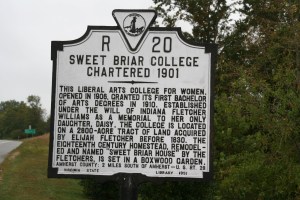 Striking a balance between development and preserving our environment has always been a challenge. Scientists warn that many of our ways of making a living have a profound impact on nature. There are some folks hard at work devising ways to meet that challenge.
It turns out that the 3000 acre Sweet Briar College campus, once a plantation, is a veritable laboratory of old wetlands, ingeniously diverted underground by settlers more than 200 years ago through a network of clay pipes so that the land above them could be farmed. It’s just one example of how we have frequently thwarted nature, says naturalist-in-residence, Mike Hayslett.
“We have a long history in our country and in our culture of regarding wetlands as an impediment to our progress, whether it’s the initial history of agriculture, it being an impediment to growing the food that we need or an impediment to our perception of progress and the need to change the landscape and other industrial uses and what have you. So we have two centuries or more of approaching wetlands as something that are best moved out of the way and replaced with something else.”
Hayslett is now in the process of locating and dismantling the extensive piping under Sweet Briar’s grounds and restoring the native wetlands. He is not only using his science students , replacing the slave labor that originally installed the pipes, but he is also holding workshops and seminars for professionals who are designing wetlands restoration projects nationwide. Participants in his Swamp School just wrapped up five days of trekking through fields and forests in and around Sweet Briar observing the work he has done so far.
So why is all this important? Marc Seelinger of the Raleigh Swamp School explains. “Easiest example is to take a look at what happened after the hurricane the past couple weeks. The lack of wetlands gave the water no place to go, so just from a flood control standpoint we’ve had massive floodings because the water has no place to be stored. The secondary thing that will happen from that is that there is also a water pollution control feature. Wetlands clean up the water, wetlands are kind of like the country’s kidneys.”
Wetlands are a buffer Seelinger says, and they are the only way to maintain a diversity of living things in our world. Mike Hayslett notes that his restored ponds are proof of the adage that “if you build it, they will come.” Long dormant seeds and terrestrial critters have found their way back to the water where they are once again propagating in great numbers.
Hayslett says his proudest achievement is the partnership he forged with the Boxley Company some ten years ago. Based in Roanoke, Boxley has plants throughout Virginia and West Virginia that supply aggregate, block and concrete for road building and commercial and residential projects. They have given him free rein to relocate wetlands around their quarry near Sweet Briar that might eventually be encroached upon.
“The mission is to be environmental stewards and we had this opportunity to work with Mike to enhance what we have here at Piney River and we jumped at the opportunity.” That’s Jack McCarthy, a Boxley Superintendent, and he says that though their environmental efforts have involved some expense, he is proud that his company has become a recognized and well publicized prototype for such partnerships. Mike Hayslett notes that there is another advantage to this cooperation. “There is a whole system, a legal and financial system, that restoration of wetlands can yield financial credits. It means dollars in the bank to restore wetland habitats.”
Though there have been laws in place since the 1980s mandating the replacement of wetlands invaded by development, cuts in the budgets of federal and state agencies overseeing them have resulted in limited enforcement. So now more than ever, wetlands enthusiasts say they hope that an understanding of good citizenship will lead to the valuing of natural habitats in lieu of destroying them.
-by Libby Fitzgerald
Freedom of Information: Opening Doors
Posted by Virginia Public Radio in Virginia's News on September 22, 2011
 Governor Bob McDonnell is due to respond to a Freedom of Information Act request for minutes and other information about a series of closed meetings over the past six weeks that involved members of his Government Reform Commission.
Like so much of the state code, Virginia laws on open meetings can be complicated, perhaps even to the point that the lawyers who advise the governor can go astray when interpreting them. After first defending the closed meetings at which recommendations for the Government Reform Commission may or may not have been drawn up, the McDonnell administration backtracked, saying the meetings might have been illegal and committing to complying with the law in the future. Governors are certainly entitled to work in private says Maria Everett, with the Virginia Freedom of Information Advisory Council.
“The governor or any sort of single elected or appointed official can certainly appoint a group to advise them, and for the purposes of open meetings law, that would not be a public body in terms of having to give notice and meet in public,” says Everett.
But if three or members of a public commission turn out for meetings – and this case they were doing so – things change, she says. “And then when it came to light that the commissioners were actually in sufficient number on the work group that changed the work group into commission meetings – that’s where the problem arose, and hiding things when you’re trying to talk about transparency in the same breath – it doesn’t pass the sniff test.”
There was something else that didn’t sniff well, at least not to Democrats, party spokesman Brian Coy explains. “There were a couple of Democrats who were on the commission itself, the larger body, but when the McDonnell administration decided to adopt this new work group approach, it just so happened that none of the Democratic members of the commission were invited to join those work groups.”
Democratic Delegate David Englin asked Attorney General Ken Cuccinelli for an investigation into the legality of the meetings but he said there was nothing he could do since his office had no legal authority in such things. Now – FOIA requests – Democrats are not only trying to get details about the Reform Commission meetings but also looking for other commissions that might violated the law and asking to see any correspondence between the attorney general and the governor on the question.
Legal points being what they are, Common Cause president Bob Edgar believes there are other considerations at least as important as whether the letter of the law was followed. “I don’t think this is a question legality, I think it’s a question of morals, ethics, it’s a question of propriety. Why would you exclude particular persons simply because they were in the other political party or the independent field. If you’re gonna work on reform I think you do it from a non-partisan, bi-partisan basis,” says Edgar.
And, he adds, in public view. “We want transparency in these meetings. We want the minutes but more importantly we want the doors open.”
Governor McDonnell has agreed to open the doors whenever three commission members are present. If only two are on hand it appears he has every right to keep the doors closed.
–Fred Echols
The Untold Story of Frank Batten
Posted by Virginia Public Radio in Virginia's News on September 21, 2011
 Last year, The Weather Channel, became the first news and information service to reach 100 million cable subscribers. The 24/7 hour cable channel dedicated to weather is ingrained in our lives. But 30 years ago, the concept of all weather all the time was the laughingstock of the broadcasting world, and were it not for a visionary businessman named Frank Batten.
Connie Sage, a former Landmark Communications employee is the author of the only authorized biography about Frank Batten. She says anyone living in Virginia would be hard-pressed not to credit Frank Batten and his company, Landmark Communications, for, at the very least, getting their news to them.
“Whether it was the Virginian Pilot, the Roanoke times, the Galax Gazette, the Greensboro news and record, Annapolis newspapers, TV stations in Vegas and Nashville, 100 small newspapers in communities throughout the country. Those all had the same values and ethics,” says Sage.
In1983, as Batten contemplated liquidating the struggling business, a call from a cable operator about the popularity of the channel changed his mind: what if he could get the cable companies to pay subscriber fees? Batten’s company then invested millions in state of the art technology, new studios, and feature programming,. Within a couple of years, almost all the cable companies were not only carrying the Weather Channel, but paying a fee to do so. The little channel everyone made fun of in 1982 sold for $3.5 billion in 2008. Such a success might suggest the actions of cold, calculating business titans. Not so, says, Jim Cantore , who went to work for the Weather Channel in 1986.
“One of the things I remember about the Battens is…they’re just nice people. You don’t have these Gordon Gekko shrewd business men. Just nice men. And I think that kind of resonated just out through the company,” he says.
Connie Sage’s book is Frank Batten Jr., the Untold Story of the Man Who Founded the Weather Channel.
— Sondra Woodward
Tea Party in Local Government
Posted by Virginia Public Radio in Virginia's News on September 15, 2011
 The Tea Party has made its mark on the national political scene by insisting that Congress spend less in a time of recession and also by questioning widely held views about climate change. In Virginia, the movement is also taking aim at a surprising target in local government.
It might be hard to find a subject that’s less sexy than urban planning. People rarely show up at municipal meetings to debate the dry details of development, so officials were surprised when a small but angry crowd assembled at Blacksburg’s town hall.
The Commonwealth wants larger communities that are growing to say where and what kind of housing, schools, stores and offices it might want to accommodate more people. The idea is to avoid sprawl and to create sustainable urban centers:
“Ah, the word sustainability stands out, since it is such a key word in Blacksburg and the VT community,” says Roger Abelhart, the first to speak at the public hearing. “A key word in local vocabularies since Blacksburg became a dues paying member to ICLEI, which to me at the very least is a violation of article one, section ten of our US Constitution.”
For those who don’t have their constitution handy, article one, section ten says states shall not enter into any agreement with a foreign Power, and ICEI, the International Council for Local Environmental Initiatives, is a global group of more than 1,200 cities that has ties to the United Nations.
“I don’t think we want to have any directions from the UN down here in the real world,” says Roscoe Trivett who drove 125 miles from Bristol to protest.
ICLEI helps communities figure out how to reduce their carbon footprint, provides software and educational materials and allows cities around the world to compare notes on going green. To Rich Collins, professor emeritus of Urban and Environmental Planning at the University of Virginia, that seems like a good idea.
“The feeling, like well, if we join with others on behalf of common planetary concerns, somehow it’s subversive of American values. I find that absurd. Frankly, I find it laughable,” Collins says, “I think there’s a broad consensus that land use planning is essential. And land use planning is not just simply cutting land into different zones; it is dealing with the capital improvements that are needed, with the schools that must be built to accommodate the new population, of getting people from here to there. This is pretty well accepted now, except by those who perhaps have not been paying attention.”
Chip Tarbutton has been paying attention, and he doesn’t like what he sees. The leader of Roanoke County’s Tea Party says urban development areas will threaten our private property rights and our future choices.
“Essentially what they want to do is create clustered developments or urban development areas where the majority of people would live and then make it difficult if not impossible for people to live outside of those areas, so those other areas would be held in reserve as wildlife preserves and in that way they hope to reduce carbon emissions that would save the planet from the global warming hoax they’re trying to foist on us,” Tarbutton says.
Tea party proponent Charles Battig agrees. He told the Albemarle County Board that all this planning might be totally unnecessary. A physician and an engineer, Battig is not swayed by a growing consensus in science that human behavior is causing the current round of climate change.
“Consensus has never proved anything,” says Battig, “At one point consensus ‘proved’ the Earth was flat, in my medical field that ulcers were caused by stress and cured by milk. Now we know that neither one of those is true.”
His allies, who constitute a majority on the Albemarle County Board, voted to drop their membership in ICLEI. So did elected officials in James and nine other communities around the country. In Roanoke, the board of supervisors voted to put off the designation of urban development areas, and Tea Party leaders are pressing the state legislature to repeal the requirement that communities plan them.
— Sandy Hausman
Warrior Girls
Posted by Virginia Public Radio in Virginia's News on September 7, 2011
 There’s a growing awareness of how damaging athletic injuries can be, thanks – in part – to 75 players who filed suit against the NFL this summer, but coaches and parents may still be clueless when it comes to female athletes. Experts here in Virginia say girls sometimes play harder than the guys and suffer injuries that can plague them for a lifetime.
Thanks to publicity in the professional world, more young athletes, coaches and parents recognize the risks faced by boys who play high school sports, but experts on female athletes say they can also suffer crippling injuries:
“More than 50% of them actually are overuse injuries from basically over training – training year round, training like 7 days per week and not giving the body and the mind a chance to recover,” says Dr. Joel Brenner, medical director of sports and adolescent medicine at the Children’s Hospital of the King’s Daughters in Norfolk.
He says girls who play basketball or soccer have more concussions than boys — a fact that doesn’t surprise Shawna Lynch-Chi – a neuropsychology fellow at the University of Virginia.
“Girls, when compared to the same type of sports that boys play, actually have a higher incidence of concussion rates than boys do. Girls and boys are just built completely differently.”
Symptoms of a concussion may occur the next day, and they can be subtle: Headache, amnesia, dizziness, ringing in the ears, nausea, slurred speech and fatigue. If athletes don’t recognize those symptoms, they’re at even greater risk for future injury.
Brenner adds that parents are sometimes to blame – pushing girls to play, hoping they’ll get college scholarships for sports. In fact, fewer than 5% of young athletes do. He says coaches and parents must be firm and insist that injured girls not compete.
Michael Sokolov agrees. The author of a book called Warrior Girls says parents must be advocates for their children — teaming up to argue with coaches when necessary.
“If you are one parent, and your young daughter plays for one of these go-go basketball, lacrosse, soccer teams, whatever, you’re one parent and you say, hey, I think we’re playing too much – we’re playing tournaments that are five games in four days or playing two seasons instead of one, all these things that are wearing our kids out – all these things that are wearing out kids out, if you’re just one person and you say that, you’re a trouble maker,” says Sokolov.
— Sandy Hausman
Fracking & Earthquakes
Posted by Virginia Public Radio in Virginia's News on September 2, 2011
 We may see more earthquakes in coming years, if oil companies begin a controversial drilling method in Virginia.
The head of Virginia Tech’s Seismological Observatory says the cause of last month’s earthquake in Mineral was a lot of stress centered in an area with several favorable faults. Martin Chapman says seismologists have long predicted an earthquake would occur there but they just didn’t expect it to be as large as a 5.8. Since 2004, oil companies have been using the latest practice of hydraulic fracturing: injecting a high pressure water, sand, and chemical solution horizontally into the earth’s crust to split apart rock and release oil and gas deposits. The practice isn’t used in Virginia, but some environmentalists warn of more frequent earthquakes in areas of the U. S. where “fracking” occurs, such as with the Marcellus shale deposits in West Virginia, Pennsylvania, and New York. Chapman agrees. He says the practice puts pressure on the faults already in an area.
“And the hydrofracking process for gas recovery or hydrocarbon recovery– what the purpose of that is to increase the porosity and permeability of the rock by fracturing it. And that generates small earthquakes. In some cases you can trigger larger earthquakes on pre-existing faults that are already near the critical stress level. So it’s basically provides the straw that causes the fault to happen.”
He says fracking at each injection well covers a small area so there’s no chance a well in a neighboring state could have triggered the Mineral earthquake. Oil companies monitor seismic activity during the fracking process.
“It usually happens when the process is being done. Usually you don’t have a long-term seismic issue there. It usually is during the time the fluids are being injected or disposed of.”
Chapman says that as hydrofracking becomes more common, especially in the Appalachian region, there may be an increase in the number of earthquakes in Virginia and surrounding areas.
–by Beverly Amsler
Studying Shore Birds
Posted by Virginia Public Radio in Virginia's News on August 29, 2011
 Because they eat fish and other marine life, shore birds can tell us about the health of our oceans and bays – kind of like canaries in coal mines. So once a week, since April, Charlie Clarkson has driven from his home in Charlottesville to a salt marsh near Chincoteague to study herons, egrets and ibis. He wants to know if mercury, emitted by coal burning power plants, is taking a toll on the baby birds.
“I’ve been monitoring the growth and development of the nestlings for the past three years, looking at growth of the feathers. The birds are actually pretty sensitive in indicating the amount of mercury that they obtain through diet. The mercury, once it enters into the birds’ system, is incorporated into the feather as an excretory mechanism. It’s basically the only way the bird has to get the mercury out of its system,” he says.
Sometimes, he’s covered with mosquitoes as he crawls into a tent, where he’ll sit for five hours, making notes on the birds – how often and when they feed their babies. Then, he hikes into the colony, where the birds get excited and often vomit, really leaving Clarkson with something to study.

— Sandy Hausman
Irene’s Impact on Virginia
Posted by Virginia Public Radio in Virginia's News on August 28, 2011
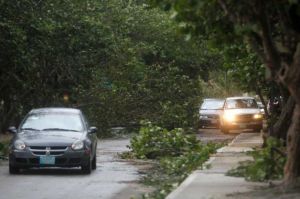 Hurricane Irene, now sweeping up the East Coast, has already led to the deaths of eight people in four states. Three of those deaths occurred in Virginia.
In Newport News, an 11 year old boy died when a tree crashed through his apartment yesterday. In Brunswick County, one man was killed when a tree fell across the car he was a passenger in. A Chesterfield County man died when a tree fell on his house.
After hours of roaring winds and driving rain through southeaster and central Virginia, many, particularly along the coast, are waking up without power….to find damaged homes, fallen trees, and flooding.
About 800,000 homes and businesses are now without power, and officials say it may be several days before they’ll get it back—so thousands are still seeking refuge in shelters,
The storm was fairly slow-moving—at 15 miles per hour—giving it more time to pound Virginia with wind and rain, and as Governor Bob McDonnell says, the broad impact of the storm made it an awesome force even inland.
“In fact, Richmond reported 71 mph gusts at 6:20 p.m. at the airport and that’s roughly 100 miles away form the storm’s center,” he said.
The Governor also points out that 16 inches of rain fell along parts of U.S. 460…. And those heavy rains could cause rivers in the Southeastern part of the state to flood for the next few days or so.
Virginia’s National Guard solders free 10 motorists trapped for hours by downed trees—and by 9 o’clock last night, the Virginia State Police fielded more than 1600 calls for help.
–by Connie Stevens
Aftermath & Aftershocks
Posted by Virginia Public Radio in Virginia's News on August 24, 2011
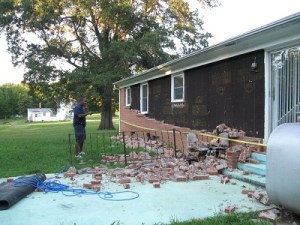 Louisa County was the epicenter of Tuesday’s earthquake, and officials there are now gearing up to assess damage.
As the sun sent in her peaceful, rural neighborhood, Cleolive Cavanaugh sat outside in her Cadillac – contemplating the steering wheel and the shocking experience of an earthquake in Central Virginia. Just before 2 p.m. she was chatting with a girlfriend – making plans for the evening’s church revival:
“I dropped the phone, and you know I just heard all this noise and I went to see what was wrong. Vases, every picture is off the wall. It’s just terrible inside. I saw all of this, oh Lord, have mercy,” she said.
Her prized collections of China and vases were destroyed, and the brick that had covered her tidy home was now in an untidy pile on the ground. Next door, her nephew Ellis Quarrels also saw incredible damage.
“Everything that could fall, fell,” said Ellis.
Police, fire-fighters and emergency medical personnel were busy all afternoon and evening, responding to calls from frightened people. Some thought they were having heart attacks. Others had fallen or suffered head injuries when things fell on them. Even Fire Chief Scott Keim admitted he was caught off guard.
“I was very surprised. When you’re standing up and the floor is moving under you, it’s a surprising event,” said Keim.
–by Sandy Hausman
Colonial Williamsburg Goes High Tech
Posted by Virginia Public Radio in Virginia's News on August 23, 2011

Colonial Williamsburg is turning to some very un-Colonial technology in hopes of engaging a new generation of visitors …..without diminishing Williamsburg’s historic appearance and feel.
It means smart phones and text messages are joining fifes and drums as part of the Williamsburg experience.
Jim Horn, Vice-President of Colonial Williamsburg’s Historical area, says Williamsburg isn’t foresaking its familiar sights and sounds– but attracting more visitors is a continuing challenge. While it drew 450,000 ticketed visitors last year, that’s still about 100,000 less than the year before. ” Kids are wedded to the i-phone. That’s the world as they understand it. By bringing phones here, it makes more sense, connects them more to the period in history,” says Horn.
The Revquest plan began July 15th– and officials acknowledge that while it’s sure to undergo changes in the future, there is little doubt that it reflects a future trend at Williamsburg and other cultural attractions, one that might be considered revolutionary.
— by Evan Jones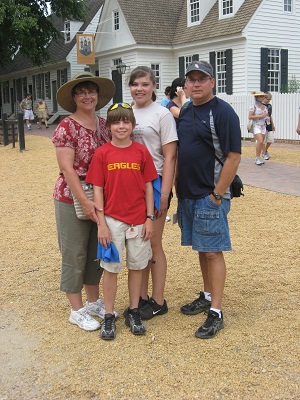
.
The Military Industrial Complex at 50
Posted by Virginia Public Radio in Virginia's News on August 22, 2011
 It’s been 50 years since a departing President Eisenhower warned the nation to keep an eye on what he called the Military-Industrial complex.
Next month, Virginia will host a national conference to see whether his predictions were accurate and to explore alternatives to massive spending on war and defense.
As he prepared to leave office, President Eisenhower surprised the nation with a warning. Before the Second World War, he said, this country didn’t have a defense industry – but now, the U.S. was spending more on defense than the net earnings of all American corporations. “In the councils of government, we must guard against the acquisition of unwarranted influence, whether sought or unsought, by the military industrial complex. The potential for the disastrous rise of misplaced power exists and will persist. We must never let the weight of this combination endanger our liberties or democratic processes,” he said in 1961.
Today, some observers think Eisenhower was right – among them author and activist David Swanson, who says he’s willing to wager the U.S. may have surpassed the former war hero’s worst nightmare.
“The military has grown drastically – the privatization and the profitability of the military, the ability to funnel money into congressional campaigns, all of these have put the military in charge of what used to be our congress members,” says Swanson.
Swanson’s helped organize a conference on September 16, 17 and 18 in Charlottesville, called the Military Industrial Complex at 50. Speakers and participants will look at how the defense industry has influenced government and the media, and they’ll explore how resources could be moved from military to social needs.
– by Sandy Hausman
Editorial Cartoonists Find Humor Despite Cutbacks
Posted by Virginia Public Radio in Virginia's News on August 15, 2011

 Editorial cartoons get people talking, yet fewer newspapers are employing cartoonists full-time because dwindling circulations lead to layoffs. Dutchie Mirolli spoke with two Virginia artists who get their points across, one cartoon at a time.
The Value of Banks
Posted by Virginia Public Radio in Virginia's News on August 9, 2011
 It might seem obvious that banks are attracted to wealthy areas, but it turns out, they also help make communities safer and more prosperous. Sandy Hausman reports on why credit unions and banks can pay big neighborhood dividends.
Battle Over Broccoli
Posted by Virginia Public Radio in Virginia's News on August 8, 2011
 Fifty years ago, broccoli was a vegetable virtually unknown in America, but its popularity has grown steadily. Consumption is up 600%, and Virginia farmers are vowing to get their share of the broccoli business –joining a federally funded campaign to grow more broccoli on the East Coast. Sandy Hausman has details.
Offshore Drilling Debate Continues
Posted by Virginia Public Radio in Virginia's News on August 3, 2011
 While some Virginia lawmakers are fighting for the state to get revenue from allowing drilling off the state’s coast, the proposal is currently stalled in the U-S Congress and the state’s congressional delegation remains split over whether to drill in the first place. Matt Laslo reports from the Capitol.
Virginia’s Country Stores
Posted by Virginia Public Radio in Virginia's News on August 1, 2011
 A good definition of the space between a rock and a hard place might be the economic viability of a traditional Virginia country store. Once the heartbeat of farming communities’ commerce and conversation, these old-fashioned emporiums have become endangered by rural Virginians increasing mobility. So, the question facing rural communities is how to keep “the country store” conversation going if “the country store” commerce is going elsewhere. Virginia Public Radio’s Martha Woodroof reports.
Butterfly Count
Posted by Virginia Public Radio in Virginia's News on July 28, 2011

Photos: Sondra Woodward
 No trip to the great outdoors would be complete without a tally of wildlife spotted. An eagle, a few rabbits and squirrels, deer, of course, and maybe a bear or a coyote. Virginia Public Radio’s Sondra Woodward takes us up to the mountains for a different kind of census, one where the subjects have names like Crescent, Copper and Hairstreak.
Civil War Legacy
Posted by Virginia Public Radio in Virginia's News on July 18, 2011
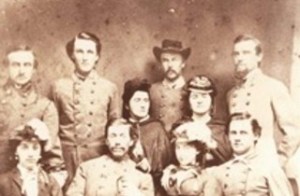 Letters, diaries, photos — if it came from the Civil War era, the best way to preserve it might be digitally. A new project that began last fall has scanned thousands of Virginia artifacts from 150 years ago. Virginia Public Radio’s Thomas Pierce reports.
Road Construction Jobs
Posted by Virginia Public Radio in Virginia's News on July 14, 2011
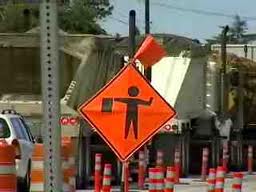 Newly released jobs numbers show thousands of Virginia construction workers may have to hang up their tool belts unless Congress can find more money for road construction. Matt Laslo reports from Washington.
Smoke on the Mountain
Posted by Virginia Public Radio in Virginia's News on July 13, 2011
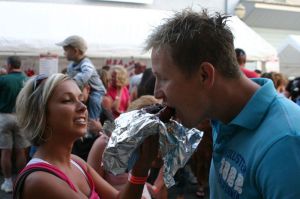 Some of the region’s best barbeque chefs are preparing to fire up their grills for the state championship in Galax this weekend, and this year could see more judges from Virginia, as organizers offer a six-hour training program. Virginia Public Radio’s Sandy Hausman has that story.
Bullying in Schools
Posted by Virginia Public Radio in Virginia's News on July 12, 2011
 The latest Virginia Schools Safety Audit is out, and experts are surprised by the top concern on the list. Sandy Hausman has that story.
Enforcing New Human Trafficking Laws in Virginia
Posted by Virginia Public Radio in Spotlight on WVTF Public Radio 2011, Virginia's News on July 11, 2011
 Governor McDonnell signed into law several measures recently to provide new protections from human trafficking and more severe punishment for those who engage in it. But before the introduction of the legislation, many Virginians had no idea how prevalent the crime is– especially in the Commonwealth. As Virginia Public Radio’s Tommie McNeil reports, the challenge now is recognizing human trafficking and taking action when it occurs.
Rare Book School at UVA
Posted by Virginia Public Radio in Virginia's News on June 30, 2011
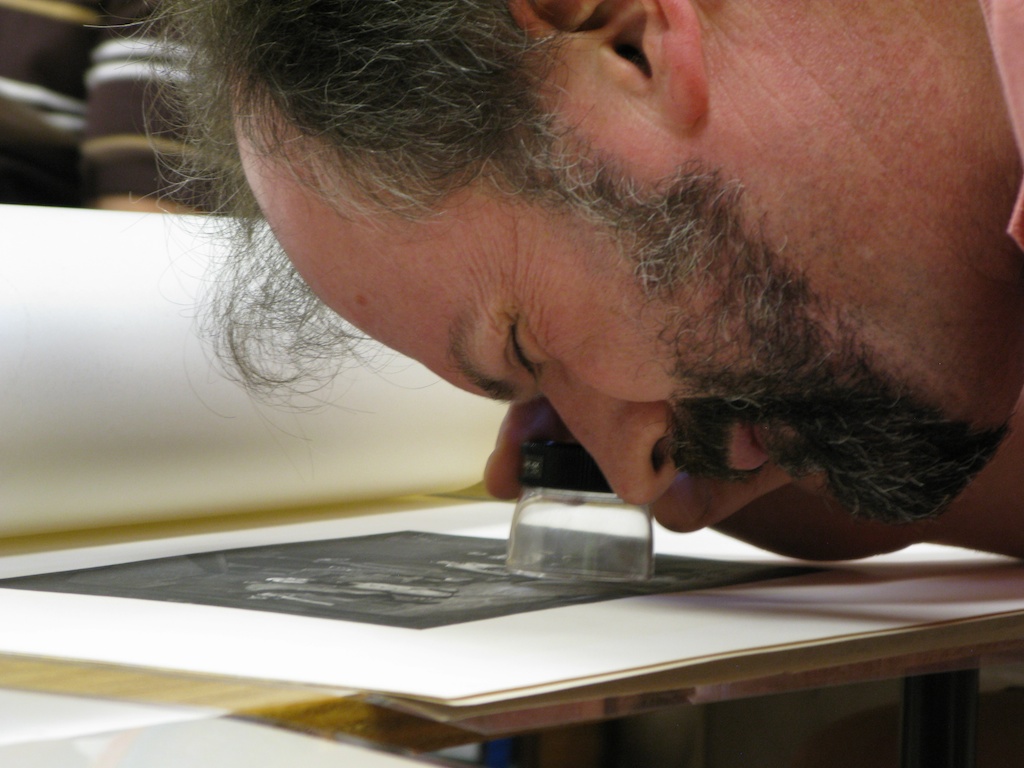 Many students see summer as a time to get away from books, but at the University of Virginia a unique program is bringing people closer. In the bowels of the main library, they study the history of binding, paper making, typography and illustration. Working with more than 80,000 rare volumes and manuscripts – they learn to read books in a whole new way, and Sandy Hausman reports that they’re encouraged to touch.
World Class Opera in Rural Virginia
Posted by Virginia Public Radio in Virginia's News on June 29, 2011
 The winding roads of Rappahannock County are scenic and sparsely populated with about 26 people per square mile. But each summer, the number swells by about a thousand people a day as visitors and participants converge on a unique summer festival. Sandy Hausman reports.
Virginia Rocket Launches
Posted by Virginia Public Radio in Virginia's News on June 28, 2011
 Millions of Americans will watch, next month, as the space shuttle blasts off for the last time, but the nation’s space program will continue, and much of the action will be right here in Virginia. It may come as a surprise to many people, but three rockets launched from the Commonwealth in June and five more will go up in July. Virginia Public Radio’s Sandy Hausman reports fromWallops Island.
Neighbors Battle Use of Biosolids
Posted by Virginia Public Radio in Virginia's News on June 20, 2011

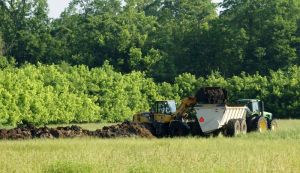 Few people give sewage treatment a second thought, but for more and more Virginians, it’s becoming a serious issue. That’s because farmers can get sludge from sewage treatment plants for free. The state isn’t 100% sure about the safety of so-called biosolids, and the Department of Environmental Quality is working on new guidelines for how and where they’re used, but folks who live near farms want answers now. WVTF’s Sandy Hausman has that story.
Photos Courtesy of Charlottesville Tomorrow
No Child Left Behind
Posted by Virginia Public Radio in Virginia's News on June 19, 2011
 The U-S Secretary of Education says if Congress doesn’t reauthorize No Child Left Behind…he’ll deal with schools directly. Matt Laslo reports that the announcement has ruffled some feathers in Virginia.
Girls on the Run
Posted by Virginia Public Radio in Virginia's News on June 14, 2011
 Middle school is a tough time for kids – especially girls, as they deal with changing bodies and social pressures. To better prepare them, a group called GIRLS ON THE RUN has started a program that combines esteem-building exercises with training for a 5K race. Virginia Public Radio’s Sandy Hausman has that story.
Virginia & Tropical Rainforests
Posted by Virginia Public Radio in Virginia's News on June 14, 2011
 Recently the environmental group Greenpeace stepped up its campaign against rainforest destruction – claiming it had analyzed packaging used by toymaker Mattel and concluded the cardboard was made from tropical rainforest trees. The material was supplied by a company that collected a quarter of a million dollars from Virginia taxpayers to expand a subsidiary here. On a fact-finding trip with the International Reporting Project, Virginia Public Radio’s Sandy Hausman learned more about the situation and filed this report.

New Virginia Map
Posted by Virginia Public Radio in Virginia's News on June 8, 2011
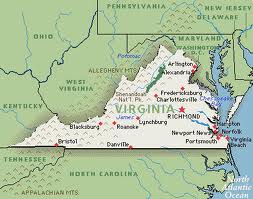 When it comes to the economy, Virginia appears to be doing pretty well with the 6th highest net worth for households. Our poverty rate is lower than 38 other states, and we edge out 42 states when it comes to unemployment, but Virginia Public Radio’s Sandy Hausman reports we should probably not be celebrating.
Protecting Plants the World Over
Posted by Virginia Public Radio in Virginia's News on June 7, 2011
 With the world’s population growing, the pressure is on to produce more food on less land. The challenge is especially great in the tropics, where insects and fungi compete with farms for edible crops. That’s why scientists from Virginia Tech are traveling the world– promoting powerful organic ways to protect plants. Virginia Public Radio’s Sandy Hausman went to Indonesia as part of the International Reporting Project to see how this green farming program works.
Federal Debt
Posted by Virginia Public Radio in Virginia's News on May 31, 2011
 They had been dubbed the “Gang of Six” … but their number was recently reduced by one. Yet Democratic U-S Senator Mark Warner and four other Senate colleagues of both parties are still trying to hammer out a bipartisan solution to reign in the soaring $14-trillion federal debt … that grows by more than $46,000 per second. And as Virginia Public Radio’s Anne Marie Morgan reports, the Senators argue that failure is NOT an option.
Lost Communities of Virginia
Posted by Virginia Public Radio in Virginia's News on May 26, 2011
 A closed general store. Railroad tracks that lead to nowhere. These are signs of so-called “lost communities”—places we often drive through, without much notice. A team of researchers with Virginia Tech’s College of Architecture and Urban Studies brings some of these once bustling places back to life—as we hear from Virginia Public Radio’s Connie Stevens.
War Shots
Posted by Virginia Public Radio in Virginia's News on May 25, 2011
 Some of the most iconic World War II footage from the Pacific theater was shot by a cameraman who shared his stories at the Library of Virginia. Former Marine Major Norm Hatch was featured at the Library’s latest ‘Book Talk.’ And as Virginia Public Radio’s Anne Marie Morgan reports, the new book about his life paints a portrait of courage under fire.
Cuts to Community Action Projects
Posted by Virginia Public Radio in Virginia's News on May 10, 2011
 The White House and Congress are both talking about cutting federal spending. Groups in Virginia that work with the poor say their programs are a small part of the government’s budget. But they say some of those cuts will mean big problems for their clients. Virginia Public Radio’s Joe Staniunas reports.
Marijuana Law
Posted by Virginia Public Radio in Virginia's News on May 2, 2011
 There was an intriguing case in Albemarle Circuit Court last week. It involved: a man accused of possessing a small amount of marijuana, a little-known penalty in Virginia law and a giant bill for taxpayers. Virginia Public Radio’s Sandy Hausman heard about the case, called the public defender, and filed this report.
Hydraulic Fracturing: Part 3 of 3
Posted by Virginia Public Radio in Virginia's News on April 26, 2011
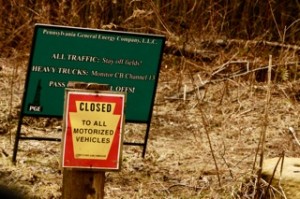 With some environmentalists singing its praises as a clean-burning fuel, natural gas was looking like America’s energy salvation. The second largest gas field in the world lies under Virginia and four neighboring states. Then, the New York Times began to report on the environmental damage done in Pennsylvania, using a gas extraction technology known as fracking. Today, Virginia Public Radio’s Sandy Hausman reports on whether it will be used in Virginia – and, if so, how that might be done safely.
Hydraulic Fracturing Series: Part 2 of 3
Posted by Virginia Public Radio in Virginia's News on April 26, 2011
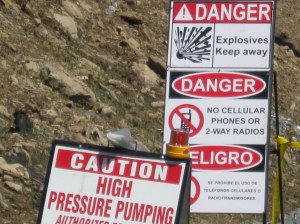 The nation’s need for energy has fueled what some call a new gold rush – drilling for natural gas trapped in layers of shale deep underground. The nation’s largest expanse of shale is in Appalachia – stretching from Virginia to New York. So far, only one firm has asked for a permit to drill in Virginia, but a Houston-based company has leased thousands of acres around Harrisonburg, and residents are getting nervous. Virginia Public Radio’s Sandy Hausman reports on their concerns – and why state regulators say they have nothing to fear.
Hydraulic Fracturing Series: Part 1 of 3
Posted by Virginia Public Radio in Virginia's News on April 25, 2011
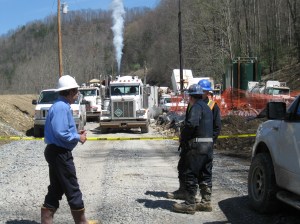 With the dangers of nuclear power playing out in Japan, fighting in Libya pushing oil prices up, and climate scientists pointing an accusing finger at coal, America is desperate for some energy alternatives. One that seemed promising is natural gas – a relatively clean burning fuel. But critics now say the process of getting gas from the ground may be risky. Virginia Public Radio’s Sandy Hausman went to Southwest Virginia to find out why.
Welcome Home, Pete Hill
Posted by Virginia Public Radio in Virginia's News on April 12, 2011
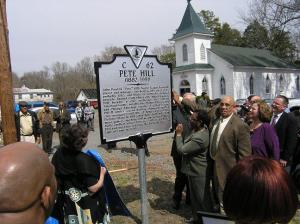
Photo by Charlie Woodroof
 History is riddled with mistakes. And one of those mistakes, concerning the birthplace of a Baseball Hall of Fame player you’ve probably never heard of, was corrected recently with the unveiling of a new historical marker by the side of the road in rural, north central Virginia. Virginia Public Radio’s Martha Woodroof reports.
Virtual Virginia: Public Online Education
Posted by Virginia Public Radio in Virginia's News on April 5, 2011
 High School students all around Virginia are taking classes their schools can’t provide—at least not in the traditional sense. These young people are enrolled in one or more of the 50 courses offered through “Virtual Virginia,” the state’s online public school academy. Fred Echols visited a Virtual Virginia teacher in Roanoke to get a closer look at how online teaching works.
Buyer Beware
Posted by Virginia Public Radio in Virginia's News on March 29, 2011
 Prosecutors in most big cities have heard about con artists who prey on people locked out of their homes or cars. Some have taken the worst offenders to court, but here in Virginia phony locksmiths appear to be scamming consumers and driving legitimate locksmiths out of business, while state regulators struggle to keep up. Virginia Public Radio’s Sandy Hausman has details:
Plan 9 Remake
Posted by Virginia Public Radio in Virginia's News on March 24, 2011
 It’s been called a “camp classic.” It’s been called “cinematically unique.” It’s been called a lot of things, but mostly it’s been called the worst movie ever made. Now, as Virginia Public Radio’s Fred Echols reports, a Charlottesville-based independent filmmaker is giving it a new life.
Furious Love
Posted by Virginia Public Radio in Virginia's News on March 24, 2011
 Virginians came to know Elizabeth Taylor as the wife of their Senator– John Warner. But the rest of the world remembers her passionate marriage to actor Richard Burton. The relationship was the subject of a new book by two Virginia authors who talked with our Charlottesville Bureau Chief Sandy Hausman.
Tracking Your Nitrogen Footprint
Posted by Virginia Public Radio in Virginia's News on March 21, 2011
 You’ve probably heard the term “carbon footprint” – a measure of how much carbon individual activities generate. Driving an SUV or traveling by jet, for example, give you a big, fat foot. But a professor at the University of Virginia has another way to gauge individual impact, and it’s getting a lot of attention online as Virginia Public Radio’s Sandy Hausman reports.
The Redistricting Game
Posted by Virginia Public Radio in Virginia's News on March 15, 2011
 In just a few short weeks the Virginia General Assembly will re-draw district lines for its state House, Senate, and US Congressional seats. But college students all over Virginia have already created dozens of possible maps for a statewide competition. Virginia Public Radio’s Thomas Pierce reports.
Deathly Lyrics
Posted by Virginia Public Radio in Virginia's News on March 8, 2011
 For centuries, real life tragedies have been memorialized in song—as ballads tell a story, passing down history through oral tradition. And in Virginia, these musical tributes were often produced as what’s called “broadside ballads”—complete with opinion and emotion, as the writer and performers weighed in on grim events. Virginia Public Radio’s Connie Stevens has this report on “Deathly Lyrics—Songs of Virginia Tragedies.”
Picasso Masterpieces in Virginia
Posted by Virginia Public Radio in Virginia's News on March 1, 2011
 Last year The Virginia Museum of Fine Arts in Richmond completed an 8- year, $200 million expansion. And now, they’ve opened a well-publicized exhibit of Pablo Picasso’s art, which they say is their most important exhibit ever. Virginia Public Radio’s Jesse Dukes reports.
Founding Fathers & Funding Information
Posted by Virginia Public Radio in Virginia's News on February 20, 2011
 As both Congress and the Virginia General Assembly take steps to end subsidies for Public Broadcasting, opponents of the funding say it’s not a core function of government. Virginia Public Radio’s Anne Marie Morgan investigated the historical record… to get an idea of where the Founding Fathers might have stood on the question. And while it’s impossible to say what their opinions would be today, it’s at least clear that in the context of their own time-they were ready and willing to use public money to get the news out.
Tax Reform
Posted by Virginia Public Radio in Virginia's News on February 18, 2011
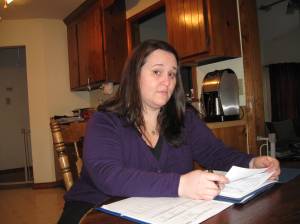
Richmond area teacher Shannon Broughton struggles to make ends meet, but she doesn't favor lower taxes.
As lawmakers in Richmond wrestle with ways to cut Virginia’s budget, some critics say the state should be taking a whole different approach – raising more revenue by changing its tax laws. The Commonwealth has not adjusted tax brackets for nearly a hundred years, and wealthy seniors get generous deductions. Sandy Hausman reports on why some believe this could be the time for tax reform in Virginia.
-
You are currently browsing the archives for the Virginia’s News category.

Subscribe to our RSS Feed
 From NPR News
- Troops stand by to enter Minnesota. And, Trump plans for a Board of Peace
- Morning news brief
- Martin Luther King III, Martin Luther King Jr.'s son, reflects on his father's legacy
- Martin Luther King Jr. would be inspired by today's activism, author says
- U.S. lawmakers wrap reassurance tour in Denmark as tensions around Greenland grow
- Trump has rolled out many of the Project 2025 policies he once claimed ignorance about
- The 2026 Olympics are the most widespread in history. See what's happening where
- Can exercise and anti-inflammatories fend off aging? A study aims to find out
- At least 39 dead in Spain train collision as rescuers search for more bodies
- In Los Angeles, Iranian-Americans march against government crackdown in Iran
- From BBC News
- Trump links Greenland dispute to not getting Nobel Peace Prize
- Man seriously injured in Sydney's third shark attack in two days
- Swiss deadly fire bar owners' lawyers condemn 'vindictiveness'
- Djokovic registers 100th Australian Open win
- 'Credit-score company encouraged me to borrow again when I was nearly debt-free'
- I lost my identity after horrific crash, says Team GB cyclist
- 'Shameful' and 'terrible look' - the chaos that marred Senegal's Afcon triumph
- Zootropolis 2 becomes Hollywood's biggest animated film ever
- How crypto criminals stole $700 million from people - often using age-old tricks
- How could Europe respond to Trump's Greenland tariffs?


 Virginia Public Radio