Archive for category Virginia’s News
Roasting the Reporter
Posted by Virginia Public Radio in Virginia's News on June 4, 2012

Photo: Virginia Public Access Project
There’s a quote that, “The odds are against getting even with people because the odds are they’ll get even with you”. It’s hard to say whether “roasters” at a Virginia Public Access Project fundraising event honoring one of the most outspoken names in Virginia politics were keeping that in mind, but political reporter and columnist Jeff Shapiro may have gotten off easy. Or perhaps just one hour of payback from some of the state’s leading politicians just wasn’t long enough to rebut 30-years of Shapiro’s scrutinizing stories and editorials.
State Credit Rating
Posted by Virginia Public Radio in Virginia's News on May 31, 2012
 Last summer Virginia almost lost its AAA credit rating because of partisan sniping in Washington over raising the nation’s debt ceiling. Matt Laslo reports that Republican leaders are drawing their line in the sand over that debate once again, which could disproportionately hurt Virginia.
Voting Rights Restoration
Posted by Virginia Public Radio in Virginia's News on May 31, 2012
 Virginia has long provided a route for felons to restore certain civil liberties that they forfeit upon conviction. The governor controls the process, and the current and past two administrations have reduced the hoops that felons must jump through so they can once again vote and have the civil rights that the public often takes for granted. But as Virginia Public Radio’s Amanda Iacone reports, a growing number of felons are successfully seeking their rights as part of their effort to move beyond their crimes, find jobs, and make a better life for themselves.
Grand Aides
Posted by Virginia Public Radio in Virginia's News on May 24, 2012
 If the Supreme Court says health care reform can proceed, 32 million more Americans are expected to get health insurance, putting new demands on the nation’s nurses and doctors. At the same time, millions of baby boomers are retiring – but some would like to keep working in a meaningful way. Those trends have led to a remarkable marriage in the field of healthcare, as Sandy Hausman reports.
CLAW: Charlottesville Lady Arm Wrestlers
Posted by Virginia Public Radio in Virginia's News on May 21, 2012

Photo: http://www.clawville.org
A ladies arm wrestling league that started in Charlottesville, VA has spread throughout the country. On June 16th, the national league is coming together for its first ever tournament. Allison Quantz has the story.
Tracy Thorne-Begland
Posted by Virginia Public Radio in Virginia's News on May 20, 2012
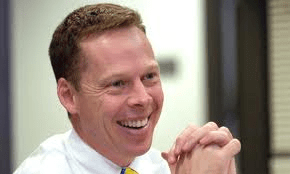 It’s been nearly a week since Virginia legislators made headlines by refusing to put a Richmond prosecutor on the bench. Tracy Thorne-Begland is a decorated fighter pilot who was honorably discharged from the Navy, and he’s openly gay. Some said this was a case of bigotry, but it may also be a case of intensive lobbying by a conservative Christian group. Sandy Hausman has that story.
Lumenhaus
Posted by Virginia Public Radio in Virginia's News on May 15, 2012
 This week, the American Institute of Architects will honor a surprising structure. Named for the power of light, Lumenhaus beat more than 500 other entries from professional architects nationwide. It was designed and built by students and faculty at Virginia Tech, and has since been displayed in Blacksburg, Chicago, New York and Madrid. Sandy Hausman took a tour and filed this report.
Politics & the State Economy
Posted by Virginia Public Radio in Virginia's News on May 14, 2012
 President Obama is chiding Congress for not acting on his slimmed down plan to spur economic growth in Virginia and elsewhere.
Election year politicking is expected to derail this latest effort to get the economy moving.
The president has laid out a “to do” list for Congress. He’s asking for lawmakers to help him lower interest rates on mortgages for millions of homeowners who are struggling with their payments in the midst of this sluggish economy. And he wants to entice U-S companies with holdings overseas to invest that money here at home. Virginia Republican Scott Rigell says he isn’t too impressed with the president’s “to do” list.
“The sum of everything that the president has proposed is minimal and really de minimis.”
But Virginia Democratic Congressman Gerry Connolly says the president has every right to highlight inaction by the Republican controlled House.
“I think the president is right to chastise the Congress for not doing its job and for calling us to recalibrate and focus on job creating initiatives instead of wedge issues that divide us just because it’s a political year.”
The president is also asking Congress to renew tax breaks for clean energy firms. Environmentalists say thousands of jobs are at stake in Virginia and across the U-S if Congress allows them to expire. And Connolly says many businesses in his northern Virginia district are worried those tax credits will sunset at the end of this year.
“Well we certainly have a lot of firms that, if they’re not directly involved in renewable energy, they’re involved in the technology that undergirds it. So a lot of our firms have a direct interest in the whole issue of the renewal of the energy tax credit.”
But Republicans argue this is another example of the president giving a lofty speech without sending Congress specific details. Virginia Republican Congressman Morgan Griffith says he may be able to support extending the renewable energy tax credits, but as of yet he hasn’t seen anything concrete proposed.
“This is one of those I have to go through one by one. I don’t want us picking winners and losers. I do think we have to be careful.”
And Griffith says the mountainous ninth district he represents is already having a dubious relationship with some government tax credits. He points especially to the tax credits that are incentivizing the building of wind turbines on the top of mountains.
“In our area that just doesn’t make sense. You can’t get enough energy on a consistent basis and get it into the grid where it makes sense. And yet they’re going to put these things on the top of the mountains and we don’t know what the consequences are until we get them up and running to the environment and to the folks that live near them and what it does to property values, yet we’re just charging full steam ahead because there’s a tax incentive for them to put them up.”
There are some areas where the two parties may be able to work out compromises though. The president wants to give tax credits to small businesses who hire new employees and the House has already acted on a bill to ease the tax burden on small firms. The president also wants a new Veterans Jobs Corps. That could help Virginia’s veterans get training to go back into the work force when they return from duty. Congressman Rigell says helping veterans is a no brainer for him.
“I do believe that with respect to veterans it’s very appropriate to have incentives to hire our veterans. They have a disproportionately high unemployment rate, so I support efforts like that.”
The president has floated this “to do” list before as a part of his Jobs Act, but congressional Republicans never acted. Virginia Democratic Congressman Jim Moran says there’s a reason House Republicans are refusing to hold votes on the president’s proposals.
“Even if it was something the House majority had planned to do the fact the president asked them to do it they wouldn’t do it. The principle objective of the Republican majority in the House of Representatives is to defy and defeat the President of the United States.”
The partisan tit for tat is nothing new, and analysts expect the gridlock to persist through November s elections. That means the president and House Republicans are both likely to continue to see their agenda’s blunted. Voters will then be left to decipher which party is to blame for the sluggish economy.
-by Matt Laslo
Message to Graduates
Posted by Virginia Public Radio in Virginia's News on May 11, 2012
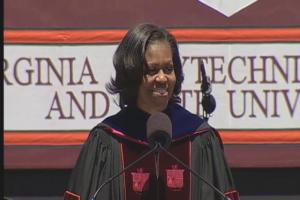 More than 5,000Virginia Tech students are now graduates. They achieved their milestone with the encouragement of First Lady Michelle Obama, who delivered the commencement speech . Connie Stevens has more.
Studying the Brain
Posted by Virginia Public Radio in Virginia's News on May 9, 2012
 Mental illness and developmental disabilities are sometimes hard to diagnose and treat, because there’s no way to actually test for them in a lab. Psychiatrists make educated guesses, based on a patient’s behavior, but often what they do is more of an art than a science. Sandy Hausman reports that could someday change as a result of revolutionary research in Roanoke.
Preserving the Myaamia Language
Posted by Virginia Public Radio in Virginia's News on May 7, 2012
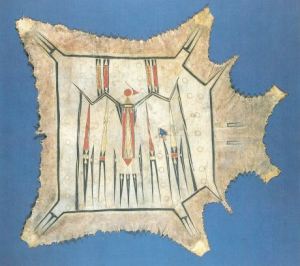 Experts say a majority of the world’s languages will disappear before the end of the century. But when a language goes, cultural traditions often go with it. Jessica Gould visits one Northern Virginia family determined to bring its ancestral language back from the brink.
Roadside Tribute
Posted by Virginia Public Radio in Virginia's News on May 3, 2012
 There are perhaps 2,400 roadside markers around the state – telling visitors about historic places in Virginia. On May 5, VDOT will erect one more –a surprising tribute to the enemy — about 4,000 prisoners of war. Sandy Hausman has that story.
Virginia’s Doctors
Posted by Virginia Public Radio in Virginia's News on May 1, 2012
 For the first time in Virginia’s history, the majority of younger physicians are women. But men still dominate the overall ranks of medical doctors. Connie Stevens has more. For the first time in Virginia’s history, the majority of younger physicians are women. But men still dominate the overall ranks of medical doctors. Connie Stevens has more.
Preserving America’s Audio, Video & Film
Posted by Virginia Public Radio in Virginia's News on April 29, 2012
 A giant facility in Culpeper, Virginia, is collecting and preserving the largest assortment of audio, video and film recordings on the planet. Rebecca Sheir journeyed to this special branch of the Library of Congress and brings us this story.
Public Broadcasting Cuts
Posted by Virginia Public Radio in Virginia's News on April 24, 2012
 It’s official. The state has cut all funding for public broadcasting, and Virginia’s stations are trying to figure out how they’ll pay for programming and operations. As Sandy Hausman reports, those hardest hit will not be viewers or listeners but kids in public schools.
Gangs & Prostitution
Posted by Virginia Public Radio in Virginia's News on April 24, 2012
 Criminal street gangs have reached a new low, targeting children to join their very lucrative underground sex-trafficking trade. Recent charges have been filed and arrests made. But as Virginia Public Radio’s Tommie McNeil reports, officials say they’ve just scratched the surface of a new agonizing war on crime for law enforcement—and a traumatizing truth for families.
Computing for Sustainable Water
Posted by Virginia Public Radio in Virginia's News on April 19, 2012
Professor Gerard Learmonth
Scientists know that an excess of nitrogen and phosphorous is damagin the Chesapeake Bay – and they know it’s coming from sewage treatment plants, farms and urban runoff. What they don’t know is how changes in human behavior and climate will impact the bay.
The University of Virginia came up with a computer simulation to answer those questions – but there are so many possible scenarios that it would take decades for the university to crunch all the numbers.
Virginia scientists and engineers would like to forecast the environmental and economic effects of possible changes to agriculture, commerce and industry over the next twenty years for the nation’s largest estuary, the Chesapeake Bay, and IBM says it’s willing to help. The company oversees a network of volunteers in 80 countries around the world – people who lend their computers’ down time for use in solving community problems. Using about 2 million of those PCs, the university hopes to reach conclusions in a single year.
“What we’re trying to do is determine via the simulation model which practices individual persons can adopt that will help reduce the flow of nutrients to the bay, so that we can not only restore the bay but sustain it for future generations,” says Systems Engineering Professor Gerad Learmonth.
He points out the the findings could guide policymakers and the public – assuring that we do the most effective things in the years to come, and he says, this could help about 400 other waterways. The Computing for Sustainable Water Project relies on a mathematical model that simulates the actions of the 16.7 million people living in the Chesapeake Bay watershed. UVA hopes many of them will join the World Community Grid by downloading a free app to their personal computers.
IBM says calculations are done automatically when systems are not in use. The process requires no time from volunteers, resists viruses, uses little additional energy, and does not affect computer speeds.
–Sandy Hausman
Law School Reform
Posted by Virginia Public Radio in Virginia's News on April 19, 2012
 As laws and government regulations get more complicated, you might expect law schools to be adding courses or making students study longer, but one Virginia school is taking a very different approach – doing away with a third year of classes. Sandy Hausman reports on how Washington and Lee is reshaping education for young lawyers – and why.
Cats at UVA Med School
Posted by Virginia Public Radio in Virginia's News on April 12, 2012
 About 40 people rallied at the University of Virginia today to demand that the medical school stop using live cats to teach young physicians and paramedics how to insert a breathing tube into newborn infants.
Dr. Ulka Agarwal stood outside the Rotunda talking with reporters about the campaign mounted by her employer – the Physicians’ Committee for Responsible Medicine. That group says the University of Virginia should adopt state-of-the-art technology to train doctors and first responders who may someday have to help a newborn baby, struggling to breathe.
“They’re using cats to train the residents to treat humans, and you don’t have to be a doctor to know that the anatomy of a cat or kitten is very different from that of a newborn human, and now that there are lifelike simulators that simulate a newborn, there is just no excuse for still using cats and kittens,” said Agarwal.
She was surrounded by about three dozen people who agreed. “I wanted to be there to show my support for the cats who have no voice, who are being mistreated and brutalized at the medical school,” said Stanardsville resident and cat owner Carol Bratton.
From inside UVA’s Rotunda, pediatrician John Kattwinkel told the media that only three cats are involved, and they’re actually an excellent model for learning to intubate infants. He said the university uses two mannequins for preliminary training, but they’re not ideal. “The reflexes are not there, the feeling the tissues is not there, and it’s a tricky task and it has to be done in 30 seconds, and the mannequin certainly is not an adequate model,” said Kattwinkel.
He says most universities had caved to public pressure rather than stand up for the best teaching techniques, and UVA’s staff veterinarian, Sandy Feldman, insisted the three cats used in training – Alley, Kiki and Fiddle — are anesthetized and do not suffer. “The day after they have this, we give them analgesics for pain, and we give them soft food to eat in case their throat is sore, and then this procedure is not done again for almost a year. These are three cats that we take very good care of, and we like to think that they’re helping us take care of innocent children that are in trouble. Some of these people come into this class. When they have to do this to a live animal, they can’t do it. They freeze up because they’re worried they’re going to do harm. Can you afford to have them freeze up when they’re treating an infant that’s in trouble?” asked Feldman.
Feldman added that several inspectors had certified the humane treatment of the animals, which are purchased from a laboratory supply breeder and are retired after ten years of service.“They live in about 440 square feet of space these three cats, which is substantially larger than my office. They have all kinds of toys. We groom them every day and give them treats. We’ve been visited by the state veterinarian, by the Commonwealth Attorney of Albemarle County, the USDA inspector. They all met the cats. They interacted with the cats. They find absolutely no problem. I’ve worked on racetracks and seen a lot of things. I’ve been in the food animal industry. Let me tell you something. This is nice. If I was a cat, this is the program to be in.”
He said 500 people had trained on the cats since they were acquired in 2004, and he asked the public to put this situation in perspective. “What’s more important – three cats that are very well cared for, or your daughters and sons, your grandchildren?” He suggested animal lovers consider the plight of 7 million feral cats in this country – or the 3.5 million shelter animals euthanized each year, and Kattwinkel proposed they help raise money for development of virtual reality training, which would give health care professionals the real feel of inserting a breathing tube and allow for the permanent retirement of training cats.
— Sandy Hausman
Tech Transfer
Posted by Virginia Public Radio in Virginia's News on April 12, 2012
 As federal and state funds for higher education dry up, many universities are putting new emphasis on what’s called Tech Transfer – patenting and licensing the inventions of faculty members. Sandy Hausman reports that these inventions can be profitable, but critics warn there are pitfalls on the way to wealth.
Virginia is for Lovers
Posted by Virginia Public Radio in Virginia's News on March 30, 2012
 Alaska has “Beyond Your Dreams, Within Your Reach.” Indiana has “Restart Your Engines.” Massachusetts has “Make It Yours.”
But the most famous state slogan of all time — indeed, one of the most famous tourism slogans of all time — belongs to us, right here in Virginia.
Rebecca Sheir gives us the inside scoop on “Virginia Is For Lovers,” from the true story of how it was born…. to whether the Commonwealth really does make more people’s hearts go pitter-patter.
Another Candidate Profile: Delegate Bob Marshall
Posted by Virginia Public Radio in Candidate Profiles, Daily Capitol News Updates, Virginia's News on March 30, 2012
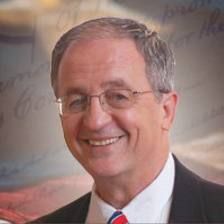
Delegate Bob Marshall has joined the campaign for U.S. Senate much later than his Republican rivals. But as Virginia Public Radio’s Tommie McNeil reports, Marshall believes he has a better chance of beating Kaine than the current front-runner, former Governor George Allen.
Health Care Law
Posted by Virginia Public Radio in Virginia's News on March 27, 2012
 Virginia lawmakers are watching as the Supreme Court takes up the health care law this week. Democrats passed the law, and Republicans despise it and are resting their political fortunes on overturning it. Matt Laslo reports on what the region’s lawmakers are looking for from the high court.
Eagle Cam
Posted by Virginia Public Radio in Virginia's News on March 22, 2012
 Thousands of people worldwide are watching two newly hatched bald eagles in a Richmond nest. The camera’s presence reflects the eagles’ dramatic recovery in Virginia. . .and as Evan Jones reports, it hopes to document the resulting challenges the resurgent population presents to each other.
FlamencoFest 2012
Posted by Virginia Public Radio in Virginia's News on March 15, 2012

Lovers of Spanish culture are in for a double treat this month – Flamenco Fest begins March 23rd, and this weekend, horse lovers will find flamenco in the ring, as one of Spain’s premiere horsemen demonstrates an amazing style of riding. Sandy Hausman has details.
Virginia Tech: After the Verdict
Posted by Virginia Public Radio in Virginia's News on March 15, 2012
 Virginia Tech says it may appeal a jury’s decision that found the university contributed to the deaths of two students in the April 16, 2007 shootings. After an 8-day trial, the jury awarded the families who sued $8 million in damages. But even if there are no appeals, there’s a good chance that award would not hold up, as we hear from Joe Staniunas.
Made in Virginia
Posted by Virginia Public Radio in Virginia's News on March 8, 2012
 Professors and administrators are getting ready for a big powwow near Petersbug Friday, March 9. President Obama will be there to show off a state partnership with Rolls Royce – the kind of collaboration that brings new money for research and new opportunities for students. Sandy Hausman has details:
Horses Helping Asthma
Posted by Virginia Public Radio in Virginia's News on March 6, 2012
 Many medical studies involve laboratory animals, but when it comes to research on asthma, no creature provides a better model than the horse. Veterinarians at Virginia Tech are hoping to help humans who struggle to breathe.
That’s because horses are subject to a condition called equine heaves.
“They’re about the only animal that has a very similar condition to human asthma. They’ll have this disease once they’ve been diagnosed for life, and human asthmatics struggle with that too. If it’s not well managed, your airway is more inclined to constrict and constrict further. That’s true both in human asthma and in horses,” says Professor Virginia Buechner-Maxwell.
And she should know. She sees hundreds of horses each year at Virginia Tech’s large animal clinic. A fairly small number of horses have this condition in the mountains of Virginia – maybe 5% — but it’s often triggered by mold and is more common as you head north. In Europe, up to half of all horses develop heaves. They’re treated with the same drugs used in people, but when doing research, horses are far easier to study.
“When I have one of my horses in a study, I’m going to put them in a stall, and we’ll have this regime for them every day, and I know that’s going to happen. You have a human in the study, the medication they’re given — they might take it differently, they might forget it one day. They might go out and take a hike in an area where there’s lots of pollen, when they’re not really supposed to be doing that. With the horses we have a lot more control,” she says.
She says research on equines is safer for people. “There are things like tuberculosis or HIV – I’m susceptible to those. When I work with horses, that susceptibility is minimal if it exists at all.”
Finally, it may be easier to deal with the USDA when conducting animal research than to tangle with the FDA for human clinical trials. Dr. Maxwell hopes her research on the causes and treatments of recurrent airway obstruction in horses will also benefit people.
–Sandy Hausman
Virginia’s Voter ID Legislation
Posted by Virginia Public Radio in Virginia's News on March 1, 2012
 A controversial voter I-D law just passed the Virginia state Senate by one vote and it’s turning heads in the nation’s capital. Matt Laslo reports from Washington on how the law could impact this year’s elections if it’s eventually signed into law.
Living Wage Hunger Strike
Posted by Virginia Public Radio in Virginia's News on February 27, 2012
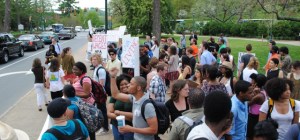 The University of Virginia’s president met with several students Monday, Feb. 27th, on the 10th day of a hunger strike – demanding higher wages for the lowest paid employees at UVA. The protestors say it takes $13 an hour to support a family of four in Charlottesville, but some contract workers are getting less than $8 an hour. Sandy Hausman has more on that story.
Virginia Lawmakers Weigh in on Federal Budget
Posted by Virginia Public Radio in Virginia's News on February 21, 2012
 President Obama’s newly released budget includes many sweeteners for Virginia lawmakers but also some pain pills for the state. Matt Laslo has this overview of the budget from Washington.
Mercury Paper: Part 3 of 3
Posted by Virginia Public Radio in Virginia's News on February 16, 2012
 Virginia’s Governor and Lieutenant Governor are crusading for a surprising cause – writing letters to retail chains, asking them to keep buying toilet paper and paper towels from a Virginia company accused of turning rainforest trees into cheap paper products. Sandy Hausman reports on why this controversy may concern Republican politicians.
Mercury Paper: Part 2 of 3
Posted by Virginia Public Radio in Virginia's News on February 15, 2012
 One of the fastest growing paper companies in the nation is here in Virginia, in Strasburg, along I-81, but two environmental groups are urging customers not to buy from Mercury Paper, because its raw materials come from a Chinese firm that’s cutting down rainforest. Sandy Hausman reports on who’s buying that claim, and how Mercury Paper is fighting back.
Mercury Paper: Part 1 of 3
Posted by Virginia Public Radio in Virginia's News on February 14, 2012
 The World Wildlife Fund issued a surprising plea last week, asking consumers to take care when buying toilet paper. The organization says a Virginia firm and its sister company are destroying rainforest to make a cheap paper products, as Sandy Hausman reports.
The Loving Story
Posted by Virginia Public Radio in Virginia's News on February 13, 2012
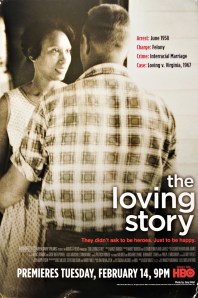 For Valentine’s Day, HBO will show a new film about a Virginia couple who broke the law by getting married. Sandy Hausman reports on their case and why it made history.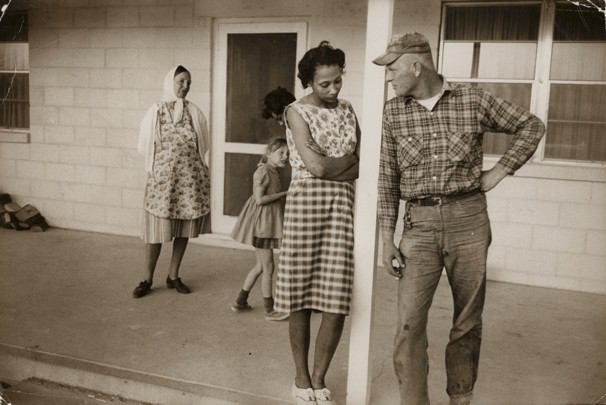
DNA Proves Wrongful Conviction
Posted by Virginia Public Radio in Virginia's News on February 12, 2012
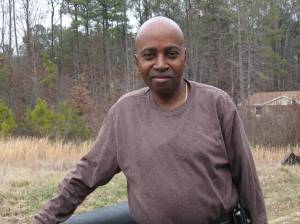
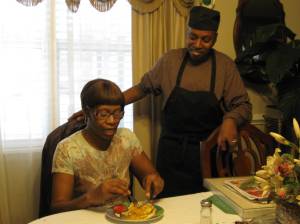 In 2005, when DNA analysis had become a routine part of criminal investigation, the state’s crime lab announced it had evidence in hundreds of cases that had never been tested. Governor Mark Warner ordered a spot check of 15 cases. In two of them, someone who had been convicted was found to be innocent, so Warner said all of the samples gathered between 1973 and 1988 should be reviewed. Today, lawyers with the Innocence Project say it’s not clear how many tests have been done, how many people have been cleared and whether they’ve been notified. Sandy Hausman has more on that story.
The Marshall Expedition (originally aired April 12, 2012)
Posted by Virginia Public Radio in Spotlight on WVTF Public Radio 2012, Virginia's News on February 12, 2012
 This year marks the 200th anniversary of the Marshall Expedition, an important event in the history of Virginia commerce.
Andrew Shaw and his six-man crew from Lynchburg are setting out to re-trace the expedition in a flat bottomed boat, called a batteau. They worked together to build the 43-foot wooden boat that will carry them up nearly 360 miles of waterway. They’ll travel up the James River from Richmond, through the Allegheny Mountains, and downriver to the Great Falls of the Kanawha in West Virginia.
They’re backed by a National Geographic Young Explorer’s Grant, which Shaw says allows them to retrace Chief Justice John Marshall’s 1812 expedition– a little-known river survey that proved essential to Virginia’s economic growth.
Roger Nelson, President of the Virginia Canals and Navigations Society, says the survey was done in support of George Washington’s plan for westward expansion. “That was his vision, to build this canal system that linked the Eastern Seaboard with the Mississippi River Valley. He could envision the riches that lay out there,” says Nelson.
John Marshall and his crew of about a dozen commissioners journeyed up the James River and through the mountains to see if this canal system could actually be completed. They made their month-long voyage with a boat designed just for the task– a batteau. Poling the boat up and down the river, the crew essentially transformed the Piedmont from a rough frontier to a thriving agricultural region.
Today’s crew will primarily use the tools of Marshall’s time, spending much of their journey upstream, through rocks, swift water and rapids. To follow the progress of the Mary Marshall and her crew, you can check out their blog at vacanals.org/marshall.
–by Kelley Libby
George Huguely: CharlottesvilleTrial Logistics
Posted by Virginia Public Radio in Virginia's News on February 5, 2012
 Jury selection began Monday, February 6th in the trial of George Huguely, the University of Virginia lacrosse player who’s accused of killing his girlfriend, Yeardley Love.
Charlottesville’s communications director, Ric Barrick, knew there would be big interest in this case when a preliminary hearing brought nine satellite trucks to town. He says 17 are now expected along with 150-175 reporters:
“Part of that crowd will include NBC, CBS and ABC, the Morning Show, 20/20, Dateline, several court TV shows as well as ESPN,” said Barrick, and aknoweldges there isn’t enough room for all those reporters, family and friends of the defendant and his alleged victim:
“It’s a relatively small courtroom, and the defense and the prosecution have asked for at least three rows, which leaves us with about 20-30 media and about 50 public seats.”
The city has set-up a satellite feed to a nearby building, where reporters and members of the public can watch the case on TV. Aside from that feed, no cameras will be allowed in the courtroom, and reporters will not be allowed to take cell phones or audio recorders inside. Planners will also try to shield the defendant from view as he enters the courtroom on day one.
Outside, Barrick says, traffic is likely to be a problem with reporters, lawyers, police, sheriff’s deputies, and the public converging on courthouse square.
All of this is contained in a 15-page media plan issued by the city after consulting with Chesapeake, where the DC sniper Lee Malvo was tried in 2003. When this trial ends, Barrick says, Charlottesville will be happy to share its media plan with other cities facing high profile trials.
–Sandy Hausman
Decline of the Death Penalty
Posted by Virginia Public Radio in Virginia's News on January 30, 2012
 Capital punishment remains popular in some political circles, but the use of the death penalty in this country is in decline. Sandy Hausman reports on why more prosecutors are asking for life without parole.
Legal Aid & House Bill 100
Posted by Virginia Public Radio in Virginia's News on January 29, 2012
 Each year, thousands of people who can’t afford a lawyer turn to Legal Aid for help. Some are trying to collect child support. Others are desperate to save their homes or keep abusive spouses away. Legal Aid, offers free or low cost assistance, but its funding is now in serious doubt.
For one Virginia woman, who asked us to conceal her identity, the last few years have been a nightmare. She separated from an abusive husband who divorced her and demanded joint custody of their 13-year-old daughter. To protect the child, she says, she turned to the courts.
“I had used some attorneys the year before, and it cost me like $3,000 for two small little court appearances, and they wiped me out of everything I had saved. I had been middle class, owned my own businesses and everything, and I married this man, and he ruined my credit. He ruined everything,” she said.
Unable to find a private lawyer who would take her case without charge, she went to legal aid to keep her x-husband from having unsupervised visits and to get child support. Now, her attorney may be laid off, because legal aid – like so many of its clients – has fallen on hard times. Its revenues from various sources have dropped by more than $6 million a year since the recession hit.
“At the same time the funding’s been going down, the poverty population in Virginia has increased by over 30%,” says David Beidler, General Counsel for the Legal Aid Society of Roanoke Valley. He says 120 lawyers work for legal aid in Virginia, but without help from Richmond, many will lose their jobs.
“The poor are going to be trying to resolve their problems by going through the courts without attorneys. What that is going to do is place a very heavy burden on the courts as these people sort of wallow through the procedural mischief that one who’s not trained is going to encounter,” says Beidler. That’s why he’s asking the state to require that lawyers use special accounts that generate interest which has, historically, paid legal aid.
“The trust accounts themselves are bank accounts that lawyers put their clients’ money in, usually, for a very short period of time. For example, during the sale of a home, the funds for the sale go into an account for maybe a day or two days, and then they’re dispersed out, but when you do this day in and day out over the course of a year, it potentially generates a huge amount of interest.”
Virginia is one of only a few states that does not require so-called IOLTA accounts, but if House Bill 100 is approved by the legislature, Beidler says, that could provide enough cash to give the poor a shot at justice equal to that of those who can afford private lawyers.
–Sandy Hausman
Bill Seeks Justice for Wrongly Convicted Juveniles
Posted by Virginia Public Radio in Virginia's News on January 18, 2012
 Lawmakers in Richmond will consider hundreds of bills over the next several weeks, including one of special concern to a Mineral, Virginia man who’s been in legal limbo since he was 15. He was wrongly convicted of a crime but is still being punished for it.
Edgar Coker’s nightmare began in 2008, when he agreed to hang out with a young woman he had known since childhood.
“And the mom came home, and Edgar was in the kitchen having a snack, and the mom went upstairs, and her daughter didn’t have a shirt on, was angry and said, “What has happened here? And she immediately said, ‘He raped me. ‘ ”
Deirdre Enright is with the Innocence Project in Charlottesville. She blames Edgar’s lawyer for giving him bad advice:
“The lawyer encouraged him to plead guilty, said that he would be certified as an adult and sent to an adult correctional center almost immediately, and the family pled guilty to a juvenile offense to avoid the possibility of him being in prison.”
Eventually, the alleged victim admitted she was not raped but that she feared getting in trouble with her mom. But Matthew Engel, Legal Director of the Innocence Project, says it was too late.
“Any new evidence of innocence has to be brought to the court’s attention within 21 days of the final judgment. Edgar was adjudicated delinquent in September, and the young woman came forward in November.”
After 17 months, the boy was freed from a juvenile jail, but when he tried to clear his name, the Stafford County Court said it did not have jurisdiction, and the matter was moot since Edgar Coker was no longer behind bars. Matt Engel disagreed:
“He has to register annually with the state police. He has to submit a DNA sample, he has to be photographed every two years. His name, picture, address, a map to his home are all posted on the sex offender registry website. Just a couple of months ago Edgar went back to a football game at his alma mater and the deputy who was present recognized him from the sex offender registry and arrested him, and he spent five hours in jail until his mother was able to bail him out, because he was a sex offender on school grounds.”
He made that case before Virginia’s Supreme Court and is now awaiting a decision. In the mean time, he and others at the Innocence Project are pushing for passage of a bill that would change state law so juveniles who pled guilty to crimes they did not actually commit could later establish their innocence.
-by Sandy Hausman
NASA’s Past & Future in Virginia
Posted by Virginia Public Radio in Virginia's News on January 17, 2012
 When you think of NASA and space travel, you probably think of Cape Canaveral or Houston. While those may be the most iconic representations of the Space Agency, one Virginia facility is part of NASA’s past and future.
When the Space Shuttle program came to an end last year, many wondered just how NASA planned to go on. The fact is that NASA has been working on it for years.
Called the Orion Multipurpose Crew Vehicle or MPCV, this next generation spacecraft will enable America to explore beyond low earth orbit for the first time in more than 40 years.
NASA Langley in Hampton is a major contributor to the project.
“Once Orion decided to do water landings, they had to find a facility that could do water landings to simulate the same kind of landing commission. The only way you can simulate is by swinging, swinging and dropping the test article to get the right loads into the astronauts spines or any impact type of scenario you want to get the right loading into the vehicle, in this case it’s the Orion spacecraft.”
That’s Lynn Bowman, project manager for the Orion SPLASH Project
“It stands for Structurally Passive Landing Attenuation for Survivability of Human Crew.”
We will stick with SPLASH. It turns out NASA Langley has something very special. It’s the place where the Apollo astronauts trained, called:
“The gantry, it’s whole purpose in the beginning was all about landing on the moon, and that’s why the gantry was built. And it also turns out it’s a unique facility, it’s a national historic landmark, and the gantry is the only facility in the world that can do these kinds of swings and drops. There’s a lot of facilities out there that do vertical drop testing, and vertical drop testing, we can do that here too, but if you want to get the right loads onto your vehicle your structure, you’ve got to swing it and drop it.”
So last year, NASA Langley built , or better yet, dug the Hydro Impact Basin, a 115 feet long, 90 feet-wide and 20 feet-deep pool next to the gantry where, today, engineers are going to swing and drop a scale model of the MCPV. It is one of many tests required to certify Orion for water landings, as gantry technician Troy Merrifield explains:
“The first was proof of concept that we could actually swing it and hit the target that we needed to hit. Now we’re into actual good data-gathering mode. There’s a hundred- something channels of data on that, everything from accelerometers to string gauges, checking to see how the materials pull apart and compress and pressure transducers that are measuring how hard it’s hitting the water.”
The capsule hits hard, but remains upright. Before Merryfield goes to help recover the vehicle, he is reminded of the gantry’s legacy.
“It really is neat when you tell people why this was built and they go ‘huh?’ ” And then you take them inside the building and you show them the pictures of Neil Armstrong doing the different things and standing in the different places you can walk around. I’m a history buff. It’s like, man, this is really neat. So now I’m working here, don’t get much cooler. The only way it would be cooler is if I were an astronaut.”
NASA Langley must now prepare for another round of testing at the Basin using the next generation of the Orion capsule, what’s called the ground test article. It is currently being built by Lockheed Martin and will arrive in Virginia in 2013.
-by Sondra Woodward
Homeless Veterans
Posted by Virginia Public Radio in Virginia's News on December 30, 2011
Thousands of Iraq and Afghanistan war veterans are returning home –many of them coming back to Virginia, hoping for a fresh start, or to simply pick up where they left off. Unfortunately, not only might they have a tough time finding employment because of the economy, but they may also face many other issues like dealing with post- traumatic stress disorder, reconnecting with family, and in many instances not having a place to call home.
Already, there are an estimated 900 homeless veterans scattered throughout Virginia and that number could be greatly underestimated as are not registered within the veteran’s services system. Most of them are Vietnam era vets like Keith, he’s withheld his last name, who served in the Marines for three years, worked as a Richmond police officer for two decades, but now finds himself starting over, and panhandling not far from the state capitol. His story is complex, but he says it is NOT related to a mental health issue like Post Traumatic Stress Disorder—but for these returning vets—it’s something lawmakers will have to look into:
“Because it’s only going to get worse when the kids come back from Iraq and Afghanistan. They will have P.T.S.D. They will have family domestic problems-which might put them out on the street. It’s only going to get worse,” he says.
Keith accepts some blame for HIS situation but says it’s been compounded by systematic redundancies. Secretary of Veterans Affairs and Homeland Security Terrie Suit says that and mental health issues are being addressed. Suit says another challenge is finding the vets like Keith, helping them obtain proper identification, getting them back into the system, and determining what their needs are and why they became homeless to begin with.
–Tommie McNeil
Congressional Year Ender
Posted by Virginia Public Radio in Virginia's News on December 29, 2011
 Congress broke a record this year, but hitting the lowest approval rating of all time isn’t what the region’s lawmakers had hoped to accomplish. Correspondent Matt Laslo talked with the Virginia congressional delegation and has a look back at this year’s wild ride in Washington.
Habitat for Humanity
Posted by Virginia Public Radio in Virginia's News on December 27, 2011
 It was 35 years ago, when an organization called Habitat for Humanity introduced the world to a new model for housing low-income families. People willing to donate their own labor could get interest-free mortgages, materials and assistance from skilled volunteers in building their own homes. So far, the group has helped build or repair more than half a million houses, but with the nation facing a serious shortage of affordable places to live, the organization is stepping up its game. Sandy Hausman reports on a new approach being tested in Virginia.
Earthquake Early Warning System?
Posted by Virginia Public Radio in Virginia's News on December 14, 2011
 Earlier this year, Virginia was surprised by an earthquake. There was no warning, because scientists haven’t figured out how to predict quakes, but a professor of physics at the University of Virginia had a hunch that could lead to an early warning system. Sandy Hausman reports on how we might know when an earthquake is about to happen.
Financial Impact of Defense Cutbacks in Virginia
Posted by Virginia Public Radio in Virginia's News on December 13, 2011
 With the failure of the congressional super committee to find more than one trillion dollars in budget cuts, deep spending reductions are slated to fall on the Defense budget, which could disproportionately impact Virginia.
More than half a trillion dollars is now slated to get cut from the Pentagon’s budget – that’s on top of a previous agreement to trim its budget by $450 billion dollars. Virginia Beach Republican Congressman Scott Riggell says that would be a terrible day for national security and the state of Virginia.
“That amount triggered from one day to the next, you know it just pivots. It goes from one level to the next in one day, the reduction. I think that would be, what I’d would refer to as I refer to as a violent course correction for the Department of Defense,” said Riggell.
Experts say the cuts are unlikely to fall on the tens of thousands of troops stationed in Virginia, but contractors who contribute a lot to the state’s economy could take a big hit. Northern Virginia Democratic Congressman Jim Moran says the budget cuts currently written into law would hit Virginia harder than any other region of the nation.
“We don’t build weapon systems but we do the things that make our military the smartest in the world with information technology, cyber security, battlefield simulation, all the research and development, most of it is anchored in Northern Virginia,” said Moran.
Cutting half a trillion dollars from the Pentagon’s budget isn’t something Virginia lawmakers want to see, even those Republicans who ran on trimming the federal debt. Critics say that’s hypocrisy, but many in the GOP, such as Chesapeake Congressman Randy Forbes, opposed the compromise measure that set up the super committee. He says automatic cuts to the Pentagon’s budget should never have been a part of the mix.
The president has threatened to veto any attempt to blunt the budget cuts. Virginia Democratic Senator Mark Warner agrees, even though he knows the cuts will be painful for Virginians. “But the notion that we would somehow remove the consequences of failing to start taking down our debt is just unacceptable,” said Warner.
Analysts think the budget cuts would fall hardest on Northern Virginia’s economy, but the south may face a different problem. Defense Secretary Leon Panetta recently announced he wants to move four ballistic missile ships to Europe to provide a shield against a potential nuclear attack.
Congressman Forbes, who is the Chairman of the House Armed Services Readiness Subcommittee, fears three of those could be sent from the naval base at Norfolk. “Those destroyers we didn’t give the Navy any additional money for assets, so at least three of those destroyers, very likely could come out of Virginia to be land based over there,” says Forbes.
The potential combination of moving those ships and slicing hundreds of billions of dollars from the Pentagon’s budget has the state’s lawmakers looking for alternatives but also, oddly enough, looking to partisan gridlock as a sign of hope. If the law isn’t changed the steep budget cuts will start hitting the state in 2013.
In the mean time Virginia’s lawmakers in Washington are working to unwind or redirect those cuts.
— Matt Laslo
Update From Virginia Tech
Posted by Virginia Public Radio in Virginia's News on December 9, 2011
 Police say they’ll likely continue their investigation into the weekend – attempting to identify a motive in the murder of a campus police officer at Virginia Tech. They’ve confirmed that the shooter took his own life, about thirty minutes after killing Officer Deriek Crouse. Sandy Hausman reports on what we know so far about Thursday’s tragedy.
George Allen, Candidate for U.S. Senate
Posted by Virginia Public Radio in Candidate Profiles, Virginia's News on December 9, 2011
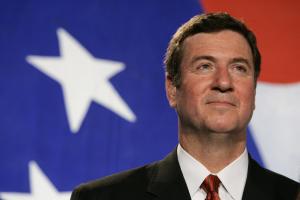
Four Republicans are competing to win the nomination in next week’s primary and run for the seat of retiring U.S. Senator Jim Webb. One of the GOP contenders is also a former Delegate, Congressman, and Senator …who is vying for the seat that he narrowly lost to Webb six years ago. In the first segment of our series on these candidates, Virginia Public Radio’s Anne Marie Morgan reports on the former Governor in the GOP race: George Allen.
Tim Kaine, Candidate for U.S. Senate
Posted by Virginia Public Radio in Candidate Profiles, Virginia's News on December 7, 2011
 From our original series introducing the Senate candidates, Virginia Public Radio’s Anne Marie Morgan reports on a former Democratic governor who is now asking voters to hire him at the federal level. He’s the lone democratic nominee for the position.
-
You are currently browsing the archives for the Virginia’s News category.

Subscribe to our RSS Feed
 From NPR News
- Trump promised a swing district blitz. He's going to a lot of very red states
- Sidewalk sleepers: They have nowhere else to stay while a loved one is in the hospital
- Weddings are expensive. How about a grocery store cake?
- No Kings turns its focus to voting this weekend. Here's what we know
- Coastal homes burn as hot winds fuel California fires
- Katie Zacharia is out as press secretary, White House says
- Katie Zacharia is 'transitioning out' as press secretary, White House says
- Hot flashes, night sweats, insomnia – OB-GYNS set new rules for menopause treatment
- Amid talk of public execution, public opinion on death penalty is split
- Israeli settlers beat Palestinians and a U.S. photojournalist in West Bank attacks
- From BBC News
- Trump waives several Russia sanctions as row with Zelensky intensifies
- Oregon teacher fought school attacker before armed dad shot suspect 'multiple times'
- Boy, 16, and 80-year-old man die in light aircraft crash near Loch Lomond
- Analysis: Zacharia was thrown into a whirlwind - and failed at a critical time for Trump
- Faisal Islam: Why China and AI are worrying global finance bosses
- Swinney insists 'stars are aligning' for Scottish independence
- Miranda's tears, joy and dance moves steal show as deadly boredom sets in on The Celebrity Traitors
- Toxic algorithms wouldn't let them go - now Australia wants an off switch
- Vapes were meant to help people quit cigarettes. Now non-smokers are taking up vaping
- Not sure what to wear for Halloween? These outfits are set to be the most popular this year


