Freedom of Information: Opening Doors
Posted by Virginia Public Radio in Virginia's News on September 22, 2011
 Governor Bob McDonnell is due to respond to a Freedom of Information Act request for minutes and other information about a series of closed meetings over the past six weeks that involved members of his Government Reform Commission.
Like so much of the state code, Virginia laws on open meetings can be complicated, perhaps even to the point that the lawyers who advise the governor can go astray when interpreting them. After first defending the closed meetings at which recommendations for the Government Reform Commission may or may not have been drawn up, the McDonnell administration backtracked, saying the meetings might have been illegal and committing to complying with the law in the future. Governors are certainly entitled to work in private says Maria Everett, with the Virginia Freedom of Information Advisory Council.
“The governor or any sort of single elected or appointed official can certainly appoint a group to advise them, and for the purposes of open meetings law, that would not be a public body in terms of having to give notice and meet in public,” says Everett.
But if three or members of a public commission turn out for meetings – and this case they were doing so – things change, she says. “And then when it came to light that the commissioners were actually in sufficient number on the work group that changed the work group into commission meetings – that’s where the problem arose, and hiding things when you’re trying to talk about transparency in the same breath – it doesn’t pass the sniff test.”
There was something else that didn’t sniff well, at least not to Democrats, party spokesman Brian Coy explains. “There were a couple of Democrats who were on the commission itself, the larger body, but when the McDonnell administration decided to adopt this new work group approach, it just so happened that none of the Democratic members of the commission were invited to join those work groups.”
Democratic Delegate David Englin asked Attorney General Ken Cuccinelli for an investigation into the legality of the meetings but he said there was nothing he could do since his office had no legal authority in such things. Now – FOIA requests – Democrats are not only trying to get details about the Reform Commission meetings but also looking for other commissions that might violated the law and asking to see any correspondence between the attorney general and the governor on the question.
Legal points being what they are, Common Cause president Bob Edgar believes there are other considerations at least as important as whether the letter of the law was followed. “I don’t think this is a question legality, I think it’s a question of morals, ethics, it’s a question of propriety. Why would you exclude particular persons simply because they were in the other political party or the independent field. If you’re gonna work on reform I think you do it from a non-partisan, bi-partisan basis,” says Edgar.
And, he adds, in public view. “We want transparency in these meetings. We want the minutes but more importantly we want the doors open.”
Governor McDonnell has agreed to open the doors whenever three commission members are present. If only two are on hand it appears he has every right to keep the doors closed.
–Fred Echols
Smog in Virginia
Posted by Virginia Public Radio in Daily Capitol News Updates on September 22, 2011

Ahead of a hearing and vote in Congress on the Environmental Protection Agency’s regulatory policy-making, a group of environmental activists has released a report that details the effects of smog on the Commonwealth. The pending action by Congress could ease EPA regulations. The group says the legislation would allow big industrial companies to further contaminate the environment.
Near House Majority Leader Eric Cantor’s district, the activists and state Delegate Jennifer McClellan urged Virginia’s Congressional delegation to vote against the TRAIN Act, which is spearheaded by Cantor. They say his district and other parts of the state rank among the highest in smog pollution nationwide.
Environment Virginia’s Caroline Kory adds that while the Act’s supporters say EPA regulations hinder job creation, industry leaders ignore data suggesting that those businesses contribute to a decline in health. She says it costs less to address pollution now before the problem gets worse. Delegate McClellan rebuts the claim that regulations harm jobs. She says there’s a nexus between the environment and jobs … such as when cleaner natural resources attract tourists—thus helping that industry.
–Tommie McNeil
[audio https://virginiapublicradio.com/wp-content/uploads/2011/09/pollution.mp3%5DThe Untold Story of Frank Batten
Posted by Virginia Public Radio in Virginia's News on September 21, 2011
 Last year, The Weather Channel, became the first news and information service to reach 100 million cable subscribers. The 24/7 hour cable channel dedicated to weather is ingrained in our lives. But 30 years ago, the concept of all weather all the time was the laughingstock of the broadcasting world, and were it not for a visionary businessman named Frank Batten.
Connie Sage, a former Landmark Communications employee is the author of the only authorized biography about Frank Batten. She says anyone living in Virginia would be hard-pressed not to credit Frank Batten and his company, Landmark Communications, for, at the very least, getting their news to them.
“Whether it was the Virginian Pilot, the Roanoke times, the Galax Gazette, the Greensboro news and record, Annapolis newspapers, TV stations in Vegas and Nashville, 100 small newspapers in communities throughout the country. Those all had the same values and ethics,” says Sage.
In1983, as Batten contemplated liquidating the struggling business, a call from a cable operator about the popularity of the channel changed his mind: what if he could get the cable companies to pay subscriber fees? Batten’s company then invested millions in state of the art technology, new studios, and feature programming,. Within a couple of years, almost all the cable companies were not only carrying the Weather Channel, but paying a fee to do so. The little channel everyone made fun of in 1982 sold for $3.5 billion in 2008. Such a success might suggest the actions of cold, calculating business titans. Not so, says, Jim Cantore , who went to work for the Weather Channel in 1986.
“One of the things I remember about the Battens is…they’re just nice people. You don’t have these Gordon Gekko shrewd business men. Just nice men. And I think that kind of resonated just out through the company,” he says.
Connie Sage’s book is Frank Batten Jr., the Untold Story of the Man Who Founded the Weather Channel.
— Sondra Woodward
Anti-Gang Documentary
Posted by Virginia Public Radio in Daily Capitol News Updates on September 20, 2011
 Virginians who were members of criminal street gangs share their riveting stories in a new documentary produced by Attorney General Ken Cuccinelli. “The Big Lie” exposes the methods that gangs use to convince children to join their ranks …but also describes the dangerous lifestyle of gangs and the distress of life in prison.
The goal is to prevent children and teens from being lured into a gang’s trap.
The DVD also features resistance strtegies—and will be available through schools and the Attorney General’s office.
–Anne Marie Morgan
State Revenues Rise, But Caution Still Urged
Posted by Virginia Public Radio in Daily Capitol News Updates on September 20, 2011

Virginia’s General Fund revenues rose in August … bringing the total year-to-date increase in tax collections to 8.8 %. That’s ahead of the annual forecast of 3.7% growth. But state officials are nevertheless urging fiscal caution as lawmakers begin planning for the new biennial budget.
Finance Secretary Ric Brown’s testimony before the House Appropriations panel could be summed up in one sentence.
“Let me say that the news I bring to you for the first couple of months is good, but I would like to see it continue, I’m not sure that it will.”
Brown said the recent revenue increase was driven mainly by individual income taxes—which provide two-thirds of general fund revenue.
Receipts in recordation taxes also rose, but declined in other major sources. For example, corporate income tax collections were down $2.8 million for the fiscal year—compared to $8.4 million last year. But Brown said he hoped sales tax receipts that were below the forecast did not signal a tipping point.
“The concern here is that normally you would see weakness in sales tax before you see it in withholding— weakness in demand. And then as employers start to layoff or cut back in the face of weaker demand, you see some tail-off on withholding,” he said.
Brown also said national indicators suggest a slowdown in economic growth … with now a 40% probability of a double-dip recession.
–Anne Marie Morgan
State Board Approves New Abortion Regulations
Posted by Chris Henson in Daily Capitol News Updates on September 19, 2011
 Virginia now has some of the toughest abortion clinic regulations in the country after the State Board of Health voted Thursday on new emergency rules.
Their goal is to improve health and safety conditions during and after abortion procedures. But opponents say it’s a step backwards in providing services by low-cost facilities, and the price tag could force the state’s 22 abortion clinics to close. The new Emergency Regulations require facilities that perform five or more first-trimester abortions to obtain licenses under hospital guidelines and they require annual inspections. Former state Health Department Director Bill Nelson said clinics already have stringent rules, and called the charge that they’re dangerous unfounded:
“The idea that you can’t find data that it’s dangerous and then to hear a voice say you need to find out what’s going on in those clinics represents a very serious threat to the privacy and the safety of abortion providers and more importantly to the women of Virginia who come to those clinics.”
Nelson says records should be redacted, not removed from clinics for review as proposed. Family Foundation spokesman Chris Freund countered that the many other services which facilities provide will NOT be jeopardized:
“All of the medical services that have been mentioned today as services in these facilities can continue. The clinic will have to make a choose of either improving their standards to continue to provide abortion or stop providing abortion to continue the other services.”
One board member offered amendments, including exempting clinics that use a pill for the procedure and facilities deemed compliant after the year 2000. Those measures were rejected.
By Tommie McNeil
Rare Copy of Bill of Rights on Display
Posted by Virginia Public Radio in Daily Capitol News Updates on September 16, 2011
 In honor of Constitution Week, Virginia’s rare copy of the U.S. Bill of Rights was on public display today at the Library of Virginia. The story behind it reveals that the Commonwealth played a pivotal role in its adoption as part of the supreme law of the land.
The document is the actual Bill of Rights sent by Congress to the General Assembly. The Library’s Director of Special Collections, Tom Camden, notes that in 1791, Virginia was the final state needed for ratification. “It’s designed solely to protect personal liberties and states’ rights. There was a lot of concern that the federal Constitution had too much power concentrated in the federal arena,” says Camden.
Virginia’s copy has the original 12 amendments, including two on the number of Congressmen and their compensation, that were ratified by the House of Delegates but not the Senate. It is made of sheep or goat skin and is worth at least $40 million
-by Anne Marie Morgan
PolitiFact: What Would Thomas Jefferson Do?
Posted by Virginia Public Radio in PolitiFact Virginia on September 16, 2011
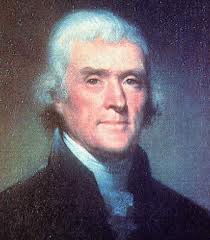 Did George Allen reign in spending as governor? What would Thomas Jefferson do about a balanced budget amendment?
In this week’s Politifact Virginia installment Fred Echols talks with Warren Fiske about state spending under Governor George Allen and Thomas Jefferson’s position on government debt.
Vote on Abortion Regulations
Posted by Virginia Public Radio in Daily Capitol News Updates on September 15, 2011
 The Virginia Board of Health will vote Thursday on emergency regulations regulating the Commonwealth’s 22 abortion clinics.
The regulations are in response to a bill signed into law by Governor McDonnell earlier this year. It requires the state to draft emergency regulations to treat abortion clinics as hospitals. If approved, the regulations would go into effect December 31st and would be in place until permanent regulations are enacted. It’s an effort to make the clinics safer, says Chris Freund of the Family Foundation of Virginia.
“The regulations cover a lot of ground, including licensing, including inspections of the facilities, including record keeping, sanitation, a lot of areas for health and safety.”
However, the regulations getting the most attention are architectural guidelines. For instance, a clinic would be required to have 5 foot wide hallways.
“If you have an emergency situation and paramedics need to get a gurney into a facility to get to someone who, say is hemorrhaging or in cardiac arrest, then you want a hallway that’s wide enough for emergency personnel to get in there.”
Jill Abbey runs the Richmond Women’s Medical Center, which operates clinics in Richmond, Roanoke, Charlottesville, and Newport News.
“The cost of the procedures will go up to women because when you add costs, that’s what has to happen.”
Abortion clinics in Virginia currently fall under the same regulations as doctor’s offices and are not inspected by the state health department. But the department would be charged with inspecting the clinics and enforcing the new rules if the regulations are approved Thursday.
— by Beverly Amsler
Tea Party in Local Government
Posted by Virginia Public Radio in Virginia's News on September 15, 2011
 The Tea Party has made its mark on the national political scene by insisting that Congress spend less in a time of recession and also by questioning widely held views about climate change. In Virginia, the movement is also taking aim at a surprising target in local government.
It might be hard to find a subject that’s less sexy than urban planning. People rarely show up at municipal meetings to debate the dry details of development, so officials were surprised when a small but angry crowd assembled at Blacksburg’s town hall.
The Commonwealth wants larger communities that are growing to say where and what kind of housing, schools, stores and offices it might want to accommodate more people. The idea is to avoid sprawl and to create sustainable urban centers:
“Ah, the word sustainability stands out, since it is such a key word in Blacksburg and the VT community,” says Roger Abelhart, the first to speak at the public hearing. “A key word in local vocabularies since Blacksburg became a dues paying member to ICLEI, which to me at the very least is a violation of article one, section ten of our US Constitution.”
For those who don’t have their constitution handy, article one, section ten says states shall not enter into any agreement with a foreign Power, and ICEI, the International Council for Local Environmental Initiatives, is a global group of more than 1,200 cities that has ties to the United Nations.
“I don’t think we want to have any directions from the UN down here in the real world,” says Roscoe Trivett who drove 125 miles from Bristol to protest.
ICLEI helps communities figure out how to reduce their carbon footprint, provides software and educational materials and allows cities around the world to compare notes on going green. To Rich Collins, professor emeritus of Urban and Environmental Planning at the University of Virginia, that seems like a good idea.
“The feeling, like well, if we join with others on behalf of common planetary concerns, somehow it’s subversive of American values. I find that absurd. Frankly, I find it laughable,” Collins says, “I think there’s a broad consensus that land use planning is essential. And land use planning is not just simply cutting land into different zones; it is dealing with the capital improvements that are needed, with the schools that must be built to accommodate the new population, of getting people from here to there. This is pretty well accepted now, except by those who perhaps have not been paying attention.”
Chip Tarbutton has been paying attention, and he doesn’t like what he sees. The leader of Roanoke County’s Tea Party says urban development areas will threaten our private property rights and our future choices.
“Essentially what they want to do is create clustered developments or urban development areas where the majority of people would live and then make it difficult if not impossible for people to live outside of those areas, so those other areas would be held in reserve as wildlife preserves and in that way they hope to reduce carbon emissions that would save the planet from the global warming hoax they’re trying to foist on us,” Tarbutton says.
Tea party proponent Charles Battig agrees. He told the Albemarle County Board that all this planning might be totally unnecessary. A physician and an engineer, Battig is not swayed by a growing consensus in science that human behavior is causing the current round of climate change.
“Consensus has never proved anything,” says Battig, “At one point consensus ‘proved’ the Earth was flat, in my medical field that ulcers were caused by stress and cured by milk. Now we know that neither one of those is true.”
His allies, who constitute a majority on the Albemarle County Board, voted to drop their membership in ICLEI. So did elected officials in James and nine other communities around the country. In Roanoke, the board of supervisors voted to put off the designation of urban development areas, and Tea Party leaders are pressing the state legislature to repeal the requirement that communities plan them.
— Sandy Hausman
Texas Governor Rick Perry Visits Virginia
Posted by Virginia Public Radio in Daily Capitol News Updates on September 15, 2011
 More than 1000 people assembled at the Richmond Convention Center for an event featuring Texas Governor and GOP Presidential hopeful Rick Perry.
The luncheon was scheduled to raise funds for November’s General Assembly elections. But the focus quickly turned to national politics and the Commonwealth’s role as a pivotal battleground state. The attendees included Christopher Raymond, who drove from Connecticut to assess both Perry and Governor McDonnell.
“It’s worth the drive to see potentially the next President of the United States and to be honest, potentially the next Vice President—because I think Bob McDonnell is going to be at the top of that list, with Marco Rubio and the Governor of Nevada, who just endorsed Governor Perry.”
The speakers stressed that Virginia is the path to victory next year. McDonnell agreed, but did not endorse Perry and reminded the crowd to work to impact the fall elections. He also praised Perry’s record, saying 40% of U.S. jobs created in the last two years were in Texas. Perry received a standing ovation, pledged to follow those same job-creating principles if elected President, and said the country is in trouble.
“This administration called food stamps an economic stimulus. I think food stamps are a symptom of the problem—they’re not the solution. The problem is too many Americans cannot find work, Mr. President. That’s the problem.”
Perry later told reporters that it was thinking too far ahead to say whether McDonnell could be his running mate.
Former Governor Tim Kaine’s Democratic U.S. Senate campaign sent out an e-mail saying, “It’s no surprise that Governor Perry wants to help folks who would support his extreme right-wing views if he becomes President.”
-by Anne Marie Morgan
Stance on Social Security
Posted by Virginia Public Radio in Daily Capitol News Updates on September 15, 2011
 Virginia Democrats are pressing Governor McDonnell to clarify his stance on Social Security … a day before Texas Governor and Presidential candidate Rick Perry is scheduled to attend a Richmond event with the Governor. Perry has claimed that the current Social Security system is flawed and is a “Ponzi” scheme that must rely on new donors to pay out benefits to previous contributors.
Leading the charge is former DNC Chair Tim Kaine, who is also running for the U.S. Senate seat being vacated by Senator Jim Webb. Kaine spoke to a group of elderly residents in the Richmond neighborhood where he resides …and called one Republican proposal to privatize Social Security a scare tactic. Kaine said the current system has worked just fine and will continue to do so.
“The way the program works is you contribute that six-point-four percent and the employer contributes the same out of the paycheck, that goes into the trust fund, and the trust fund is then used to pay the retirements of the retirees at the time, and then by doing that, there’s an expectation that, hey, when I’m a retiree, people will be doing the same for me,” he said.
Kaine says Social Security is often the only source of income for the elderly, and to privatize it would mean possibly risking their money in the stock market. Democratic leaders in Virginia have asked Governor McDonnell in a letter to explain whether his luncheon with Perry Wednesday is an endorsement of Perry’s controversial plan to change the current system.
–Tommie McNeil
Reading Challenges
Posted by Virginia Public Radio in Daily Capitol News Updates on September 12, 2011
 Despite achieving most state and federal benchmarks, Virginia’s students have a problem. Many of them are not reading on the levels that they should by third grade. Students who have not caught up by then will often all behind in other courses, and are likely to never catch up.
The state’s Joint Legislative Audit and Review Commission is weighing recommendations to enhance third grade reading performance statewide. Commission members acknowledged that some of the proposals will be expensive.
Delegate Johnny Joannou found it hard to support English as A Second Language program development and funding additional staff. He said his immigrant background had socio-economic challenges and many children of his generation overcame those challenges without programs. He asked JLARC project leader Kimberly Sarte, why is there such a disparity in learning between older and current generations.
“I think that some kids aren’t getting the support they need at home, and perhaps if they’re not getting… you know, if they’re English language learners, if there’s other reasons outside of the school that they may come in kind of deficient, they’re going to have—a lot of kids— not all, a lot of kids are going to have difficulty. And so if you can kinda raise the classroom program—the level of the classroom program with some of the strategies that we’ll discuss, that’s obviously going to help these kids. If they come in and there’s maybe a classroom program that’s not as strong or there’s not as many resources available to kind of assist them, it’s hard for them to catch up,” said Sarte.
The proposals include providing more engaging reading materials, book rooms with those works, and using new digital technology.
— Tommie McNeil
Jobs & Politics
Posted by Virginia Public Radio in Daily Capitol News Updates on September 9, 2011
 While President Obama was in Richmond promoting his new jobs bill within the district of one of his toughest critics on policy … that same official, House Majority Leader Eric Cantor, was preparing to promote his own jobs plan nearby. Some say that both visits were preliminary campaign stumps for next year’s Presidential election.
President Obama’s speech at the University of Richmond on the jobs bill was much like a confident healthcare reform speech he gave in Virginia a few years ago. One supporter and occasional commentator on Mr. Obama was there—and was asked if the speech was relevant for Virginians. Former Governor Doug Wilder said yes, and that the President has gone back to basics.
“To say,’ hey wait a minute, I’ve been in office a couple of years. I didn’t do all the things I promised that I wanted to do, I’m not saying I was right or wrong, however, this is where I am today,’ and I think to the extent that he continues that, to let people know,’ I have not forgotten, I know what to do, I know how to do it, I need your help, let’s get it done,'” said former Governor Wilder.
House Majority Leader Eric Cantor said there IS room for compromise. “The President did talk about some measures that will provide some tax relief for small business people, and as we know in Richmond, and elsewhere in the Commonwealth, and the country, they’re the jobs engine. So hopefully we can get some progress on that very quickly, and I intend to try and do that.”
He does say that the President’s plan does not pay for itself, and GOP leaders will remain adamant about not adding to the current massive federal debt.
PolitiFactVirginia.com: Government Size & Disaster Funding
Posted by Virginia Public Radio in PolitiFact Virginia on September 9, 2011
 Federal disaster funding has joined the size-of-government issue at the forefront of political debate this month. Today Fred Echols talks with Warren Fiske of the Richmond Times-Dispatch and Politifact Virginia dot com about both.
Health Care Reform
Posted by Virginia Public Radio in Daily Capitol News Updates on September 8, 2011
 A three-judge panel of the U.S. Fourth Circuit Court of Appeals has dismissed two lawsuits that challenged the constitutionality of the federal health care law.
The judges had heard an appeal of a U.S. District Court ruling declaring that the federal mandate for most Americans to buy health insurance or pay a penalty is unconstitutional.
During oral arguments in May, Virginia and Liberty University had urged the 4th Circuit to uphold Judge Henry Hudson’s ruling striking down the mandate.
The three-judge panel did not address the mandate’s constitutionality, but ruled that both do not have standing to bring the lawsuit … and said allowing such lawsuits made the states “roving constitutional watchdogs.”
Attorney General Ken Cuccinelli had argued that the Commonwealth does have that right because of its state law establishing that Virginians cannot be compelled to buy health insurance. The Attorney General has said that rather than asking the full 4th Circuit to hear the case, he will appeal the ruling to the U.S. Supreme Court.
Two other Appeals Courts have also handed down decisions. The Sixth Circuit upheld the federal law, while the 11th Circuit struck down the individual mandate in a lawsuit representing 26 states.
–Anne Marie Morgan
Drive to End Hunger
Posted by Virginia Public Radio in Daily Capitol News Updates on September 8, 2011
 This weekend is the 10th anniversary of the 9-11 attacks, and one activity that Governor McDonnell would like Virginians to do in commemoration is to help those who can’t help themselves. His administration, along with the AARP of Virginia, the Central Virginia Food Bank, and NASCAR driver Jeff Gordon, have coordinated a statewide effort to help the hungry, especially the elderly population.
Gordon will not only take part in a NASCAR race in Richmond, but also the Drive to End Hunger, which has already donated $10,000 to the Central Virginia Food Bank. But Gordon also issued a challenge to racing fans and others—to text the word “Hunger” to 50555.
“Every contribution is a $10 donation when you text that and for every one that happens, I’m going to match it myself personally.”
Gordon says he’s so passionate about these types of initiatives because the U.S. is a rich country, but millions describe themselves as being food insecure or not having money for food.
The Governor says as many as 16% of Virginians fit that description. “That’s tough–we’re the eighth most prosperous state in terms of income per capita in America and yet we’ve got that, so I am very much committed to helping the food banks, the Ruritan club, the AARP, Americorps, all these other great groups that are working on this.”
They’ve also coordinated a community food drive September 9th and 10th in which 150 collection sites will accept food donations statewide.
–Tommie McNeil
Warrior Girls
Posted by Virginia Public Radio in Virginia's News on September 7, 2011
 There’s a growing awareness of how damaging athletic injuries can be, thanks – in part – to 75 players who filed suit against the NFL this summer, but coaches and parents may still be clueless when it comes to female athletes. Experts here in Virginia say girls sometimes play harder than the guys and suffer injuries that can plague them for a lifetime.
Thanks to publicity in the professional world, more young athletes, coaches and parents recognize the risks faced by boys who play high school sports, but experts on female athletes say they can also suffer crippling injuries:
“More than 50% of them actually are overuse injuries from basically over training – training year round, training like 7 days per week and not giving the body and the mind a chance to recover,” says Dr. Joel Brenner, medical director of sports and adolescent medicine at the Children’s Hospital of the King’s Daughters in Norfolk.
He says girls who play basketball or soccer have more concussions than boys — a fact that doesn’t surprise Shawna Lynch-Chi – a neuropsychology fellow at the University of Virginia.
“Girls, when compared to the same type of sports that boys play, actually have a higher incidence of concussion rates than boys do. Girls and boys are just built completely differently.”
Symptoms of a concussion may occur the next day, and they can be subtle: Headache, amnesia, dizziness, ringing in the ears, nausea, slurred speech and fatigue. If athletes don’t recognize those symptoms, they’re at even greater risk for future injury.
Brenner adds that parents are sometimes to blame – pushing girls to play, hoping they’ll get college scholarships for sports. In fact, fewer than 5% of young athletes do. He says coaches and parents must be firm and insist that injured girls not compete.
Michael Sokolov agrees. The author of a book called Warrior Girls says parents must be advocates for their children — teaming up to argue with coaches when necessary.
“If you are one parent, and your young daughter plays for one of these go-go basketball, lacrosse, soccer teams, whatever, you’re one parent and you say, hey, I think we’re playing too much – we’re playing tournaments that are five games in four days or playing two seasons instead of one, all these things that are wearing our kids out – all these things that are wearing out kids out, if you’re just one person and you say that, you’re a trouble maker,” says Sokolov.
— Sandy Hausman
Preventing Human Trafficking
Posted by Virginia Public Radio in Daily Capitol News Updates on September 7, 2011
 Recently, we took an in-depth look at human trafficking and how it impacts many within this country, especially immigrants and children. Virginia’s Attorney General Ken Cuccinelli has some new initiatives that aim to combat the fastest-growing criminal industry in the world.
He agrees with the groups fighting human trafficking, who say that the perpetrators of the crime will not be stopped and prosecuted if law enforcement agencies don’t recognize it in all its forms—or know how to act when they do. One challenge is stopping online traffickers who solicit through such Websites as Craigslist and Backpage.com. The Attorney General says Craigslist has been cooperative in removing ads and links that may be underground prostitution rings.
“But even within Craigslist, the bad guys come up with new ways to advertise themselves, so there’s this continual cat and mouse game, but that’s where it’s most obviously different from …you know, prostitution rings and other things like that.”
So far, Backpage.com has not complied with requests by the Attorney General and his state counterparts to remove similar ads. To proactively address online and other trafficking, Cuccinelli recently hosted a first-of-its-kind training seminar–with the Justice Department, law enforcement, and prosecutors.
— Tommy McNeil
Home Schoolers & Team Sports
Posted by Virginia Public Radio in Daily Capitol News Updates on September 6, 2011
 Virginia students who are home-schooled may be granted an opportunity to play on public school sports teams under legislation being considered by a special House of Delegates education panel. Home-schooled students have at least some access to public school sports in 22 states.
Several students told lawmakers that they don’t want quotas but a chance to try out. Bill sponsor Delegate Rob Bell agreed that the public schools should offer equal access and opportunity.
“Sports teaches teamwork, fitness, and leadership. High school sports, in particular, can be an avenue to college. It can provide scholarships to students who are athletes. In rural areas, it is literally the only game in town,” he said.
The Virginia High School League sets general rules for sports eligibility. Both the League and Delegate Jennifer McClellan said the bill does not guarantee that home-schooled students would adhere to the same behavioral and academic qualifications:
“You keep talking about a level playing field. And we want a level playing field, too. But we want a level playing field where the home-school student doesn’t have an advantage over the public school student because they’re not held to the same standard,” she said.
For example, home-schooled students cannot take the Standards of Learning tests. But Bell said the state has approved other accredited tests for the students, so they should not be penalized.
–Anne Marie Morgan
PolitiFact Virginia: Governor Bob McDonnell & Congressman Bobby Scott
Posted by Virginia Public Radio in PolitiFact Virginia on September 2, 2011
 Governor McDonnell is pondering whether he would leave Richmond to run for Vice President, while Congressman Bobby Scott has found something else he doesn’t like about the Bush tax cuts. Fred Echols called on PolitiFact Virginia.com to get a reading on what both men have been saying.
Fracking & Earthquakes
Posted by Virginia Public Radio in Virginia's News on September 2, 2011
 We may see more earthquakes in coming years, if oil companies begin a controversial drilling method in Virginia.
The head of Virginia Tech’s Seismological Observatory says the cause of last month’s earthquake in Mineral was a lot of stress centered in an area with several favorable faults. Martin Chapman says seismologists have long predicted an earthquake would occur there but they just didn’t expect it to be as large as a 5.8. Since 2004, oil companies have been using the latest practice of hydraulic fracturing: injecting a high pressure water, sand, and chemical solution horizontally into the earth’s crust to split apart rock and release oil and gas deposits. The practice isn’t used in Virginia, but some environmentalists warn of more frequent earthquakes in areas of the U. S. where “fracking” occurs, such as with the Marcellus shale deposits in West Virginia, Pennsylvania, and New York. Chapman agrees. He says the practice puts pressure on the faults already in an area.
“And the hydrofracking process for gas recovery or hydrocarbon recovery– what the purpose of that is to increase the porosity and permeability of the rock by fracturing it. And that generates small earthquakes. In some cases you can trigger larger earthquakes on pre-existing faults that are already near the critical stress level. So it’s basically provides the straw that causes the fault to happen.”
He says fracking at each injection well covers a small area so there’s no chance a well in a neighboring state could have triggered the Mineral earthquake. Oil companies monitor seismic activity during the fracking process.
“It usually happens when the process is being done. Usually you don’t have a long-term seismic issue there. It usually is during the time the fluids are being injected or disposed of.”
Chapman says that as hydrofracking becomes more common, especially in the Appalachian region, there may be an increase in the number of earthquakes in Virginia and surrounding areas.
–by Beverly Amsler
Tobacco Alternatives
Posted by Virginia Public Radio in Daily Capitol News Updates on September 1, 2011
 Periodically, the Virginia Tobacco Indemnification and Community Revitalization Commission meets to discuss how best to use the state’s portion of the national master tobacco settlement. Some regions of the Commonwealth still rely heavily on the tobacco industry to sustain communities, which is why large portions of the settlement are allocated to promote economic vitality that can supplement the slowly dying industry.
It’s no secret that Southside Virginia residents and farmers are in desperate need of new jobs. Delegate Kathy Byron says the way to boost the local economy is through the development of technology-based businesses that are not only beneficial to the region—but also to the state and nation. She says developing alternative and renewable energies has been among the panel’s top priorities.
“We are looking at other ways that people can use their farmland—to be able to grow things that will produce things that are being used in research today. I talked to someone this morning that’s using the protein in potatoes to be able to use for stem cell research and for different types of medical research.”
Byron says they do assume some risk by investing in research centers that are developing newer, unproven technologies. Tobacco growers have been awarded more than 288-million dollars in indemnification payments—and regions more than $793-million in grants to promote economic development in tobacco-dependent communities.
Restructuring Virginia
Posted by Virginia Public Radio in Daily Capitol News Updates on August 31, 2011
 A Virginia gubernatorial panel that’s been working to streamline state government says it is targeting more than the low-hanging fruit in its latest efforts. Last year, its legislative achievements included consolidating or getting rid of 49 boards and commissions … and creating one-stop portals for business start-ups. And this year’s goals could result in real restructuring within agencies and programs, with many proposed reforms on the table.
Many proposed reforms are on the table. Secretary of Health and Human Resources Bill Hazel said as a federal mandate requires states to expand Medicaid coverage, Virginia must change how it handles 1.1 million applications per year.
“We have about a 16% error rate on Medicaid applications. Unacceptable. Some people get Medicaid that shouldn’t, others don’t get it who should. But we have this error rate.”
Other plans include consolidating social services data across agencies to coordinate the flood of new requests. The panel is still pursuing goals of 4-day work weeks for some state employees to save costs. But Human Resource Management Director Sarah Wilson told the members that funding the unused leave of state workers is problematic:
“This is an unfunded liability for the agencies. And if everyone in my agency that’s eligible to retire today retired, I don’t have the money to cover it,” she said.
Also under discussion is an inventory of surplus state property and buildings to gauge if they should be used or sold.
–Anne Marie Morgan
Republicans Talk Plans
Posted by Virginia Public Radio in Daily Capitol News Updates on August 30, 2011
Although state Democratic leaders disagree …Virginia Senate Republicans believe the dynamics of state politics are about to change dramatically for the first time since 2007. They believe they have the candidates in place to retake the state Senate and control both chambers.
 But Lt. Governor Bill Bolling says the GOP has the numbers to propel the Republicans in the Senate to a minimum of 21.
“I can’t ever remember a year where we have fielded 36 Republican candidates out of 40 districts. That is an amazing accomplishment—and good candidates. You know candidates as Ryan said who are business leaders, some who have had prior political experience, either on the local level or the state level. It’s not just the number of candidates that we’re fielding–it’s the quality of the candidates that we’re fielding.”
Democrats are fielding nominees in only 28 of 40 Senate districts. Bolling says some races will be challenging, but he believes this year, Democrats will be on the defensive. The GOP senators also think they have more diverse candidates—from moderate to conservative—but that they’re more united on issues than their Democratic counterparts.
— Tommie McNeil
Assessing the Aftermath
Posted by Virginia Public Radio in Daily Capitol News Updates on August 29, 2011
 The sound of chain saws and generators still pierced are piercing the air in many parts of Virginia as residents dig out from under the debris that remains in the wake of Hurricane Irene.
Power outages continued to affect hundreds of thousands of customers, while crews worked to clear the remaining impassable roads– both private and public-sector officials say conditions statewide are improving.
Most of the 218 road closures were caused by downed power lines and trees. Dominion Virginia Power said initial outages to more than 1.2 million customers were the second-largest ever—behind Hurricane Isabel. 6000 personnel from eight states have been working to restore power …and the company says 75% of customers should have service by Wednesday and 90 – 95% by Friday. Governor McDonnell has been touring impacted areas and briefed reporters on a telephone conference call from Tidewater. He cautioned Virginians to be careful even though the hurricane is gone.
“One of the lessons of Isabel was that half of the people who died related to that storm died after the storm had passed in doing recovery and clean-up operations –from either hitting standing water on roads, touching live wires, having heart attacks from overexertion, or related activities. So it is still a time to be vigilant, ” he said.
Officials are now assessing damage statewide to determine Virginia’s eligibility for state and federal aid.
–Anne Marie Morgan
Studying Shore Birds
Posted by Virginia Public Radio in Virginia's News on August 29, 2011
 Because they eat fish and other marine life, shore birds can tell us about the health of our oceans and bays – kind of like canaries in coal mines. So once a week, since April, Charlie Clarkson has driven from his home in Charlottesville to a salt marsh near Chincoteague to study herons, egrets and ibis. He wants to know if mercury, emitted by coal burning power plants, is taking a toll on the baby birds.
“I’ve been monitoring the growth and development of the nestlings for the past three years, looking at growth of the feathers. The birds are actually pretty sensitive in indicating the amount of mercury that they obtain through diet. The mercury, once it enters into the birds’ system, is incorporated into the feather as an excretory mechanism. It’s basically the only way the bird has to get the mercury out of its system,” he says.
Sometimes, he’s covered with mosquitoes as he crawls into a tent, where he’ll sit for five hours, making notes on the birds – how often and when they feed their babies. Then, he hikes into the colony, where the birds get excited and often vomit, really leaving Clarkson with something to study.

— Sandy Hausman
Irene’s Impact on Virginia
Posted by Virginia Public Radio in Virginia's News on August 28, 2011
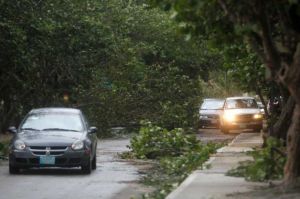 Hurricane Irene, now sweeping up the East Coast, has already led to the deaths of eight people in four states. Three of those deaths occurred in Virginia.
In Newport News, an 11 year old boy died when a tree crashed through his apartment yesterday. In Brunswick County, one man was killed when a tree fell across the car he was a passenger in. A Chesterfield County man died when a tree fell on his house.
After hours of roaring winds and driving rain through southeaster and central Virginia, many, particularly along the coast, are waking up without power….to find damaged homes, fallen trees, and flooding.
About 800,000 homes and businesses are now without power, and officials say it may be several days before they’ll get it back—so thousands are still seeking refuge in shelters,
The storm was fairly slow-moving—at 15 miles per hour—giving it more time to pound Virginia with wind and rain, and as Governor Bob McDonnell says, the broad impact of the storm made it an awesome force even inland.
“In fact, Richmond reported 71 mph gusts at 6:20 p.m. at the airport and that’s roughly 100 miles away form the storm’s center,” he said.
The Governor also points out that 16 inches of rain fell along parts of U.S. 460…. And those heavy rains could cause rivers in the Southeastern part of the state to flood for the next few days or so.
Virginia’s National Guard solders free 10 motorists trapped for hours by downed trees—and by 9 o’clock last night, the Virginia State Police fielded more than 1600 calls for help.
–by Connie Stevens
PolitiFactVirginia.Com: Job Creation
Posted by Virginia Public Radio in Daily Capitol News Updates on August 26, 2011
 Job creation has been the focus of some political back-and-forth in Virginia over the past couple of weeks. So Virginia Public Radio’s Fred Echols called on PolitiFactVirginia.com to put things in perspective.
The Storm Approaches
Posted by Virginia Public Radio in Daily Capitol News Updates on August 26, 2011
 State agencies are closed, many coastal localities have ordered mandatory evacuations, and emergency service personnel have been mobilized—all in preparation for Hurricane Irene. And as Virginia Public Radio’s Tommie McNeil reports, Governor McDonnell anticipates that Irene could be as bad—if not worse—than Hurricane Isabel eight years ago.
Disaster Relief
Posted by Virginia Public Radio in Daily Capitol News Updates on August 24, 2011
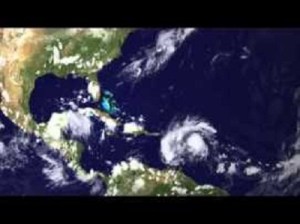 In a week that saw fires in the Great Dismal Swamp, an earthquake originating in Mineral, Virginia, and now an upcoming hurricane which could hit the Commonwealth over the weekend, Governor McDonnell is talking about disasters.
He says in terms of Hurricane Irene, state emergency operations officials will prepare for a worst-case scenario, meaning the storm’s path could track some of the state’s major interstates and significantly damage coastal and low-lying areas. But he says residents, too, need to be prepared.
“Know where the shelters are, look out for their neighbor, have a plan for their pets, stock up on food and batteries and water now, have a generator if they have a significantly electrical… all those common sense things, today, tomorrow, Friday, that’s the time to be doing these things. We’ll do our part. We’ll put out the appropriate but prudent warnings that are necessary depending on the storm track,” he said.
Additionally, the Governor is announcing major donations to the Virginia Disaster Relief Fund, which he established in April to encourage private companies and citizens to give to communities impacted by tornadoes. He also ordered that the fund be made a permanent part of Virginia’s disaster relief tools.
Student Aid & the Middle Class
Posted by Virginia Public Radio in Daily Capitol News Updates on August 24, 2011
 For the first time ever, the largest source of debt for Americans last year was not credit cards, but student loans.
Now a state advisory committee formed by the Governor is working on proposals to make higher education less costly for Virginia students. One method is through student aid and similar programs, which officials worry could be more complicated than it sounds.
The law now requires plans for need-based financial aid for low- and middle-income students. Federal poverty measures define low-income. But the panel said middle class is harder to define—and it plans to propose models that go beyond income to show actual need. They also use factors such as the number of college students or disabled siblings in the family, or whether parents are older. Work-study programs are another form of aid.
Secretary of Education Laura Fornash said research shows these students earn higher grades–but they’re underfunded. “The federal government provides a work-study program and each institution has a certain allocation of those resources. And I think what you heard today was interest from the presidents of the public institutions, and I think the privates would agree, that more resources in that area really is a more meaningful way to help students with their need,” she says.
Some colleges use tuition to fund aid. But lawmakers say their constituents object to that while they struggle to pay tuition—only to see their dollars given to others.
— by Anne Marie Morgan
Aftermath & Aftershocks
Posted by Virginia Public Radio in Virginia's News on August 24, 2011
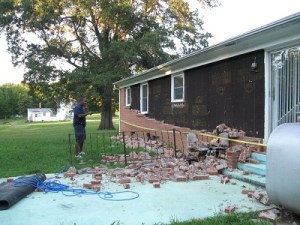 Louisa County was the epicenter of Tuesday’s earthquake, and officials there are now gearing up to assess damage.
As the sun sent in her peaceful, rural neighborhood, Cleolive Cavanaugh sat outside in her Cadillac – contemplating the steering wheel and the shocking experience of an earthquake in Central Virginia. Just before 2 p.m. she was chatting with a girlfriend – making plans for the evening’s church revival:
“I dropped the phone, and you know I just heard all this noise and I went to see what was wrong. Vases, every picture is off the wall. It’s just terrible inside. I saw all of this, oh Lord, have mercy,” she said.
Her prized collections of China and vases were destroyed, and the brick that had covered her tidy home was now in an untidy pile on the ground. Next door, her nephew Ellis Quarrels also saw incredible damage.
“Everything that could fall, fell,” said Ellis.
Police, fire-fighters and emergency medical personnel were busy all afternoon and evening, responding to calls from frightened people. Some thought they were having heart attacks. Others had fallen or suffered head injuries when things fell on them. Even Fire Chief Scott Keim admitted he was caught off guard.
“I was very surprised. When you’re standing up and the floor is moving under you, it’s a surprising event,” said Keim.
–by Sandy Hausman
Colonial Williamsburg Goes High Tech
Posted by Virginia Public Radio in Virginia's News on August 23, 2011

Colonial Williamsburg is turning to some very un-Colonial technology in hopes of engaging a new generation of visitors …..without diminishing Williamsburg’s historic appearance and feel.
It means smart phones and text messages are joining fifes and drums as part of the Williamsburg experience.
Jim Horn, Vice-President of Colonial Williamsburg’s Historical area, says Williamsburg isn’t foresaking its familiar sights and sounds– but attracting more visitors is a continuing challenge. While it drew 450,000 ticketed visitors last year, that’s still about 100,000 less than the year before. ” Kids are wedded to the i-phone. That’s the world as they understand it. By bringing phones here, it makes more sense, connects them more to the period in history,” says Horn.
The Revquest plan began July 15th– and officials acknowledge that while it’s sure to undergo changes in the future, there is little doubt that it reflects a future trend at Williamsburg and other cultural attractions, one that might be considered revolutionary.
— by Evan Jones
.
Earthquake
Posted by Virginia Public Radio in Spotlight on WVTF Public Radio 2011 on August 23, 2011

Louisa County was the epicenter of today’s earthquake. There were no fatalities, but Sandy Hausman reports there were injuries and considerable property damage. As aftershocks continue, officials are trying to figure out who will pay for repairs.
Virginia’s Primaries
Posted by Virginia Public Radio in Daily Capitol News Updates on August 22, 2011
 They may not be at the top of everyone’s to-do list for summer activities, but Virginia primaries for a number of General Assembly and local offices are taking place Tuesday, August 23. This year’s primaries were scheduled later than normal due to redistricting, and as Virginia Public Radio’s Anne Marie Morgan reports, many voters may find they need to familiarize themselves with their new district boundaries.
The Military Industrial Complex at 50
Posted by Virginia Public Radio in Virginia's News on August 22, 2011
 It’s been 50 years since a departing President Eisenhower warned the nation to keep an eye on what he called the Military-Industrial complex.
Next month, Virginia will host a national conference to see whether his predictions were accurate and to explore alternatives to massive spending on war and defense.
As he prepared to leave office, President Eisenhower surprised the nation with a warning. Before the Second World War, he said, this country didn’t have a defense industry – but now, the U.S. was spending more on defense than the net earnings of all American corporations. “In the councils of government, we must guard against the acquisition of unwarranted influence, whether sought or unsought, by the military industrial complex. The potential for the disastrous rise of misplaced power exists and will persist. We must never let the weight of this combination endanger our liberties or democratic processes,” he said in 1961.
Today, some observers think Eisenhower was right – among them author and activist David Swanson, who says he’s willing to wager the U.S. may have surpassed the former war hero’s worst nightmare.
“The military has grown drastically – the privatization and the profitability of the military, the ability to funnel money into congressional campaigns, all of these have put the military in charge of what used to be our congress members,” says Swanson.
Swanson’s helped organize a conference on September 16, 17 and 18 in Charlottesville, called the Military Industrial Complex at 50. Speakers and participants will look at how the defense industry has influenced government and the media, and they’ll explore how resources could be moved from military to social needs.
– by Sandy Hausman
PolitiFact: Education Spending & Federal Taxes
Posted by Virginia Public Radio in PolitiFact Virginia on August 22, 2011
 Our PolitiFact report this week is all about money, specifically Virginia education spending and federal taxes. Fred Echols has the details from Sean Gormon with the Richmond Times-Dispatch and PolitiFactVirginia.com
Funding Unemployment Benefits
Posted by Virginia Public Radio in Daily Capitol News Updates on August 22, 2011
 The cash-strapped federal government had loaned money to the states to help pay for long extensions in unemployment benefits. But it will not waive the interest that states owe … and expects to collect $20 million in interest payments from the Commonwealth. And as Virginia Public Radio’s Tommie
Governor Wants to Create Savings Fund
Posted by Virginia Public Radio in Daily Capitol News Updates on August 19, 2011
 Bond rating agencies are considering reducing Virginia’s AAA status because of its close ties to the U. S. government. Governor McDonnell has proposed creating a Federal Action Contingency Trust fund to help offset some of the potential federal spending cuts to the Commonwealth. The Governor also announced a $544 million budget surplus. And as Virginia Public Radio’s Tommie McNeil reports, he wants to deposit $30 million of that into the new fund.
Possible Overhaul on Timeshare Options
Posted by Virginia Public Radio in Daily Capitol News Updates on August 18, 2011
 It has been nearly three decades since the Virginia General Assembly made major changes to state laws governing timeshares. But in those decades, reports of problems with timeshare arrangements have accumulated. As Virginia Public Radio’s Anne Marie Morgan reports, state lawmakers say it may be time for an overhaul.
Interfaith Group Opposes Uranium Mining
Posted by Virginia Public Radio in Daily Capitol News Updates on August 18, 2011
 Some Virginia lawmakers are poised to introduce legislation that would lift a 30 year ban on uranium mining. But a coalition of anti-uranium mining groups says the risks associated with the practice far outweigh the potential benefits. And as Virginia Public Radio’s Tommie McNeil reports, the coalition has launched a campaign to educate residents of the potential dangers.
Legalities of Tracking
Posted by Chris Henson in Daily Capitol News Updates on August 15, 2011
 State legislators say technological advances and the ways that people use them are developing so rapidly that the laws can’t always keep up. The latest example is how people deploy GPS systems to track other people– frequently without their knowledge. And as Virginia Public Radio’s Anne Marie Morgan reports, the General Assembly’s technology experts are considering a new law that would shorten the list of those who many legally do so.
Editorial Cartoonists Find Humor Despite Cutbacks
Posted by Virginia Public Radio in Virginia's News on August 15, 2011

 Editorial cartoons get people talking, yet fewer newspapers are employing cartoonists full-time because dwindling circulations lead to layoffs. Dutchie Mirolli spoke with two Virginia artists who get their points across, one cartoon at a time.
Phil Hamilton Sentencing
Posted by Virginia Public Radio in Daily Capitol News Updates on August 12, 2011
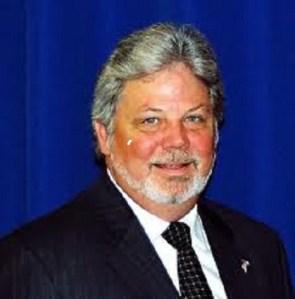 Former Virginia Delegate Phil Hamilton has been sentenced to nine and a half years in federal prison on extortion and bribery convictions—for his role in securing a job at Old Dominion University in exchange for state funding. But during the sentencing, the judge presiding over the case said it’s the most difficult decision he’s ever made. Virginia Public Radio’s Tommie McNeil provides insight on the courtroom proceedings.
PolitiFact: Defense Spending & Medicare RoboCalls
Posted by Virginia Public Radio in PolitiFact Virginia on August 12, 2011
 Democrats and Republicans are sharpening the focus on their favorite issues as negotiators prepare to go back to work on deficit reduction.Warren Fiske with the Richmond Times Dispatch and PolitiFactVirginia.com is keeping busy checking out some of the claims coming from the two camps, as we hear from Fred Echols.
811 Miss Utility
Posted by Virginia Public Radio in Daily Capitol News Updates on August 11, 2011
 The State Corporation Commission is using the date 8-11 to urge residents to dial 811 to contact the state’s “Miss Utility” line before performing ANY digging—as required by state law. As Virginia Public Radio’s Tommie McNeil reports, the SCC says too many incidents arise where an activity as simple as gardening in the backyard has caused major problems within a region.
Veterans Benefits
Posted by Virginia Public Radio in Daily Capitol News Updates on August 10, 2011
 Soon an influx of Iraq and Afghanistan war veterans will return home…and many of them will head to Virginia, with medical injuries and job placement needs. But already bogged down with requests for assistance from vets of wars past, a state Board of Veterans Services is asking the Governor to help beef up staffing and funding to accommodate the new requests. Virginia Public Radio’s Tommie McNeil has more from the State Capitol.
The Value of Banks
Posted by Virginia Public Radio in Virginia's News on August 9, 2011
 It might seem obvious that banks are attracted to wealthy areas, but it turns out, they also help make communities safer and more prosperous. Sandy Hausman reports on why credit unions and banks can pay big neighborhood dividends.
A Lesson in Civics
Posted by Virginia Public Radio in Daily Capitol News Updates on August 9, 2011
 A Newsweek survey earlier this year was merely the latest in a long line of studies indicating that knowledge of U.S. history and government is on the decline among Americans. Here in the Commonwealth, the General Assembly has revived a legislative commission to recommend ways to bolster civics education in the public schools … and as Virginia Public Radio’s Anne Marie Morgan reports, the panel’s goal is to galvanize Social Studies.

Subscribe to our RSS Feed
 From NPR News
- Imran Khan supporters march in Pakistan to demand his release after talks failed
- SCOTUS hears major climate change case. And, Brazil's presidential race goes to runoff
- Nobel medicine prize goes to 3 scientists for research into brain activity
- Former Prince Andrew files legal action to quash warrants that led to residence searches
- Spain's prime minister calls early elections as pressure mounts over housing crisis
- Republicans and Democrats find a unifying target: Pharmacy benefit managers
- Super El Niño is here. What's so super about it?
- From floating saunas to clinical trials: How heat might help mental health
- Supreme Court's new term kicks off with blockbuster climate change case
- Voters are increasingly using AI chatbots to fact-check and compare candidates
- From BBC News
- US removes all bombers from RAF Fairford base
- Andrew takes legal action over search warrants before his arrest
- Spanish PM Sánchez calls early election after housing protests
- Watch: How the eviction of an elderly resident in Madrid led to a snap election
- Average five-year mortgage rate hits 6% for first time in three years
- Flydubai co-pilot planned to crash plane into Tel Aviv airport or building, reports say
- Nobel Prize awarded for showing inner workings of the brain
- Jewish Greens chair says she could leave party over 'Zionism is racism' motion
- Protesters scuffle with police as migrants brought ashore on south coast
- Potty training scheme to roll out to 20 more areas


