Archive for category Virginia’s News
Gangs & Prostitution
Posted by Virginia Public Radio in Virginia's News on April 24, 2012
 Criminal street gangs have reached a new low, targeting children to join their very lucrative underground sex-trafficking trade. Recent charges have been filed and arrests made. But as Virginia Public Radio’s Tommie McNeil reports, officials say they’ve just scratched the surface of a new agonizing war on crime for law enforcement—and a traumatizing truth for families.
Computing for Sustainable Water
Posted by Virginia Public Radio in Virginia's News on April 19, 2012
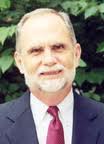
Professor Gerard Learmonth
Scientists know that an excess of nitrogen and phosphorous is damagin the Chesapeake Bay – and they know it’s coming from sewage treatment plants, farms and urban runoff. What they don’t know is how changes in human behavior and climate will impact the bay.
The University of Virginia came up with a computer simulation to answer those questions – but there are so many possible scenarios that it would take decades for the university to crunch all the numbers.
Virginia scientists and engineers would like to forecast the environmental and economic effects of possible changes to agriculture, commerce and industry over the next twenty years for the nation’s largest estuary, the Chesapeake Bay, and IBM says it’s willing to help. The company oversees a network of volunteers in 80 countries around the world – people who lend their computers’ down time for use in solving community problems. Using about 2 million of those PCs, the university hopes to reach conclusions in a single year.
“What we’re trying to do is determine via the simulation model which practices individual persons can adopt that will help reduce the flow of nutrients to the bay, so that we can not only restore the bay but sustain it for future generations,” says Systems Engineering Professor Gerad Learmonth.
He points out the the findings could guide policymakers and the public – assuring that we do the most effective things in the years to come, and he says, this could help about 400 other waterways. The Computing for Sustainable Water Project relies on a mathematical model that simulates the actions of the 16.7 million people living in the Chesapeake Bay watershed. UVA hopes many of them will join the World Community Grid by downloading a free app to their personal computers.
IBM says calculations are done automatically when systems are not in use. The process requires no time from volunteers, resists viruses, uses little additional energy, and does not affect computer speeds.
–Sandy Hausman
Law School Reform
Posted by Virginia Public Radio in Virginia's News on April 19, 2012
 As laws and government regulations get more complicated, you might expect law schools to be adding courses or making students study longer, but one Virginia school is taking a very different approach – doing away with a third year of classes. Sandy Hausman reports on how Washington and Lee is reshaping education for young lawyers – and why.
Cats at UVA Med School
Posted by Virginia Public Radio in Virginia's News on April 12, 2012
 About 40 people rallied at the University of Virginia today to demand that the medical school stop using live cats to teach young physicians and paramedics how to insert a breathing tube into newborn infants.
Dr. Ulka Agarwal stood outside the Rotunda talking with reporters about the campaign mounted by her employer – the Physicians’ Committee for Responsible Medicine. That group says the University of Virginia should adopt state-of-the-art technology to train doctors and first responders who may someday have to help a newborn baby, struggling to breathe.
“They’re using cats to train the residents to treat humans, and you don’t have to be a doctor to know that the anatomy of a cat or kitten is very different from that of a newborn human, and now that there are lifelike simulators that simulate a newborn, there is just no excuse for still using cats and kittens,” said Agarwal.
She was surrounded by about three dozen people who agreed. “I wanted to be there to show my support for the cats who have no voice, who are being mistreated and brutalized at the medical school,” said Stanardsville resident and cat owner Carol Bratton.
From inside UVA’s Rotunda, pediatrician John Kattwinkel told the media that only three cats are involved, and they’re actually an excellent model for learning to intubate infants. He said the university uses two mannequins for preliminary training, but they’re not ideal. “The reflexes are not there, the feeling the tissues is not there, and it’s a tricky task and it has to be done in 30 seconds, and the mannequin certainly is not an adequate model,” said Kattwinkel.
He says most universities had caved to public pressure rather than stand up for the best teaching techniques, and UVA’s staff veterinarian, Sandy Feldman, insisted the three cats used in training – Alley, Kiki and Fiddle — are anesthetized and do not suffer. “The day after they have this, we give them analgesics for pain, and we give them soft food to eat in case their throat is sore, and then this procedure is not done again for almost a year. These are three cats that we take very good care of, and we like to think that they’re helping us take care of innocent children that are in trouble. Some of these people come into this class. When they have to do this to a live animal, they can’t do it. They freeze up because they’re worried they’re going to do harm. Can you afford to have them freeze up when they’re treating an infant that’s in trouble?” asked Feldman.
Feldman added that several inspectors had certified the humane treatment of the animals, which are purchased from a laboratory supply breeder and are retired after ten years of service.“They live in about 440 square feet of space these three cats, which is substantially larger than my office. They have all kinds of toys. We groom them every day and give them treats. We’ve been visited by the state veterinarian, by the Commonwealth Attorney of Albemarle County, the USDA inspector. They all met the cats. They interacted with the cats. They find absolutely no problem. I’ve worked on racetracks and seen a lot of things. I’ve been in the food animal industry. Let me tell you something. This is nice. If I was a cat, this is the program to be in.”
He said 500 people had trained on the cats since they were acquired in 2004, and he asked the public to put this situation in perspective. “What’s more important – three cats that are very well cared for, or your daughters and sons, your grandchildren?” He suggested animal lovers consider the plight of 7 million feral cats in this country – or the 3.5 million shelter animals euthanized each year, and Kattwinkel proposed they help raise money for development of virtual reality training, which would give health care professionals the real feel of inserting a breathing tube and allow for the permanent retirement of training cats.
— Sandy Hausman
Tech Transfer
Posted by Virginia Public Radio in Virginia's News on April 12, 2012
 As federal and state funds for higher education dry up, many universities are putting new emphasis on what’s called Tech Transfer – patenting and licensing the inventions of faculty members. Sandy Hausman reports that these inventions can be profitable, but critics warn there are pitfalls on the way to wealth.
Virginia is for Lovers
Posted by Virginia Public Radio in Virginia's News on March 30, 2012
 Alaska has “Beyond Your Dreams, Within Your Reach.” Indiana has “Restart Your Engines.” Massachusetts has “Make It Yours.”
But the most famous state slogan of all time — indeed, one of the most famous tourism slogans of all time — belongs to us, right here in Virginia.
Rebecca Sheir gives us the inside scoop on “Virginia Is For Lovers,” from the true story of how it was born…. to whether the Commonwealth really does make more people’s hearts go pitter-patter.
Another Candidate Profile: Delegate Bob Marshall
Posted by Virginia Public Radio in Candidate Profiles, Daily Capitol News Updates, Virginia's News on March 30, 2012
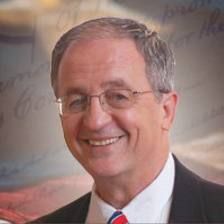
Delegate Bob Marshall has joined the campaign for U.S. Senate much later than his Republican rivals. But as Virginia Public Radio’s Tommie McNeil reports, Marshall believes he has a better chance of beating Kaine than the current front-runner, former Governor George Allen.
Health Care Law
Posted by Virginia Public Radio in Virginia's News on March 27, 2012
 Virginia lawmakers are watching as the Supreme Court takes up the health care law this week. Democrats passed the law, and Republicans despise it and are resting their political fortunes on overturning it. Matt Laslo reports on what the region’s lawmakers are looking for from the high court.
Eagle Cam
Posted by Virginia Public Radio in Virginia's News on March 22, 2012
 Thousands of people worldwide are watching two newly hatched bald eagles in a Richmond nest. The camera’s presence reflects the eagles’ dramatic recovery in Virginia. . .and as Evan Jones reports, it hopes to document the resulting challenges the resurgent population presents to each other.
FlamencoFest 2012
Posted by Virginia Public Radio in Virginia's News on March 15, 2012

Lovers of Spanish culture are in for a double treat this month – Flamenco Fest begins March 23rd, and this weekend, horse lovers will find flamenco in the ring, as one of Spain’s premiere horsemen demonstrates an amazing style of riding. Sandy Hausman has details.
Virginia Tech: After the Verdict
Posted by Virginia Public Radio in Virginia's News on March 15, 2012
 Virginia Tech says it may appeal a jury’s decision that found the university contributed to the deaths of two students in the April 16, 2007 shootings. After an 8-day trial, the jury awarded the families who sued $8 million in damages. But even if there are no appeals, there’s a good chance that award would not hold up, as we hear from Joe Staniunas.
Made in Virginia
Posted by Virginia Public Radio in Virginia's News on March 8, 2012
 Professors and administrators are getting ready for a big powwow near Petersbug Friday, March 9. President Obama will be there to show off a state partnership with Rolls Royce – the kind of collaboration that brings new money for research and new opportunities for students. Sandy Hausman has details:
Horses Helping Asthma
Posted by Virginia Public Radio in Virginia's News on March 6, 2012
 Many medical studies involve laboratory animals, but when it comes to research on asthma, no creature provides a better model than the horse. Veterinarians at Virginia Tech are hoping to help humans who struggle to breathe.
That’s because horses are subject to a condition called equine heaves.
“They’re about the only animal that has a very similar condition to human asthma. They’ll have this disease once they’ve been diagnosed for life, and human asthmatics struggle with that too. If it’s not well managed, your airway is more inclined to constrict and constrict further. That’s true both in human asthma and in horses,” says Professor Virginia Buechner-Maxwell.
And she should know. She sees hundreds of horses each year at Virginia Tech’s large animal clinic. A fairly small number of horses have this condition in the mountains of Virginia – maybe 5% — but it’s often triggered by mold and is more common as you head north. In Europe, up to half of all horses develop heaves. They’re treated with the same drugs used in people, but when doing research, horses are far easier to study.
“When I have one of my horses in a study, I’m going to put them in a stall, and we’ll have this regime for them every day, and I know that’s going to happen. You have a human in the study, the medication they’re given — they might take it differently, they might forget it one day. They might go out and take a hike in an area where there’s lots of pollen, when they’re not really supposed to be doing that. With the horses we have a lot more control,” she says.
She says research on equines is safer for people. “There are things like tuberculosis or HIV – I’m susceptible to those. When I work with horses, that susceptibility is minimal if it exists at all.”
Finally, it may be easier to deal with the USDA when conducting animal research than to tangle with the FDA for human clinical trials. Dr. Maxwell hopes her research on the causes and treatments of recurrent airway obstruction in horses will also benefit people.
–Sandy Hausman
Virginia’s Voter ID Legislation
Posted by Virginia Public Radio in Virginia's News on March 1, 2012
 A controversial voter I-D law just passed the Virginia state Senate by one vote and it’s turning heads in the nation’s capital. Matt Laslo reports from Washington on how the law could impact this year’s elections if it’s eventually signed into law.
Living Wage Hunger Strike
Posted by Virginia Public Radio in Virginia's News on February 27, 2012
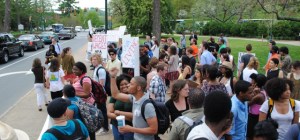 The University of Virginia’s president met with several students Monday, Feb. 27th, on the 10th day of a hunger strike – demanding higher wages for the lowest paid employees at UVA. The protestors say it takes $13 an hour to support a family of four in Charlottesville, but some contract workers are getting less than $8 an hour. Sandy Hausman has more on that story.
Virginia Lawmakers Weigh in on Federal Budget
Posted by Virginia Public Radio in Virginia's News on February 21, 2012
 President Obama’s newly released budget includes many sweeteners for Virginia lawmakers but also some pain pills for the state. Matt Laslo has this overview of the budget from Washington.
Mercury Paper: Part 3 of 3
Posted by Virginia Public Radio in Virginia's News on February 16, 2012
 Virginia’s Governor and Lieutenant Governor are crusading for a surprising cause – writing letters to retail chains, asking them to keep buying toilet paper and paper towels from a Virginia company accused of turning rainforest trees into cheap paper products. Sandy Hausman reports on why this controversy may concern Republican politicians.
Mercury Paper: Part 2 of 3
Posted by Virginia Public Radio in Virginia's News on February 15, 2012
 One of the fastest growing paper companies in the nation is here in Virginia, in Strasburg, along I-81, but two environmental groups are urging customers not to buy from Mercury Paper, because its raw materials come from a Chinese firm that’s cutting down rainforest. Sandy Hausman reports on who’s buying that claim, and how Mercury Paper is fighting back.
Mercury Paper: Part 1 of 3
Posted by Virginia Public Radio in Virginia's News on February 14, 2012
 The World Wildlife Fund issued a surprising plea last week, asking consumers to take care when buying toilet paper. The organization says a Virginia firm and its sister company are destroying rainforest to make a cheap paper products, as Sandy Hausman reports.
The Loving Story
Posted by Virginia Public Radio in Virginia's News on February 13, 2012
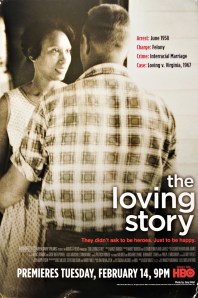 For Valentine’s Day, HBO will show a new film about a Virginia couple who broke the law by getting married. Sandy Hausman reports on their case and why it made history.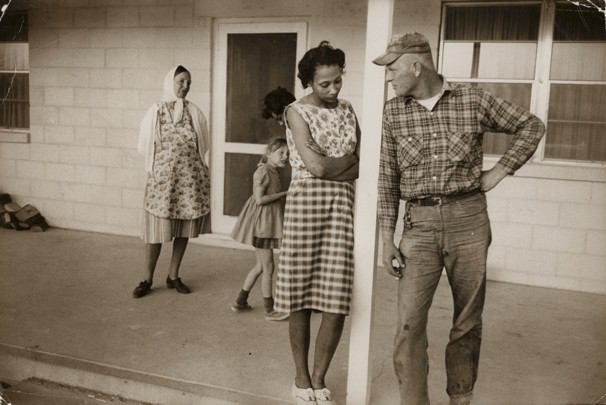
DNA Proves Wrongful Conviction
Posted by Virginia Public Radio in Virginia's News on February 12, 2012
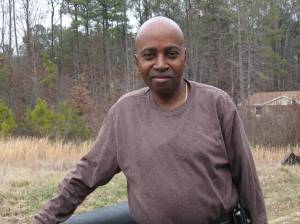
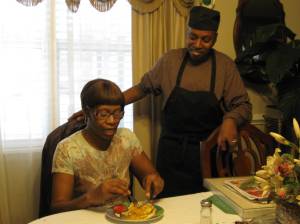 In 2005, when DNA analysis had become a routine part of criminal investigation, the state’s crime lab announced it had evidence in hundreds of cases that had never been tested. Governor Mark Warner ordered a spot check of 15 cases. In two of them, someone who had been convicted was found to be innocent, so Warner said all of the samples gathered between 1973 and 1988 should be reviewed. Today, lawyers with the Innocence Project say it’s not clear how many tests have been done, how many people have been cleared and whether they’ve been notified. Sandy Hausman has more on that story.
The Marshall Expedition (originally aired April 12, 2012)
Posted by Virginia Public Radio in Spotlight on WVTF Public Radio 2012, Virginia's News on February 12, 2012
 This year marks the 200th anniversary of the Marshall Expedition, an important event in the history of Virginia commerce.
Andrew Shaw and his six-man crew from Lynchburg are setting out to re-trace the expedition in a flat bottomed boat, called a batteau. They worked together to build the 43-foot wooden boat that will carry them up nearly 360 miles of waterway. They’ll travel up the James River from Richmond, through the Allegheny Mountains, and downriver to the Great Falls of the Kanawha in West Virginia.
They’re backed by a National Geographic Young Explorer’s Grant, which Shaw says allows them to retrace Chief Justice John Marshall’s 1812 expedition– a little-known river survey that proved essential to Virginia’s economic growth.
Roger Nelson, President of the Virginia Canals and Navigations Society, says the survey was done in support of George Washington’s plan for westward expansion. “That was his vision, to build this canal system that linked the Eastern Seaboard with the Mississippi River Valley. He could envision the riches that lay out there,” says Nelson.
John Marshall and his crew of about a dozen commissioners journeyed up the James River and through the mountains to see if this canal system could actually be completed. They made their month-long voyage with a boat designed just for the task– a batteau. Poling the boat up and down the river, the crew essentially transformed the Piedmont from a rough frontier to a thriving agricultural region.
Today’s crew will primarily use the tools of Marshall’s time, spending much of their journey upstream, through rocks, swift water and rapids. To follow the progress of the Mary Marshall and her crew, you can check out their blog at vacanals.org/marshall.
–by Kelley Libby
George Huguely: CharlottesvilleTrial Logistics
Posted by Virginia Public Radio in Virginia's News on February 5, 2012
 Jury selection began Monday, February 6th in the trial of George Huguely, the University of Virginia lacrosse player who’s accused of killing his girlfriend, Yeardley Love.
Charlottesville’s communications director, Ric Barrick, knew there would be big interest in this case when a preliminary hearing brought nine satellite trucks to town. He says 17 are now expected along with 150-175 reporters:
“Part of that crowd will include NBC, CBS and ABC, the Morning Show, 20/20, Dateline, several court TV shows as well as ESPN,” said Barrick, and aknoweldges there isn’t enough room for all those reporters, family and friends of the defendant and his alleged victim:
“It’s a relatively small courtroom, and the defense and the prosecution have asked for at least three rows, which leaves us with about 20-30 media and about 50 public seats.”
The city has set-up a satellite feed to a nearby building, where reporters and members of the public can watch the case on TV. Aside from that feed, no cameras will be allowed in the courtroom, and reporters will not be allowed to take cell phones or audio recorders inside. Planners will also try to shield the defendant from view as he enters the courtroom on day one.
Outside, Barrick says, traffic is likely to be a problem with reporters, lawyers, police, sheriff’s deputies, and the public converging on courthouse square.
All of this is contained in a 15-page media plan issued by the city after consulting with Chesapeake, where the DC sniper Lee Malvo was tried in 2003. When this trial ends, Barrick says, Charlottesville will be happy to share its media plan with other cities facing high profile trials.
–Sandy Hausman
Decline of the Death Penalty
Posted by Virginia Public Radio in Virginia's News on January 30, 2012
 Capital punishment remains popular in some political circles, but the use of the death penalty in this country is in decline. Sandy Hausman reports on why more prosecutors are asking for life without parole.
Legal Aid & House Bill 100
Posted by Virginia Public Radio in Virginia's News on January 29, 2012
 Each year, thousands of people who can’t afford a lawyer turn to Legal Aid for help. Some are trying to collect child support. Others are desperate to save their homes or keep abusive spouses away. Legal Aid, offers free or low cost assistance, but its funding is now in serious doubt.
For one Virginia woman, who asked us to conceal her identity, the last few years have been a nightmare. She separated from an abusive husband who divorced her and demanded joint custody of their 13-year-old daughter. To protect the child, she says, she turned to the courts.
“I had used some attorneys the year before, and it cost me like $3,000 for two small little court appearances, and they wiped me out of everything I had saved. I had been middle class, owned my own businesses and everything, and I married this man, and he ruined my credit. He ruined everything,” she said.
Unable to find a private lawyer who would take her case without charge, she went to legal aid to keep her x-husband from having unsupervised visits and to get child support. Now, her attorney may be laid off, because legal aid – like so many of its clients – has fallen on hard times. Its revenues from various sources have dropped by more than $6 million a year since the recession hit.
“At the same time the funding’s been going down, the poverty population in Virginia has increased by over 30%,” says David Beidler, General Counsel for the Legal Aid Society of Roanoke Valley. He says 120 lawyers work for legal aid in Virginia, but without help from Richmond, many will lose their jobs.
“The poor are going to be trying to resolve their problems by going through the courts without attorneys. What that is going to do is place a very heavy burden on the courts as these people sort of wallow through the procedural mischief that one who’s not trained is going to encounter,” says Beidler. That’s why he’s asking the state to require that lawyers use special accounts that generate interest which has, historically, paid legal aid.
“The trust accounts themselves are bank accounts that lawyers put their clients’ money in, usually, for a very short period of time. For example, during the sale of a home, the funds for the sale go into an account for maybe a day or two days, and then they’re dispersed out, but when you do this day in and day out over the course of a year, it potentially generates a huge amount of interest.”
Virginia is one of only a few states that does not require so-called IOLTA accounts, but if House Bill 100 is approved by the legislature, Beidler says, that could provide enough cash to give the poor a shot at justice equal to that of those who can afford private lawyers.
–Sandy Hausman
Bill Seeks Justice for Wrongly Convicted Juveniles
Posted by Virginia Public Radio in Virginia's News on January 18, 2012
 Lawmakers in Richmond will consider hundreds of bills over the next several weeks, including one of special concern to a Mineral, Virginia man who’s been in legal limbo since he was 15. He was wrongly convicted of a crime but is still being punished for it.
Edgar Coker’s nightmare began in 2008, when he agreed to hang out with a young woman he had known since childhood.
“And the mom came home, and Edgar was in the kitchen having a snack, and the mom went upstairs, and her daughter didn’t have a shirt on, was angry and said, “What has happened here? And she immediately said, ‘He raped me. ‘ ”
Deirdre Enright is with the Innocence Project in Charlottesville. She blames Edgar’s lawyer for giving him bad advice:
“The lawyer encouraged him to plead guilty, said that he would be certified as an adult and sent to an adult correctional center almost immediately, and the family pled guilty to a juvenile offense to avoid the possibility of him being in prison.”
Eventually, the alleged victim admitted she was not raped but that she feared getting in trouble with her mom. But Matthew Engel, Legal Director of the Innocence Project, says it was too late.
“Any new evidence of innocence has to be brought to the court’s attention within 21 days of the final judgment. Edgar was adjudicated delinquent in September, and the young woman came forward in November.”
After 17 months, the boy was freed from a juvenile jail, but when he tried to clear his name, the Stafford County Court said it did not have jurisdiction, and the matter was moot since Edgar Coker was no longer behind bars. Matt Engel disagreed:
“He has to register annually with the state police. He has to submit a DNA sample, he has to be photographed every two years. His name, picture, address, a map to his home are all posted on the sex offender registry website. Just a couple of months ago Edgar went back to a football game at his alma mater and the deputy who was present recognized him from the sex offender registry and arrested him, and he spent five hours in jail until his mother was able to bail him out, because he was a sex offender on school grounds.”
He made that case before Virginia’s Supreme Court and is now awaiting a decision. In the mean time, he and others at the Innocence Project are pushing for passage of a bill that would change state law so juveniles who pled guilty to crimes they did not actually commit could later establish their innocence.
-by Sandy Hausman
NASA’s Past & Future in Virginia
Posted by Virginia Public Radio in Virginia's News on January 17, 2012
 When you think of NASA and space travel, you probably think of Cape Canaveral or Houston. While those may be the most iconic representations of the Space Agency, one Virginia facility is part of NASA’s past and future.
When the Space Shuttle program came to an end last year, many wondered just how NASA planned to go on. The fact is that NASA has been working on it for years.
Called the Orion Multipurpose Crew Vehicle or MPCV, this next generation spacecraft will enable America to explore beyond low earth orbit for the first time in more than 40 years.
NASA Langley in Hampton is a major contributor to the project.
“Once Orion decided to do water landings, they had to find a facility that could do water landings to simulate the same kind of landing commission. The only way you can simulate is by swinging, swinging and dropping the test article to get the right loads into the astronauts spines or any impact type of scenario you want to get the right loading into the vehicle, in this case it’s the Orion spacecraft.”
That’s Lynn Bowman, project manager for the Orion SPLASH Project
“It stands for Structurally Passive Landing Attenuation for Survivability of Human Crew.”
We will stick with SPLASH. It turns out NASA Langley has something very special. It’s the place where the Apollo astronauts trained, called:
“The gantry, it’s whole purpose in the beginning was all about landing on the moon, and that’s why the gantry was built. And it also turns out it’s a unique facility, it’s a national historic landmark, and the gantry is the only facility in the world that can do these kinds of swings and drops. There’s a lot of facilities out there that do vertical drop testing, and vertical drop testing, we can do that here too, but if you want to get the right loads onto your vehicle your structure, you’ve got to swing it and drop it.”
So last year, NASA Langley built , or better yet, dug the Hydro Impact Basin, a 115 feet long, 90 feet-wide and 20 feet-deep pool next to the gantry where, today, engineers are going to swing and drop a scale model of the MCPV. It is one of many tests required to certify Orion for water landings, as gantry technician Troy Merrifield explains:
“The first was proof of concept that we could actually swing it and hit the target that we needed to hit. Now we’re into actual good data-gathering mode. There’s a hundred- something channels of data on that, everything from accelerometers to string gauges, checking to see how the materials pull apart and compress and pressure transducers that are measuring how hard it’s hitting the water.”
The capsule hits hard, but remains upright. Before Merryfield goes to help recover the vehicle, he is reminded of the gantry’s legacy.
“It really is neat when you tell people why this was built and they go ‘huh?’ ” And then you take them inside the building and you show them the pictures of Neil Armstrong doing the different things and standing in the different places you can walk around. I’m a history buff. It’s like, man, this is really neat. So now I’m working here, don’t get much cooler. The only way it would be cooler is if I were an astronaut.”
NASA Langley must now prepare for another round of testing at the Basin using the next generation of the Orion capsule, what’s called the ground test article. It is currently being built by Lockheed Martin and will arrive in Virginia in 2013.
-by Sondra Woodward
Homeless Veterans
Posted by Virginia Public Radio in Virginia's News on December 30, 2011
Thousands of Iraq and Afghanistan war veterans are returning home –many of them coming back to Virginia, hoping for a fresh start, or to simply pick up where they left off. Unfortunately, not only might they have a tough time finding employment because of the economy, but they may also face many other issues like dealing with post- traumatic stress disorder, reconnecting with family, and in many instances not having a place to call home.
Already, there are an estimated 900 homeless veterans scattered throughout Virginia and that number could be greatly underestimated as are not registered within the veteran’s services system. Most of them are Vietnam era vets like Keith, he’s withheld his last name, who served in the Marines for three years, worked as a Richmond police officer for two decades, but now finds himself starting over, and panhandling not far from the state capitol. His story is complex, but he says it is NOT related to a mental health issue like Post Traumatic Stress Disorder—but for these returning vets—it’s something lawmakers will have to look into:
“Because it’s only going to get worse when the kids come back from Iraq and Afghanistan. They will have P.T.S.D. They will have family domestic problems-which might put them out on the street. It’s only going to get worse,” he says.
Keith accepts some blame for HIS situation but says it’s been compounded by systematic redundancies. Secretary of Veterans Affairs and Homeland Security Terrie Suit says that and mental health issues are being addressed. Suit says another challenge is finding the vets like Keith, helping them obtain proper identification, getting them back into the system, and determining what their needs are and why they became homeless to begin with.
–Tommie McNeil
Congressional Year Ender
Posted by Virginia Public Radio in Virginia's News on December 29, 2011
 Congress broke a record this year, but hitting the lowest approval rating of all time isn’t what the region’s lawmakers had hoped to accomplish. Correspondent Matt Laslo talked with the Virginia congressional delegation and has a look back at this year’s wild ride in Washington.
Habitat for Humanity
Posted by Virginia Public Radio in Virginia's News on December 27, 2011
 It was 35 years ago, when an organization called Habitat for Humanity introduced the world to a new model for housing low-income families. People willing to donate their own labor could get interest-free mortgages, materials and assistance from skilled volunteers in building their own homes. So far, the group has helped build or repair more than half a million houses, but with the nation facing a serious shortage of affordable places to live, the organization is stepping up its game. Sandy Hausman reports on a new approach being tested in Virginia.
Earthquake Early Warning System?
Posted by Virginia Public Radio in Virginia's News on December 14, 2011
 Earlier this year, Virginia was surprised by an earthquake. There was no warning, because scientists haven’t figured out how to predict quakes, but a professor of physics at the University of Virginia had a hunch that could lead to an early warning system. Sandy Hausman reports on how we might know when an earthquake is about to happen.
Financial Impact of Defense Cutbacks in Virginia
Posted by Virginia Public Radio in Virginia's News on December 13, 2011
 With the failure of the congressional super committee to find more than one trillion dollars in budget cuts, deep spending reductions are slated to fall on the Defense budget, which could disproportionately impact Virginia.
More than half a trillion dollars is now slated to get cut from the Pentagon’s budget – that’s on top of a previous agreement to trim its budget by $450 billion dollars. Virginia Beach Republican Congressman Scott Riggell says that would be a terrible day for national security and the state of Virginia.
“That amount triggered from one day to the next, you know it just pivots. It goes from one level to the next in one day, the reduction. I think that would be, what I’d would refer to as I refer to as a violent course correction for the Department of Defense,” said Riggell.
Experts say the cuts are unlikely to fall on the tens of thousands of troops stationed in Virginia, but contractors who contribute a lot to the state’s economy could take a big hit. Northern Virginia Democratic Congressman Jim Moran says the budget cuts currently written into law would hit Virginia harder than any other region of the nation.
“We don’t build weapon systems but we do the things that make our military the smartest in the world with information technology, cyber security, battlefield simulation, all the research and development, most of it is anchored in Northern Virginia,” said Moran.
Cutting half a trillion dollars from the Pentagon’s budget isn’t something Virginia lawmakers want to see, even those Republicans who ran on trimming the federal debt. Critics say that’s hypocrisy, but many in the GOP, such as Chesapeake Congressman Randy Forbes, opposed the compromise measure that set up the super committee. He says automatic cuts to the Pentagon’s budget should never have been a part of the mix.
The president has threatened to veto any attempt to blunt the budget cuts. Virginia Democratic Senator Mark Warner agrees, even though he knows the cuts will be painful for Virginians. “But the notion that we would somehow remove the consequences of failing to start taking down our debt is just unacceptable,” said Warner.
Analysts think the budget cuts would fall hardest on Northern Virginia’s economy, but the south may face a different problem. Defense Secretary Leon Panetta recently announced he wants to move four ballistic missile ships to Europe to provide a shield against a potential nuclear attack.
Congressman Forbes, who is the Chairman of the House Armed Services Readiness Subcommittee, fears three of those could be sent from the naval base at Norfolk. “Those destroyers we didn’t give the Navy any additional money for assets, so at least three of those destroyers, very likely could come out of Virginia to be land based over there,” says Forbes.
The potential combination of moving those ships and slicing hundreds of billions of dollars from the Pentagon’s budget has the state’s lawmakers looking for alternatives but also, oddly enough, looking to partisan gridlock as a sign of hope. If the law isn’t changed the steep budget cuts will start hitting the state in 2013.
In the mean time Virginia’s lawmakers in Washington are working to unwind or redirect those cuts.
— Matt Laslo
Update From Virginia Tech
Posted by Virginia Public Radio in Virginia's News on December 9, 2011
 Police say they’ll likely continue their investigation into the weekend – attempting to identify a motive in the murder of a campus police officer at Virginia Tech. They’ve confirmed that the shooter took his own life, about thirty minutes after killing Officer Deriek Crouse. Sandy Hausman reports on what we know so far about Thursday’s tragedy.
George Allen, Candidate for U.S. Senate
Posted by Virginia Public Radio in Candidate Profiles, Virginia's News on December 9, 2011
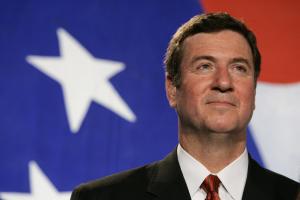
Four Republicans are competing to win the nomination in next week’s primary and run for the seat of retiring U.S. Senator Jim Webb. One of the GOP contenders is also a former Delegate, Congressman, and Senator …who is vying for the seat that he narrowly lost to Webb six years ago. In the first segment of our series on these candidates, Virginia Public Radio’s Anne Marie Morgan reports on the former Governor in the GOP race: George Allen.
Tim Kaine, Candidate for U.S. Senate
Posted by Virginia Public Radio in Candidate Profiles, Virginia's News on December 7, 2011
 From our original series introducing the Senate candidates, Virginia Public Radio’s Anne Marie Morgan reports on a former Democratic governor who is now asking voters to hire him at the federal level. He’s the lone democratic nominee for the position.
Meet Jamie Radtke, Candidate for Senate
Posted by Virginia Public Radio in Candidate Profiles, Virginia's News on December 5, 2011
 In this installment of our special series to introduce Senate candidates, Virginia Public Radio’s Anne Marie Morgan reports on Jamie Radtke, the Chesterfield County resident who is the Republican woman in this field of contenders.
Meet Julien Modica, Candidate for Senate
Posted by Virginia Public Radio in Virginia's News on December 2, 2011
 Our series on Virginia’s U.S. Senate candidates takes us to Julien Modica, a businessman who has faced many challenges in life. But Modica says he has overcome them, and they’ve made him the Democrat he is today. Virginia Public Radio’s Tommie McNeil reports on the candidate who filed a lawsuit so he could debate the two frontrunners, George Allen and Tim Kaine.
Meet Tim Donner, Candidate for Senate
Posted by Virginia Public Radio in Virginia's News on December 1, 2011
 One criticism about the news media is that it is liberal and opposed to conservative values. Those who believe that have not met Tim Donner, the next U.S. Senate candidate featured in our series. The conservative worked for many years as a broadcaster, owned a video production company, and served in a public policy organization. And as Virginia Public Radio’s Tommie McNeil reports, Donner says he is qualified and anxious to go to Washington as Virginia’s next U.S Senator.
Meet David McCormick, Candidate for Senate
Posted by Virginia Public Radio in Virginia's News on November 30, 2011
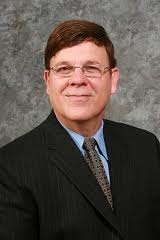 Each day that you listen to our series on the eight Virginia Democrats and Republicans who are vying for the U.S. Senate, you’ll hear a lot of discussion about changing the dynamic in Washington. Today’s candidate, David McCormick, is no exception. But as Virginia Public Radio’s Tommie McNeil reports, he has his own approach to accomplishing that.
Meet E.W.Jackson, Candidate for Senate
Posted by Virginia Public Radio in Candidate Profiles, Virginia's News on November 29, 2011
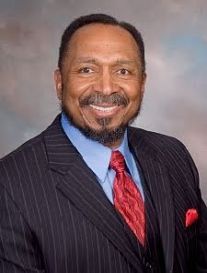 In our original series on the Senate candidates, the GOP candidate featured here says there is one topic that is not being discussed openly—and that’s spiritual leadership. As Virginia Public Radio’s Tommie McNeil reports, it’s something E.W. Jackson says will get the country back on track.
Meet Courtney Lynch, Candidate for Senate
Posted by Virginia Public Radio in Virginia's News on November 28, 2011
 Former GOP Governor George Allen is fighting to regain the U.S. Senate seat he lost five years ago to retiring Senator Jim Webb. Another former Governor, Democrat Tim Kaine, is also vying for the seat —and many pundits believe it’s going to be a photo finish between the two men. But six other partisan candidates stand in their way and believe they also have a right to be considered worthy opponents. In this first part of a new series focusing on ALL of these candidates, Virginia Public Radio’s Tommie McNeil begins with a Democratic woman who’d like to win her party’s nomination.
World AIDS Day 2011: Virginia Update
Posted by Virginia Public Radio in Virginia's News on November 28, 2011
 Today is World AIDS Day, and clinics around the state are offering free tests – hoping to slow the spread of the virus. More than 21,000 people in the Commonwealth are believed to be infected. Sandy Hausman reports that experts here are especially worried about teens — who rarely know their HIV status but may well be sexually active.
Power Sole
Posted by Virginia Public Radio in Virginia's News on November 27, 2011
 A University of Virginia freshman is $10,000 richer, after taking second place in a campus contest that promotes innovation.
As a volunteer in rural Peru, Joseph Linzon saw a problem. Residents needed electricity for cell phones, laptops and iPods, but they didn’t have a ready source of power. As he traveled through remote villages on foot, the idea came to him.
“As you walk you produce energy – kinetic energy, and I was thinking, “How can I convert this kinetic energy, that’s created with the swinging of a foot and charge a battery?” And that’s what an inductive coil mechanism does. It’s similar to a shake to charge flashlight.”
Back in Virginia, Linzon put a small battery and inductive coil into the sole of a gym shoe and showed it to a panel of judges at the university’s annual Entrepreneurship Cup.
“It’s completely embedded within the shoe. The user wouldn’t have access to this battery. The only way they would have access to it is through a USB port. I took a shoe, I shook it, and I charged my iPhone,” explains Linzon.
He’s now awaiting a patent and plans to use his prize to develop a prototype and pay legal fees. He calls his invention the Power Sole – with the slogan, “empowering the powerless, one step at a time.”
— Sandy Hausman
Virginia Makes Movies: Part 1
Posted by Virginia Public Radio in Virginia's News on November 21, 2011
 The lights are on and the cameras rolling in Richmond, where Steven Spielberg is shooting a film about Lincoln. Virginia taxpayers are co-producers on the movie, having given Hollywood $3.5 million in cash and excused the filmmakers from paying some sales and hotel taxes. Sandy Hausman has more on that story.
USS Cole Families Unite
Posted by Virginia Public Radio in Virginia's News on November 10, 2011
 The alleged mastermind of the USS Cole bombing was arraigned Wednesday in Guantanamo Bay, Cuba. In Norfolk, family members of the 17 sailors watched on a closed-circuit feed– as for the first time, Abd Al Nashiri spoke before the military tribunals. More from Virginia Public Radio’s Jessica Stone.
The Hats of Montpelier
Posted by Virginia Public Radio in Virginia's News on November 8, 2011
 About 18,000 people turned out over the weekend for the nation’s premiere steeplechase – a race run annually at James Madison’s Montpelier. The 77th Annual Hunt Club Races featured a new competition this year – one that had nothing to do with horses.
You might think a horse race is about horses, but for millions of women, it’s all about the hat, and this year the organizers of the Montpelier Hunt Races acknowledged that with a hat competition. About 50 women entered, and the winner went home with a gift certificate worth $500.
Meanwhile, three vendors sold hundreds of hats in tents near the track – among them Diana Francis, who makes custom hats at her studio in Lexington. “My inspiration sometimes comes in the middle of the night, and I know it sounds crazy, but I’m up at 1 or 2 o’clock in the morning because I realize that’s just the special treatment a hat needs,” says Francis.
Feathers, fur, flowers and ribbons are always in vogue, but Francis says today’s hats can flexible. “It used to be that hats would be sprayed and made to be very stiff, whereas today they’re much softer, so that you can actually play with a hat and give it the kind of shape that you would like one day and do something different the next. It’s very much a mood thing, wearing a hat.”
Jacki Gill of Ruther Glen agrees, and her wide brimmed pink hat, sprouting feathers, expressed her enchantment with the chapeau. “I don’t know. They feel festive, and you feel fancy when you put them on. You’re just a step above yourself regularly,” she said.
Loraine McConnell, an Orange County Milliner, says this is the heart of hat country. “I think Virginia probably has the most number of steeplechase races and also, the most vineyards on the east coast, with wine festivals, so we have a lot of opportunities to wear hats,”said McConnell.
Her shop, Sequoia Springs, boasts hats are good for your health. “It’s good for our skin, anti-aging, skin cancer are two of the medical reasons that are promoting the fashion.”
— Sandy Hausman
Collateral Calamity
Posted by Virginia Public Radio in Virginia's News on October 20, 2011
 The city of Harrisburg recently made headlines when it declared bankruptcy, but the capital of Pennsylvania was not the first municipality to face serious financial problems this year. Here in Virginia, one community nearly lost its police station and city hall when it failed to keep up with its bills. Sandy Hausman has that story.
Posted by Virginia Public Radio in Virginia's News on October 12, 2011
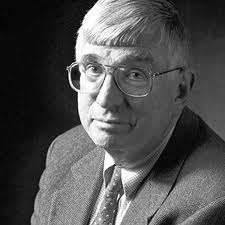 He was a graduate of Harvard Law School, a Rhodes Scholar, and President of the University of Virginia before beginning two decades of work in defense of the First Amendment.
Now, Bob O’Neil has retired, and Charlottesville is planning a unique event to say thanks. Bob O’Neil grew up in Cambridge, Massachusetts, the son of a faculty member at Harvard. He got undergraduate and law degrees there, before taking academic jobs in California, Ohio, Indiana, Wisconsin and the University of Virginia, where he served as president.
His assistant, Sandy Gillem, remembers the day O’Neil was officially selected. “There’s a secret organization at the university called the Society of the Purple Shadows. It’s a benevolent group. They will appear at some gathering, dressed in purple robes with a mask or a veil, and they will extend silently whatever it is they’re bringing, and I remember the day that the board elected Bob O’Neil as president. Bob was in the middle of his remarks when the shadows appeared, and what they were doing was bringing him a letter welcoming him to the university, but I can remember the expression on their faces for the rest of my life. They had never lived in the South before, and they thought, My Lord! The Klan has arrived!”
The O’Neils soon discovered that Charlottesville was a civilized place, and Bob made friends quickly. “He could be reserved. Karen, his wife, on the other hand, could talk to a stone wall, so they were an awfully good pair. They entertained constantly.”
After five years in office, O’Neil stepped down to start the Thomas Jefferson Center for the Protection of Free Expression, a group that would offer assistance to people fighting legal battles on First Amendment grounds. His second in command was Josh Wheeler, a UVA Law School graduate who had studied under O’Neil.
“After I’d been working at the center for a while, I created a little game for myself that I called ‘Stump the Bob,’ and the purpose of the game was to find a First Amendment case that he did not know about, and I would work it into the conversation. I gave up after about six months, because not only did he always know the case, he went on to tell me additional facts about the case that were not reported that he somehow knew about,” said Wheeler.
O’Neil was also generous. Wheeler says he rarely turned down a request to speak, and John Whitehead, who founded another not-for-profit to protect civil liberties said his counterpart was happy to share expertise. “He clerked for William Brennan on the Supreme Court, so he understands how the Supreme Court thinks, and what was good about Bob, when I’d call and say, ‘Can you help me with this?’ I’d get an e-mail back. I knew Bob was going to do his best to help.”
But after 20 years at the center, O’Neil was ready to retire. Colleagues at the Jefferson Center, the University of Virginia Law School and the Virginia Coalition for Open Government thought this a very good time to pay tribute to O’Neil, with a reception and dinner hosted by comedian Chris Bliss, and at least one VIP seated at every table. The guest list includes broadcasters Ken Rudin, Ann Compton and Bob Edwards, writers Rita Mae Brown and Rita Dove, actress Sissy Spacek , two former governors of the state and many more. Tickets are now on sale for the tribute to Bob O’Neil, set for October 29th at the University of Virginia Law School.
-by Sandy Hausman
What Killed Kevin?
Posted by Virginia Public Radio in Virginia's News on October 5, 2011
 More than a year after the suicide of an editor at the Virginia Quarterly Review raised questions about workplace bullying, a New York filmmaker is wrapping up production of a documentary about the subject.
The film explores the issues of workplace bullying based on what happened in Charlottesville.
Beverly Peterson’s film begins at the place where Kevin Morrisey’s body was found shortly after he called 911. The film then turns to media coverage of Morrisey’s suicide.
Peterson spoke several times with Morrisey’s boss ,Ted Genoways, and with Genoways’ wife.
“Kevin’s mood could be dark for days at a time in ways that weren’t always visible to the rest of the staff. We did so much for Kevin, but it was never enough. I wish we could have done more, but he’s not the person they describe. He wasn’t weak and bullied.”
The film also introduces us to Morrissey’s sister, who said her brother was depressed and that their family was dysfunctional. But after learning others were unhappy at the Virginia Quarterly Review, she points an accusing finger at the magazine’s parent, the University of Virginia.
“I hear this dramatic story of my brother being bullied, of everyone down there asking for help and not getting any help, of them telling people that they were afraid Kevin was suicidal,” says his sister. “No one was helping Kevin. Why?”
The university’s president ordered an investigation that absolved Ted Genoways in the death of Kevin Morrisey. Filmmaker Peterson thinks the media was too quick to lay blame and relied too heavily on an advocacy group called the Workplace Bullying Institute, which quickly adopted Kevin Morrisey as a poster child.
Peterson admits she got interested in this subject years before the Morrisey case when she was the victim of a workplace bully. Now she’s using her website, ourbullypulpit.com, to fight back by promoting a national discussion of workplace bullies and legislation proposed to stop them. The first three parts of her documentary, What Really Killed Kevin Morrisey, are there and she’ll post three more during Freedom From Workplace Bullying Week in mid October.
— Sandy Hausman
Behind the Budget
Posted by Virginia Public Radio in Virginia's News on October 5, 2011
 Although the McDonnell administration is very cautious about predicting how well the Commonwealth is rebounding during the recession, it has also been touting the recent $545 million budget surplus.
But a left-leaning think tank suggests that state officials are giving Virginians a false sense of security and are not disclosing a “hidden deficit” that’s looming next year.
The Commonwealth Institute’s Michael Cassidy finds fault with using the term “budget surplus.” He says it does not mean the state is flush with cash. Instead, it means that that the Governor and lawmakers used creative accounting and cut education funding, textbooks, school buses, and guidance counselors. Furthermore, while some news accounts suggest that they were “stacking the deck,” he doesn’t think that’s the real story here.
“Well the real issue that’s facing the Governor and the General Assembly is when they go to write next year’s budget.”
That’s because the Institute’s recent study examines how the fiscal picture will look next year, and it is not good.
“By our estimates, we’re facing an $800 million shortfall in the next state budget, based on where revenues are coming in, and based on needs for public services. That’s just assuming we just continue all the cuts we made in the recession we still are going to be $800 million short.”
Cassidy says the cause is the state’s “cuts only” approach and reliance on the Federal Recovery Act, which helped offset cuts to services. But he adds that Congress has no appetite to renew that funding without raising revenues, and more programs and jobs will need to be cut.
“I mean, just look at the numbers, since 2008. Virginia has lost over six-thousand state and local employees. That’s made this recession a lot worse, cause that, that’s a drag on whatever job creation numbers are being produced in other sectors of the economy.”
But Secretary of Finance Ric Brown counters that there’s no “hidden deficit,” and the focus should not be on terminology. He says he’s worked for eleven governors and when revenues exceeded estimates, it was called a “surplus,” If it did not, it was called a “shortfall.” Brown also says the numbers speak for themselves.
“Our forecast is growth at this stage of the game for both 12, 13, 14, not negative, it’s a different ball game than what we’ve had before. That doesn’t mean that we’re going to be able to fund everything that everybody wants and there won’t be tight spots, but that is the budget process.”
Brown does agree with Cassidy that Virginia relied on federal funds, but state officials account for that in future budget planning.
“And all those policy issues are going to be weighed against how much resources do you have to spend, so it’s matter of prioritizing items. At the end of the day, it’s going to be balanced, but it’s not unusual at this stage of the game when you look at agency requests and you look at everything on the table to say, ‘Add up all those pieces,’ and then say ‘Boy that exceeds revenue!’ ”
Brown says no administration wants cuts and job losses, but when asked if the state could survive without higher taxes, he said “Yes”.
“We still have opportunities out there in the way we deliver services to streamline them. I don’t know that big businesses run programs with continuous improvement and cost cutting. They learn how to do that on a routine basis and a recurring basis in order to stay in business. Governments are no different.”
Brown was also asked if the state found another half-billion dollars if some should be used to restore previous cuts. He said the funds should be invested in “one-time spending,” such as construction projects but not for operational spending because that only buys time for items that may still need to be reduced.
-by Tommie McNeil
-
You are currently browsing the archives for the Virginia’s News category.

Subscribe to our RSS Feed
 From NPR News
- Troops stand by to enter Minnesota. And, Trump plans for a Board of Peace
- Morning news brief
- Martin Luther King III, Martin Luther King Jr.'s son, reflects on his father's legacy
- Martin Luther King Jr. would be inspired by today's activism, author says
- The 2026 Olympics are the most widespread in history. See what's happening where
- U.S. lawmakers wrap reassurance tour in Denmark as tensions around Greenland grow
- Trump has rolled out many of the Project 2025 policies he once claimed ignorance about
- Can exercise and anti-inflammatories fend off aging? A study aims to find out
- At least 39 dead in Spain train collision as rescuers search for more bodies
- In Los Angeles, Iranian-Americans march against government crackdown in Iran
- From BBC News
- What we know about Spain's worst rail disaster in more than a decade
- 'Credit-score company encouraged me to borrow again when I was nearly debt-free'
- Teachers in Scotland on supply list for years or leaving country due to job shortages
- 'Shameful' and 'terrible look' - the chaos that marred Senegal's Afcon triumph
- US believes its power matters more than international law, UN chief tells BBC
- Man seriously injured in Sydney's third shark attack in two days
- I lost my identity after horrific crash, says Team GB cyclist
- How crypto criminals stole $700 million from people - often using age-old tricks
- Why the US is buying icebreakers from Finland
- I'm allergic to cold - anything below 12C and I break out in hives


 Virginia Public Radio