Virginia Public Radio

This user hasn't shared any biographical information
30 Day Utility Reprieve for Some
Posted in Daily Capitol News Updates on October 23, 2011
 These days it’s not particularly shocking to hear that someone has fallen on hard times, especially if the primary bread-winner is ill. But the State Corporation Commission is advising residents of a new law that could give a number of those who are struggling a little extra time to make ends meet.
State Corporation Commission spokesman Ken Schrad says utilities were allowed to cut the source of heat, water, and essential appliances 10 days after a notice was sent, although some did grant exceptions. The new state law establishes a 30-day exception—but only for people with a serious medical condition who can prove it.
“Keep in mind, they still owe the electric company or the water company, and there’s still a threat of service being cut off. It’s just a matter of getting additional time before that final act occurs. Under the rule adopted by the commission, a customer can only use this provision twice in any 12-month period. So basically you have two opportunities to take advantage of this rule over the course of one year,” says Shrad.
— Tommie McNeil
Politics on PolitiFact
Posted in PolitiFact Virginia on October 21, 2011
 Virginia House Minority Leader Ward Armstrong is running for re-election this year against another incumbent, Republican Charles Poindexter. That’s because the GOP targeted Armstrong when it redrew the legislative map, moving his southwest Virginia district to the DC suburbs. Armstrong has caught the eye of Politifact Virginia this week, as Fred Echols reports
.
Teacher Retirement Plans
Posted in Daily Capitol News Updates on October 21, 2011
 The Board of Trustees of the Virginia Retirement System has once again set the level of funding that it estimates will be needed to pay into the state pension fund.
Virginia Education Association members say as the General Assembly crunches VRS numbers, it will seek ways to cut costs—and sometimes that’s been on the backs of teachers who’ve already made sacrifices. Bea Moss and other retirees say discussion of teachers paying into a 401k-type plan is unacceptable, especially given stock market downturns.
“We earn low wages for those with our level education. There’s no profit sharing, no stock purchase plan, but we are promised some dignity in retirement. The time has come to stop short changing VRS and to honor the commitment of those who have given their commitment to the students of this Commonwealth,” says Moss.
Some say another key issue is that defined benefit plans are documented to be an important tool to attract and retain a quality public sector workforce —and public employees oppose switching to defined contribution plans.
— Tommie McNeil
Collateral Calamity
Posted in Virginia's News on October 20, 2011
 The city of Harrisburg recently made headlines when it declared bankruptcy, but the capital of Pennsylvania was not the first municipality to face serious financial problems this year. Here in Virginia, one community nearly lost its police station and city hall when it failed to keep up with its bills. Sandy Hausman has that story.
Energy Conference
Posted in Daily Capitol News Updates on October 20, 2011
 The state’s second annual conference on energy has wrapped up, as Governor McDonnell promotes more diverse energy sources for the Commonwealth
The Governor’s Senior Advisor on Energy, Maureen Matsen, says three very different energy company leaders— Dominion Resources’ Tom Farrell, Duke Energy’s Jim Rogers, and NRG’s David Crane—provided distinct insights. Some think the leading emerging technology may be either solar panels or electric cars, but they all agreed that the state can not move forward without traditional energy.
“I think that all three of them agreed that nuclear is a critical component of our base energy assets. That’s efficient base load that we’re going to need for the future. That coal is certainly is still a large part of what we do–we can’t keep the lights on without it. And natural gas–it was interesting–Jim Rogers isn’t sure that it’s a game changer, but others are quite sure that it’s a game changer,” said Matsen.
Dominion, the state’s largest energy provider, is diversifying its resources—but says all forms of energy will be needed to keep up with surging demand. Matsen adds that state leaders are working to make Virginia the East Coast leader in wind energy—and consulting with other countries to ensure that coastal wind power is more efficient than other projects nationwide.
Overhauling Leave Time
Posted in Daily Capitol News Updates on October 19, 2011
 State employees have accumulated hundreds of millions of dollars in unused leave and Virginia policymakers say the potential unfunded liability is enormous. That’s because many state workers can cash out their unused vacation and sick days when they retire and that number is expected to surge as Baby Boomers leave the workforce.
Efforts are underway to overhaul the 60-year-old system. In addition to vacation and sick leave, there are now more than 20 time-off alternatives, including community service and family illness. But Human Resources Management Director Sara Wilson said the complex rules vary among workers. “Whether it was tenure-based, look at the different ways we provide leave. It’s credited, accrued, earned—the different categories. And some you can carry over, some you can’t, some have a leave year, some have a fiscal year, some have a rolling calendar year,” says Wilson.
Wilson led a study of potential changes to make the system more simple and flexible. They include freezing old leave balances, capping paid time-off, and combining classifications into all-purpose leave that would be used or lost. Delegate Joe May said that merits more study. His own informal survey suggested that some abuse sick leave. “I concluded that if you were over 50 and married, you were five times healthier than if you were under 30 and single,” says May.
Lawmakers have not yet endorsed any plan but agree there must be reforms.
–Anne Marie Morgan
Cancer Treatment
Posted in Daily Capitol News Updates on October 18, 2011
 Concern over patient access to certain chemotherapy drugs has prompted the Joint Commission on Health Care to research costs and cancer treatment trends in the Commonwealth. The commission has found a disparity in insurance coverage … and is weighing whether a new mandate might be necessary.
With more than 30,000 cancer cases diagnosed in Virginia each year, treatment regimens may include oral or intravenously administered chemotherapy, or both. But Delegate Chris Peace said a constituent told him about an unexpected problem.
“His wife had been offered IV treatment and then ultimately the oral chemotherapy treatment. She developed a tremendous rash and other complications from the IV medications. There were some considerable benefits to the oral. What they found was that the oral was much more expensive because the coverage was different,” explained Peace.
One study found that average out-of-pocket expenses for oral chemotherapy drugs were more than $2900 per month. And one in six cancer patients with high out-of-pocket costs fails to take the medicine as prescribed. The commission’s report said one reason for the disparity is that many insurers count IV treatments as a medical benefit and oral drugs as a pharmacy benefit. The panel said legislation requiring parity may be an option.
–Anne Marie Morgan
Small Business Summit
Posted in Daily Capitol News Updates on October 17, 2011
 While large corporations are more than welcome to set up shop in Virginia, Governor McDonnell told a gathering of small business leaders that they are not being overlooked, especially since they provide the majority of jobs within the Commonwealth and the U.S.
But he also said at the first Governor’s Small Business Summit that the legislature cannot do it alone. He’s asking these business leaders to devise plans and innovative ways to become world-class local and global competitors.
The Governor said the state wants to cultivate a positive environment where businesses can prosper, expand, and hire Virginians. He also expressed how he feels about the “Occupy Wall Street” protests around the state and country.
“It’s sort of disappointing to see some people that have points to make and are free to make them, but camping out in the parks and protesting against business. Well, that’s what creates jobs. And I want people in Virginia to know that we’re pleased with our businesses coming here and investing and creating opportunities.”
McDonnell said that while Washington may not be listening to the needs of the people, Virginia lawmakers are, and he believes the entrepreneurs who head smaller businesses in Virginia are the same type of visionaries who created Microsoft and Apple. He believes that the thousands of U.S. regulations are preventing those companies from expanding. Although the Governor supports the creation of higher paying technology jobs, he would like to see a resurgence of manufacturing jobs here.
-by Tommie McNeil
Politifact: Transportation Funding, Jobs to China
Posted in PolitiFact Virginia on October 17, 2011
This week Politifact Virginia tests Governor McDonnell on another transportation funding promise and finds out whether a GOP State Senate candidate is really responsible for sending Virginia jobs to China. Fred Echols reports.
Wage Gap
Posted in Daily Capitol News Updates on October 17, 2011
 This week, the Commonwealth Institute for Fiscal Analysis released a report that reveals a wage gap between Virginia’s top and lowest earners. It stressed that the top tier of earners experienced more wage growth recently than the lowest tier in the past 30 years. But the study also defines clear trends and suggests what could be done to address them.
The Institute’s Michael Cassidy says several factors lead to the disparity, including job sectors. Areas such as accommodations, tourism, and food service still pay much less than others that do not require a college degree. “We’ve also seen a real decimation of the middle income jobs in our economy. So, sectors like construction and manufacturing have seen among the highest employment losses since the recession,” says Cassidy.
And he says while those with at least bachelors degrees often see higher wage gains than those without, it’s not the only factor.
“Just having more folks in the economy with a college degree doesn’t necessarily mean that there are going to be jobs there for them. Here in Virginia we’ve seen that in the recent years, that has certainly been the case.” Cassidy says policymakers must find ways to promote workforce training in sectors that are growing, such as healthcare. But he says state officials also must discover ways to boost demand for products and services that businesses provide–to make hiring and higher wages possible.
–Tommie McNeil
Posted in Virginia's News on October 12, 2011
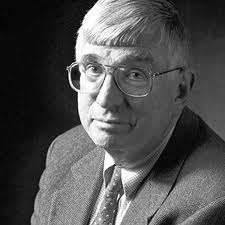 He was a graduate of Harvard Law School, a Rhodes Scholar, and President of the University of Virginia before beginning two decades of work in defense of the First Amendment.
Now, Bob O’Neil has retired, and Charlottesville is planning a unique event to say thanks. Bob O’Neil grew up in Cambridge, Massachusetts, the son of a faculty member at Harvard. He got undergraduate and law degrees there, before taking academic jobs in California, Ohio, Indiana, Wisconsin and the University of Virginia, where he served as president.
His assistant, Sandy Gillem, remembers the day O’Neil was officially selected. “There’s a secret organization at the university called the Society of the Purple Shadows. It’s a benevolent group. They will appear at some gathering, dressed in purple robes with a mask or a veil, and they will extend silently whatever it is they’re bringing, and I remember the day that the board elected Bob O’Neil as president. Bob was in the middle of his remarks when the shadows appeared, and what they were doing was bringing him a letter welcoming him to the university, but I can remember the expression on their faces for the rest of my life. They had never lived in the South before, and they thought, My Lord! The Klan has arrived!”
The O’Neils soon discovered that Charlottesville was a civilized place, and Bob made friends quickly. “He could be reserved. Karen, his wife, on the other hand, could talk to a stone wall, so they were an awfully good pair. They entertained constantly.”
After five years in office, O’Neil stepped down to start the Thomas Jefferson Center for the Protection of Free Expression, a group that would offer assistance to people fighting legal battles on First Amendment grounds. His second in command was Josh Wheeler, a UVA Law School graduate who had studied under O’Neil.
“After I’d been working at the center for a while, I created a little game for myself that I called ‘Stump the Bob,’ and the purpose of the game was to find a First Amendment case that he did not know about, and I would work it into the conversation. I gave up after about six months, because not only did he always know the case, he went on to tell me additional facts about the case that were not reported that he somehow knew about,” said Wheeler.
O’Neil was also generous. Wheeler says he rarely turned down a request to speak, and John Whitehead, who founded another not-for-profit to protect civil liberties said his counterpart was happy to share expertise. “He clerked for William Brennan on the Supreme Court, so he understands how the Supreme Court thinks, and what was good about Bob, when I’d call and say, ‘Can you help me with this?’ I’d get an e-mail back. I knew Bob was going to do his best to help.”
But after 20 years at the center, O’Neil was ready to retire. Colleagues at the Jefferson Center, the University of Virginia Law School and the Virginia Coalition for Open Government thought this a very good time to pay tribute to O’Neil, with a reception and dinner hosted by comedian Chris Bliss, and at least one VIP seated at every table. The guest list includes broadcasters Ken Rudin, Ann Compton and Bob Edwards, writers Rita Mae Brown and Rita Dove, actress Sissy Spacek , two former governors of the state and many more. Tickets are now on sale for the tribute to Bob O’Neil, set for October 29th at the University of Virginia Law School.
-by Sandy Hausman
JLARC Medicaid Review
Posted in Daily Capitol News Updates on October 12, 2011
 With Virginia set to add another 400,0000 Medicaid recipients in a few years due to a federal mandate, the General Assembly asked its investigative agency to find out why the program has been making millions of dollars in improper payments. The Joint Legislative Audit and Review Commission found that most of the mistakes seem to originate in local social services agencies.
Medicaid is the largest program in the state budget, and it often grows by double digits each cycle… making mistakes costly. The improper payments could be provider or recipient fraud, errors, or intentional abuse. JLARC Project Leader Ashley Colvin said 20% of Medicaid cases had errors. “Some improper payments were prevented through pre-payment reviews, fraud resulted in few improper payments, and the most costly improper payments appear to result from agency errors made during the process of enrolling recipients.”
Colvin said the mistakes’ budget impact may be enormous. “The greatest financial risk to the state comes from eligibility errors made by local departments of social services. But our analysis of federal data indicate that improper payments are estimated to have occurred in a range from $18 million to $263 million in federal fiscal year 2009.”
According to Colvin, the dollar range was wide since some recipients may have been eligible, but the paperwork could not prove it. Better training of caseworkers and replacing outdated software were two JLARC proposals to mitigate errors.
— Anne Marie Morgan
Statewide Medical Database
Posted in Daily Capitol News Updates on October 11, 2011
 The availability, costs, and practices of medical care vary significantly across Virginia, so a legislative subcommittee is examining whether a database that aggregates statewide information could help improve the state’s health care delivery system.
Twelve states have all-payer claims databases, which gather medical, pharmacy, and dental claims from private and public payers, including insurers and Medicaid. Delegate —and Doctor— John O’Bannon chairs the Health Care panel that’s exploring the idea.
“The whole goal of this is to begin to measure things across various systems, tests, or procedures across providers to see if we can get begin to get a handle on some of the things that are driving up the costs of care—but more importantly, to focus on the quality side to make care better,” says Dr. O’Bannon.
O’Bannon said the data could answer many questions, such as which diagnostic tests are used, outcomes of different treatments, which providers cost more, who uses emergency rooms, or how clinical guidelines are met. He envisions that everyone, including communities and businesses, could use the data. He says to protect privacy, names would not be collected.
–Anne Marie Morgan
Brothers
Posted in Daily Capitol News Updates on October 7, 2011
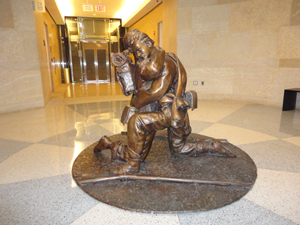 There’s a lesson to be learned for those who say that Virginia is still fighting the Civil War. It comes straight from the halls of the State Capitol—which was once the Confederate capital—to mark the War’s sesquicentennial. The bronze statue is called “Brothers” …and it symbolizes how amidst opposing views and divisive issues, it’s how they’re resolved that makes the nation great.
The life-sized statue depicts two brothers: the older Confederate—poor, weathered, and battled-torn—and the younger Yankee—recently recruited and supplied. On a field of battle, they have set aside their arms and fallen to their knees embracing. One faces the sky as if thanking his Maker for the chance to make amends.
“After the Civil War was finished, Southerners began to organize into camps–United Confederate Veterans and they would establish camps in different cities. Likewise, the Union Veterans would associated together in Grand Army of the Republic posts that began dawning the landscape. And what I can’t help but notice, is that by the 1890’s when Civil War veterans were holding various reunions, they began to invite their counterparts to the same reunions,” says State Capitol Historian Mark Greenough.
The statue is the work of nationally recognized sculptor Gary Casteel … but was donated by an anonymous Virginian.
–Tommie McNeil
Regulations on Timeshares
Posted in Daily Capitol News Updates on October 6, 2011
 People seem to either love or hate timeshares—and although some say their timeshares have paid for themselves many times over, others find the costly maintenance fees or unfulfilled promises of amenities burdensome. A large number of Virginians have tried to unload their properties but found that they could not.
At first, Delegate John Cosgrove thought of legislation to allow owners to divest themselves of their timeshares, but the state constitution forbids it. So now he’s trying a new approach to help those with problems. “Basically, there are some really unscrupulous groups out there saying, ‘We’ll sell your timeshares, send us 500-bucks,’ and you never hear from them again. Luckily, I haven’t fallen victim to that scam, but a lot of people have.”
His proposed bill does not solve all problems entirely. “But what it does do–it looks forward so that when people sell timeshares they must disclose on a separate piece of paper in larger print that you can’t buy a timeshare as an investment—that resale is very difficult. That once you buy it, it’s for your personal use and, you’re pretty much stuck with it,” says Cosgrove.
It also requires companies that resell timeshare weeks to comply with stronger regulations to do business in Virginia, including describing their costs and consumer benefits. But those who feel cheated will still have to take a timeshare developer to court, and Cosgrove says there have been many such lawsuits in Virginia.
–Tommie McNeil
Virginia General Assembly Elections
Posted in Daily Capitol News Updates on October 5, 2011

With the election only a month away, the campaigns for all 140 House of Delegates and Virginia Senate seats have kicked into high gear. Dozens of seats are uncontested, but the stakes are especially high in one chamber of the General Assembly.
A number of long-time incumbents are defending their seats. But the Senate is more competitive than the House, with the two major parties vying for control. State Election Services Assistant Manager Matt Abell says the Senate has only 14 uncontested seats. “That leaves 26 contested races of the 40. Twenty-four of the 26 are contested between the major parties—the Republican and Democratic candidates.”
The House has only 37 contested seats, with 27 between the major parties. The rest have Independents, Libertarians, or Independent Greens on the ballot. But Abell says the number of competitive House races has recently declined. “In 2007, there were 59 uncontested House of Delegate races. That dropped to 32 in 2009. And now in 2011, we’re up to 63 uncontested races,” he says.
Virginia will also hold local elections, including those for constitutional officers, supervisors, and school boards.
–Anne Marie Morgan
What Killed Kevin?
Posted in Virginia's News on October 5, 2011
 More than a year after the suicide of an editor at the Virginia Quarterly Review raised questions about workplace bullying, a New York filmmaker is wrapping up production of a documentary about the subject.
The film explores the issues of workplace bullying based on what happened in Charlottesville.
Beverly Peterson’s film begins at the place where Kevin Morrisey’s body was found shortly after he called 911. The film then turns to media coverage of Morrisey’s suicide.
Peterson spoke several times with Morrisey’s boss ,Ted Genoways, and with Genoways’ wife.
“Kevin’s mood could be dark for days at a time in ways that weren’t always visible to the rest of the staff. We did so much for Kevin, but it was never enough. I wish we could have done more, but he’s not the person they describe. He wasn’t weak and bullied.”
The film also introduces us to Morrissey’s sister, who said her brother was depressed and that their family was dysfunctional. But after learning others were unhappy at the Virginia Quarterly Review, she points an accusing finger at the magazine’s parent, the University of Virginia.
“I hear this dramatic story of my brother being bullied, of everyone down there asking for help and not getting any help, of them telling people that they were afraid Kevin was suicidal,” says his sister. “No one was helping Kevin. Why?”
The university’s president ordered an investigation that absolved Ted Genoways in the death of Kevin Morrisey. Filmmaker Peterson thinks the media was too quick to lay blame and relied too heavily on an advocacy group called the Workplace Bullying Institute, which quickly adopted Kevin Morrisey as a poster child.
Peterson admits she got interested in this subject years before the Morrisey case when she was the victim of a workplace bully. Now she’s using her website, ourbullypulpit.com, to fight back by promoting a national discussion of workplace bullies and legislation proposed to stop them. The first three parts of her documentary, What Really Killed Kevin Morrisey, are there and she’ll post three more during Freedom From Workplace Bullying Week in mid October.
— Sandy Hausman
Behind the Budget
Posted in Virginia's News on October 5, 2011
 Although the McDonnell administration is very cautious about predicting how well the Commonwealth is rebounding during the recession, it has also been touting the recent $545 million budget surplus.
But a left-leaning think tank suggests that state officials are giving Virginians a false sense of security and are not disclosing a “hidden deficit” that’s looming next year.
The Commonwealth Institute’s Michael Cassidy finds fault with using the term “budget surplus.” He says it does not mean the state is flush with cash. Instead, it means that that the Governor and lawmakers used creative accounting and cut education funding, textbooks, school buses, and guidance counselors. Furthermore, while some news accounts suggest that they were “stacking the deck,” he doesn’t think that’s the real story here.
“Well the real issue that’s facing the Governor and the General Assembly is when they go to write next year’s budget.”
That’s because the Institute’s recent study examines how the fiscal picture will look next year, and it is not good.
“By our estimates, we’re facing an $800 million shortfall in the next state budget, based on where revenues are coming in, and based on needs for public services. That’s just assuming we just continue all the cuts we made in the recession we still are going to be $800 million short.”
Cassidy says the cause is the state’s “cuts only” approach and reliance on the Federal Recovery Act, which helped offset cuts to services. But he adds that Congress has no appetite to renew that funding without raising revenues, and more programs and jobs will need to be cut.
“I mean, just look at the numbers, since 2008. Virginia has lost over six-thousand state and local employees. That’s made this recession a lot worse, cause that, that’s a drag on whatever job creation numbers are being produced in other sectors of the economy.”
But Secretary of Finance Ric Brown counters that there’s no “hidden deficit,” and the focus should not be on terminology. He says he’s worked for eleven governors and when revenues exceeded estimates, it was called a “surplus,” If it did not, it was called a “shortfall.” Brown also says the numbers speak for themselves.
“Our forecast is growth at this stage of the game for both 12, 13, 14, not negative, it’s a different ball game than what we’ve had before. That doesn’t mean that we’re going to be able to fund everything that everybody wants and there won’t be tight spots, but that is the budget process.”
Brown does agree with Cassidy that Virginia relied on federal funds, but state officials account for that in future budget planning.
“And all those policy issues are going to be weighed against how much resources do you have to spend, so it’s matter of prioritizing items. At the end of the day, it’s going to be balanced, but it’s not unusual at this stage of the game when you look at agency requests and you look at everything on the table to say, ‘Add up all those pieces,’ and then say ‘Boy that exceeds revenue!’ ”
Brown says no administration wants cuts and job losses, but when asked if the state could survive without higher taxes, he said “Yes”.
“We still have opportunities out there in the way we deliver services to streamline them. I don’t know that big businesses run programs with continuous improvement and cost cutting. They learn how to do that on a routine basis and a recurring basis in order to stay in business. Governments are no different.”
Brown was also asked if the state found another half-billion dollars if some should be used to restore previous cuts. He said the funds should be invested in “one-time spending,” such as construction projects but not for operational spending because that only buys time for items that may still need to be reduced.
-by Tommie McNeil
Insurance Shopping
Posted in Daily Capitol News Updates on October 5, 2011
 Many consumers don’t know this, but the State Corporation Commission has very extensive shoppers’ guides on buying various types of insurance.
Given the ease of shopping via the Internet, the SCC says it is imperative to know the best practices.
Surprisingly, the SCC lists the top 50 insurance carriers statewide. Although there are a handful of well-known insurers, many more exist, including some that do not have great reputations and offer bargains that turn out not to be so good. The SCC’s Rick Wright says his agency recommends that consumers shop their insurance periodically, even if they’re satisfied.
“What we recommend though is that insurance, when you’re shopping for insurance, you start out with an apples to apples quote. Have your own policy in hand and make sure that whoever you’re dealing with is quoting the same coverage that you’ve got on your existing policy,” says Wright. “And that way, you’ve got a fair measure to go by whether or not you’re getting a better deal or not.”
But Wright says a cheaper deal is not a better deal if consumers do not get equal or better coverage. He says one essential part of auto insurance is the maximum liability coverage paid to each person in a vehicle if you are at fault. The person who’s liable must pay for everything that the insurer does not pay, which can cause financial ruin due to one fender bender. Wright also suggests shopping for umbrella policies that extend the automotive coverage; they are typically less expensive than traditional ones.
-by Tommie McNeil
Flyball Combines Agility & Speed
Posted in Spotlight on WVTF Public Radio 2011 on October 5, 2011
 Thousands of Virginians own dogs and many owners are looking for ways to get some exercise and forge a tighter bond with their pup. Beverly Amsler reports on one way to do both.
Making Virginia Law Easier to Understand
Posted in Daily Capitol News Updates on October 4, 2011
 A project that’s a hobby of a Virginia Web developer will soon be made public. It will enable citizens who are not attorneys to find and understand the Commonwealth’s laws.
The goal is to make statutes that appear to be perplexing more interesting and user-friendly.
The Website is the brainchild of Waldo Jaquith, the Web Developer for the University of Virginia’s Miller Center. Jaquith wants citizens to be able to access and comprehend state laws free of charge whenever they need to do so. He told the Virginia Code Commission, which works to update state laws, that the Commonwealth’s current Website is confusing. Jaquith said the laws are more useful when cross-referenced with context.
“I want to take the state Code to connect it with Court decisions, Attorney General opinions, scholarly publications, bills that have been or currently are before the General Assembly that propose to modify the state Code, Legal Aid Societies, legal self-help guides, you name it. Iif we can tie it back to the Code I want to do it in one place on one Website.”
The site also refers to each law’s history and will be automatically updated. It is in the final testing phase and will soon be officially rolled out. Jaquith has received a grant from the John S. and James L. Knight Foundation to develop similar sites for other states.
-by Anne Marie Morgan
PolitiFact Virginia: Soup’s On
Posted in PolitiFact Virginia on September 30, 2011
 In this week’s PolitiFact Virginia segment, taxes on soup kitchens and gimmicks that balance the budget come under scrutiny. Fred Echols reports.
Wetlands at Sweet Briar College
Posted in Virginia's News on September 29, 2011
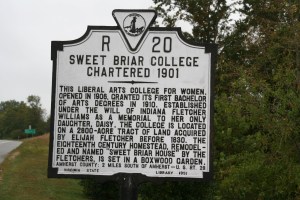 Striking a balance between development and preserving our environment has always been a challenge. Scientists warn that many of our ways of making a living have a profound impact on nature. There are some folks hard at work devising ways to meet that challenge.
It turns out that the 3000 acre Sweet Briar College campus, once a plantation, is a veritable laboratory of old wetlands, ingeniously diverted underground by settlers more than 200 years ago through a network of clay pipes so that the land above them could be farmed. It’s just one example of how we have frequently thwarted nature, says naturalist-in-residence, Mike Hayslett.
“We have a long history in our country and in our culture of regarding wetlands as an impediment to our progress, whether it’s the initial history of agriculture, it being an impediment to growing the food that we need or an impediment to our perception of progress and the need to change the landscape and other industrial uses and what have you. So we have two centuries or more of approaching wetlands as something that are best moved out of the way and replaced with something else.”
Hayslett is now in the process of locating and dismantling the extensive piping under Sweet Briar’s grounds and restoring the native wetlands. He is not only using his science students , replacing the slave labor that originally installed the pipes, but he is also holding workshops and seminars for professionals who are designing wetlands restoration projects nationwide. Participants in his Swamp School just wrapped up five days of trekking through fields and forests in and around Sweet Briar observing the work he has done so far.
So why is all this important? Marc Seelinger of the Raleigh Swamp School explains. “Easiest example is to take a look at what happened after the hurricane the past couple weeks. The lack of wetlands gave the water no place to go, so just from a flood control standpoint we’ve had massive floodings because the water has no place to be stored. The secondary thing that will happen from that is that there is also a water pollution control feature. Wetlands clean up the water, wetlands are kind of like the country’s kidneys.”
Wetlands are a buffer Seelinger says, and they are the only way to maintain a diversity of living things in our world. Mike Hayslett notes that his restored ponds are proof of the adage that “if you build it, they will come.” Long dormant seeds and terrestrial critters have found their way back to the water where they are once again propagating in great numbers.
Hayslett says his proudest achievement is the partnership he forged with the Boxley Company some ten years ago. Based in Roanoke, Boxley has plants throughout Virginia and West Virginia that supply aggregate, block and concrete for road building and commercial and residential projects. They have given him free rein to relocate wetlands around their quarry near Sweet Briar that might eventually be encroached upon.
“The mission is to be environmental stewards and we had this opportunity to work with Mike to enhance what we have here at Piney River and we jumped at the opportunity.” That’s Jack McCarthy, a Boxley Superintendent, and he says that though their environmental efforts have involved some expense, he is proud that his company has become a recognized and well publicized prototype for such partnerships. Mike Hayslett notes that there is another advantage to this cooperation. “There is a whole system, a legal and financial system, that restoration of wetlands can yield financial credits. It means dollars in the bank to restore wetland habitats.”
Though there have been laws in place since the 1980s mandating the replacement of wetlands invaded by development, cuts in the budgets of federal and state agencies overseeing them have resulted in limited enforcement. So now more than ever, wetlands enthusiasts say they hope that an understanding of good citizenship will lead to the valuing of natural habitats in lieu of destroying them.
-by Libby Fitzgerald
Errors in Unemployment Benefits
Posted in Daily Capitol News Updates on September 29, 2011
 At least 17.6% of Virginia’s unemployment benefits during the last three years were paid in error. That’s according to the U.S. Labor Department … which has targeted the Commonwealth and a handful of other states for special monitoring in an effort to decrease the rate of mistakes. 85% of the overpayments were caused by three errors.
The 3-year total of overpayments was $434-million. 11% of claimants collected benefits after going back to work. 12% were paid before notice was received that their work separation made them ineligible. 62% were paid even though it could not be validated that they met work-search requirements.
Attorney General Ken Cuccinnelli said his office will be advising the Employment Commission about the problem. But he adds that employers had to pay higher taxes to the state trust fund after it was depleted last year. “ We do have businesses that are strained. They’re struggling to keep on the black side of the ledger versus the red side of the ledger. And if we can keep their tax rate from rate from artificially rising—improperly rising—we’ll leave them with more assets to grow, to invest, and to create more jobs,” said Cuccinnelli.
The state budget had to include funds this year to repay interest on federal loans given to keep paying jobless benefits. The state does try to recover improper payments, but it’s now required to submit a strategic plan and be monitored until the error rate falls below 10%.
–Anne Marie Morgan
Inmate Rehabilitation
Posted in Daily Capitol News Updates on September 29, 2011
 One of the key strategies in incarcerating criminals is rehabilitating them while they’re in prison so that they can become more productive citizens upon their release. However, statistics show that many re-offend … and say they returned to their former lives because they can’t reintegrate into society. But a state Prisoner Re-Entry Policy group led by the Secretary of Public Safety says it will propose a plan that could help reduce those recidivism rates.
Chief Deputy Superintendent at the Virginia Department of Correctional Education Drew Malloy says many proposals will not only make prisoners useful upon release, but while they’re in prison. One of his department’s cost-savers is a commercial drivers’ license program, which will help low-risk offenders find work upon release, but also allow them to be delivery drivers for the DOC for a lower cost than outside contractors. Malloy says they’ve also been concerned about younger offenders.
“The fact is we want the juvenile offenders to come back into the communities so that they can go right back into their old schools if possible, or at least back into their communities with a G.E.D. or a high school diploma, and some cases, post-secondary work already, because we do have community college programs,” says Malloy.
The group will also propose providing housing for youth and adult ex-offenders …and allowing working inmates to deposit some of their wages into accounts that they will have upon release. Another measure would map what each prisoner should do during each stage of incarceration before reentering society.
–Tommie McNeil
Strengthening Families
Posted in Daily Capitol News Updates on September 27, 2011
 Participants from 14 states and the District of Columbia convened in Richmond for the “Northeast Family Strengthening Conference” hosted by several Virginia state agencies. The programs focused on strategies to build positive family relationships, increase financial assets, improve workforce development, and other best practices. State officials believe a holistic approach could significantly decrease the number of poor and fragile families.
Using federal data, the speakers drew a correlation between higher poverty rates and fractured families … which they said increases dependence on the public sector. “Virginia families that are headed by women have a 31% chance of experiencing poverty, while families that consist of married couples have only a 4% chance, says Lietenant Governor Bill Bolling.
The cost for child support cases and many social services—is nearly $2.4 billion in Virginia per year. “Children who are raised by single parents are at greater risk of dropping out of school. They’re at greater risk for teenage pregnancy, juvenile delinquency, living in poverty, and experiencing health, emotional, and behavioral problems,” says Bolling.
Children living with one parent with an unmarried partner had the highest rates of abuse. A new state initiative is developing multi-prong strategies that include reducing non-marital births, connecting fathers with children, and increasing household income through innovative policies.
–Anne Marie Morgan
PolitiFact: The Bob-O-Meter
Posted in PolitiFact Virginia on September 23, 2011
 This month, PolitiFactVirginia.com launched the Bob-O-Meter, which will track 50 promises made by Governor Bob McDonnell during his campaign for office. This week, Fred Echols checks the meter’s readings on redistricting and a couple of interstate highway issues.
Disaster Assistance
Posted in Daily Capitol News Updates on September 23, 2011
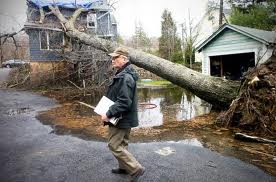 Virginia is in an unusual position of having to ask the federal government for disaster assistance as result of four natural disasters occurring back-to-back. But even if FEMA denies some claims, the Commonwealth will still have to rebuild and find funding to help repair the damage.
FEMA already denied assistance for the tornadoes in May, but has granted SOME funding for the earthquake, Hurricane Irene, and Tropical Storm Lee. Virginia Department of Emergency Management Director Michael Cline told the Senate Finance Committee that the earthquake alone caused $14-million in damage.
Cline says it remains to be seen if FEMA will provide funds for other claims. He said some state costs were mitigated because for the first time, the primary flooding areas had flood insurance. Additional damages include $87 million to private property, $130 million to agriculture, and $52 million in local government costs.
–Tommie McNeil
Virtual Schools
Posted in Daily Capitol News Updates on September 22, 2011
 Futurologists predicted this day was coming—when children would no longer spend their days in school learning … but work instead in the comfort of their own homes using the latest innovations. But Virginia is still laying the groundwork to make that a reality, and the Senate Finance Committee is examining the cost-effectiveness of virtual schools and how they can provide high-quality education to students.
While several states have adopted Virtual Schools, none has totally submerged its students in a world with no school walls or daily interactions with teachers and others. Allison Powell, the Vice-President for the International Association for K-12 Learning, admits that each state and local jurisdiction will have different needs. States would need universal rules for full implementation and some regions may still have funding challenges based on the variety of schools and courses they offer.
“You do still have the administrative piece of running a school, the instruction is a little bit different, they’re not necessarily using textbooks. Some of these companies do ship out boxes of books and videos, and science kits, and all that kind of stuff as well, so the kid isn’t in these full time programs sitting in front of a computer for eight hours a day,” she says.
Powell says many costs are similar to brick and mortar schools ….but without transportation or building expenses. She says another benefit is providing students with alternative teaching methods designed to keep their attention and use individual learning styles.
–Tommie McNeil
Freedom of Information: Opening Doors
Posted in Virginia's News on September 22, 2011
 Governor Bob McDonnell is due to respond to a Freedom of Information Act request for minutes and other information about a series of closed meetings over the past six weeks that involved members of his Government Reform Commission.
Like so much of the state code, Virginia laws on open meetings can be complicated, perhaps even to the point that the lawyers who advise the governor can go astray when interpreting them. After first defending the closed meetings at which recommendations for the Government Reform Commission may or may not have been drawn up, the McDonnell administration backtracked, saying the meetings might have been illegal and committing to complying with the law in the future. Governors are certainly entitled to work in private says Maria Everett, with the Virginia Freedom of Information Advisory Council.
“The governor or any sort of single elected or appointed official can certainly appoint a group to advise them, and for the purposes of open meetings law, that would not be a public body in terms of having to give notice and meet in public,” says Everett.
But if three or members of a public commission turn out for meetings – and this case they were doing so – things change, she says. “And then when it came to light that the commissioners were actually in sufficient number on the work group that changed the work group into commission meetings – that’s where the problem arose, and hiding things when you’re trying to talk about transparency in the same breath – it doesn’t pass the sniff test.”
There was something else that didn’t sniff well, at least not to Democrats, party spokesman Brian Coy explains. “There were a couple of Democrats who were on the commission itself, the larger body, but when the McDonnell administration decided to adopt this new work group approach, it just so happened that none of the Democratic members of the commission were invited to join those work groups.”
Democratic Delegate David Englin asked Attorney General Ken Cuccinelli for an investigation into the legality of the meetings but he said there was nothing he could do since his office had no legal authority in such things. Now – FOIA requests – Democrats are not only trying to get details about the Reform Commission meetings but also looking for other commissions that might violated the law and asking to see any correspondence between the attorney general and the governor on the question.
Legal points being what they are, Common Cause president Bob Edgar believes there are other considerations at least as important as whether the letter of the law was followed. “I don’t think this is a question legality, I think it’s a question of morals, ethics, it’s a question of propriety. Why would you exclude particular persons simply because they were in the other political party or the independent field. If you’re gonna work on reform I think you do it from a non-partisan, bi-partisan basis,” says Edgar.
And, he adds, in public view. “We want transparency in these meetings. We want the minutes but more importantly we want the doors open.”
Governor McDonnell has agreed to open the doors whenever three commission members are present. If only two are on hand it appears he has every right to keep the doors closed.
–Fred Echols
Smog in Virginia
Posted in Daily Capitol News Updates on September 22, 2011

Ahead of a hearing and vote in Congress on the Environmental Protection Agency’s regulatory policy-making, a group of environmental activists has released a report that details the effects of smog on the Commonwealth. The pending action by Congress could ease EPA regulations. The group says the legislation would allow big industrial companies to further contaminate the environment.
Near House Majority Leader Eric Cantor’s district, the activists and state Delegate Jennifer McClellan urged Virginia’s Congressional delegation to vote against the TRAIN Act, which is spearheaded by Cantor. They say his district and other parts of the state rank among the highest in smog pollution nationwide.
Environment Virginia’s Caroline Kory adds that while the Act’s supporters say EPA regulations hinder job creation, industry leaders ignore data suggesting that those businesses contribute to a decline in health. She says it costs less to address pollution now before the problem gets worse. Delegate McClellan rebuts the claim that regulations harm jobs. She says there’s a nexus between the environment and jobs … such as when cleaner natural resources attract tourists—thus helping that industry.
–Tommie McNeil
[audio https://virginiapublicradio.com/wp-content/uploads/2011/09/pollution.mp3%5DThe Untold Story of Frank Batten
Posted in Virginia's News on September 21, 2011
 Last year, The Weather Channel, became the first news and information service to reach 100 million cable subscribers. The 24/7 hour cable channel dedicated to weather is ingrained in our lives. But 30 years ago, the concept of all weather all the time was the laughingstock of the broadcasting world, and were it not for a visionary businessman named Frank Batten.
Connie Sage, a former Landmark Communications employee is the author of the only authorized biography about Frank Batten. She says anyone living in Virginia would be hard-pressed not to credit Frank Batten and his company, Landmark Communications, for, at the very least, getting their news to them.
“Whether it was the Virginian Pilot, the Roanoke times, the Galax Gazette, the Greensboro news and record, Annapolis newspapers, TV stations in Vegas and Nashville, 100 small newspapers in communities throughout the country. Those all had the same values and ethics,” says Sage.
In1983, as Batten contemplated liquidating the struggling business, a call from a cable operator about the popularity of the channel changed his mind: what if he could get the cable companies to pay subscriber fees? Batten’s company then invested millions in state of the art technology, new studios, and feature programming,. Within a couple of years, almost all the cable companies were not only carrying the Weather Channel, but paying a fee to do so. The little channel everyone made fun of in 1982 sold for $3.5 billion in 2008. Such a success might suggest the actions of cold, calculating business titans. Not so, says, Jim Cantore , who went to work for the Weather Channel in 1986.
“One of the things I remember about the Battens is…they’re just nice people. You don’t have these Gordon Gekko shrewd business men. Just nice men. And I think that kind of resonated just out through the company,” he says.
Connie Sage’s book is Frank Batten Jr., the Untold Story of the Man Who Founded the Weather Channel.
— Sondra Woodward
Anti-Gang Documentary
Posted in Daily Capitol News Updates on September 20, 2011
 Virginians who were members of criminal street gangs share their riveting stories in a new documentary produced by Attorney General Ken Cuccinelli. “The Big Lie” exposes the methods that gangs use to convince children to join their ranks …but also describes the dangerous lifestyle of gangs and the distress of life in prison.
The goal is to prevent children and teens from being lured into a gang’s trap.
The DVD also features resistance strtegies—and will be available through schools and the Attorney General’s office.
–Anne Marie Morgan
State Revenues Rise, But Caution Still Urged
Posted in Daily Capitol News Updates on September 20, 2011

Virginia’s General Fund revenues rose in August … bringing the total year-to-date increase in tax collections to 8.8 %. That’s ahead of the annual forecast of 3.7% growth. But state officials are nevertheless urging fiscal caution as lawmakers begin planning for the new biennial budget.
Finance Secretary Ric Brown’s testimony before the House Appropriations panel could be summed up in one sentence.
“Let me say that the news I bring to you for the first couple of months is good, but I would like to see it continue, I’m not sure that it will.”
Brown said the recent revenue increase was driven mainly by individual income taxes—which provide two-thirds of general fund revenue.
Receipts in recordation taxes also rose, but declined in other major sources. For example, corporate income tax collections were down $2.8 million for the fiscal year—compared to $8.4 million last year. But Brown said he hoped sales tax receipts that were below the forecast did not signal a tipping point.
“The concern here is that normally you would see weakness in sales tax before you see it in withholding— weakness in demand. And then as employers start to layoff or cut back in the face of weaker demand, you see some tail-off on withholding,” he said.
Brown also said national indicators suggest a slowdown in economic growth … with now a 40% probability of a double-dip recession.
–Anne Marie Morgan
Rare Copy of Bill of Rights on Display
Posted in Daily Capitol News Updates on September 16, 2011
 In honor of Constitution Week, Virginia’s rare copy of the U.S. Bill of Rights was on public display today at the Library of Virginia. The story behind it reveals that the Commonwealth played a pivotal role in its adoption as part of the supreme law of the land.
The document is the actual Bill of Rights sent by Congress to the General Assembly. The Library’s Director of Special Collections, Tom Camden, notes that in 1791, Virginia was the final state needed for ratification. “It’s designed solely to protect personal liberties and states’ rights. There was a lot of concern that the federal Constitution had too much power concentrated in the federal arena,” says Camden.
Virginia’s copy has the original 12 amendments, including two on the number of Congressmen and their compensation, that were ratified by the House of Delegates but not the Senate. It is made of sheep or goat skin and is worth at least $40 million
-by Anne Marie Morgan
PolitiFact: What Would Thomas Jefferson Do?
Posted in PolitiFact Virginia on September 16, 2011
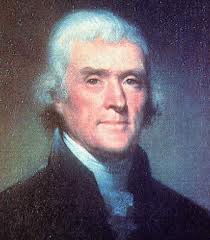 Did George Allen reign in spending as governor? What would Thomas Jefferson do about a balanced budget amendment?
In this week’s Politifact Virginia installment Fred Echols talks with Warren Fiske about state spending under Governor George Allen and Thomas Jefferson’s position on government debt.
Vote on Abortion Regulations
Posted in Daily Capitol News Updates on September 15, 2011
 The Virginia Board of Health will vote Thursday on emergency regulations regulating the Commonwealth’s 22 abortion clinics.
The regulations are in response to a bill signed into law by Governor McDonnell earlier this year. It requires the state to draft emergency regulations to treat abortion clinics as hospitals. If approved, the regulations would go into effect December 31st and would be in place until permanent regulations are enacted. It’s an effort to make the clinics safer, says Chris Freund of the Family Foundation of Virginia.
“The regulations cover a lot of ground, including licensing, including inspections of the facilities, including record keeping, sanitation, a lot of areas for health and safety.”
However, the regulations getting the most attention are architectural guidelines. For instance, a clinic would be required to have 5 foot wide hallways.
“If you have an emergency situation and paramedics need to get a gurney into a facility to get to someone who, say is hemorrhaging or in cardiac arrest, then you want a hallway that’s wide enough for emergency personnel to get in there.”
Jill Abbey runs the Richmond Women’s Medical Center, which operates clinics in Richmond, Roanoke, Charlottesville, and Newport News.
“The cost of the procedures will go up to women because when you add costs, that’s what has to happen.”
Abortion clinics in Virginia currently fall under the same regulations as doctor’s offices and are not inspected by the state health department. But the department would be charged with inspecting the clinics and enforcing the new rules if the regulations are approved Thursday.
— by Beverly Amsler
Tea Party in Local Government
Posted in Virginia's News on September 15, 2011
 The Tea Party has made its mark on the national political scene by insisting that Congress spend less in a time of recession and also by questioning widely held views about climate change. In Virginia, the movement is also taking aim at a surprising target in local government.
It might be hard to find a subject that’s less sexy than urban planning. People rarely show up at municipal meetings to debate the dry details of development, so officials were surprised when a small but angry crowd assembled at Blacksburg’s town hall.
The Commonwealth wants larger communities that are growing to say where and what kind of housing, schools, stores and offices it might want to accommodate more people. The idea is to avoid sprawl and to create sustainable urban centers:
“Ah, the word sustainability stands out, since it is such a key word in Blacksburg and the VT community,” says Roger Abelhart, the first to speak at the public hearing. “A key word in local vocabularies since Blacksburg became a dues paying member to ICLEI, which to me at the very least is a violation of article one, section ten of our US Constitution.”
For those who don’t have their constitution handy, article one, section ten says states shall not enter into any agreement with a foreign Power, and ICEI, the International Council for Local Environmental Initiatives, is a global group of more than 1,200 cities that has ties to the United Nations.
“I don’t think we want to have any directions from the UN down here in the real world,” says Roscoe Trivett who drove 125 miles from Bristol to protest.
ICLEI helps communities figure out how to reduce their carbon footprint, provides software and educational materials and allows cities around the world to compare notes on going green. To Rich Collins, professor emeritus of Urban and Environmental Planning at the University of Virginia, that seems like a good idea.
“The feeling, like well, if we join with others on behalf of common planetary concerns, somehow it’s subversive of American values. I find that absurd. Frankly, I find it laughable,” Collins says, “I think there’s a broad consensus that land use planning is essential. And land use planning is not just simply cutting land into different zones; it is dealing with the capital improvements that are needed, with the schools that must be built to accommodate the new population, of getting people from here to there. This is pretty well accepted now, except by those who perhaps have not been paying attention.”
Chip Tarbutton has been paying attention, and he doesn’t like what he sees. The leader of Roanoke County’s Tea Party says urban development areas will threaten our private property rights and our future choices.
“Essentially what they want to do is create clustered developments or urban development areas where the majority of people would live and then make it difficult if not impossible for people to live outside of those areas, so those other areas would be held in reserve as wildlife preserves and in that way they hope to reduce carbon emissions that would save the planet from the global warming hoax they’re trying to foist on us,” Tarbutton says.
Tea party proponent Charles Battig agrees. He told the Albemarle County Board that all this planning might be totally unnecessary. A physician and an engineer, Battig is not swayed by a growing consensus in science that human behavior is causing the current round of climate change.
“Consensus has never proved anything,” says Battig, “At one point consensus ‘proved’ the Earth was flat, in my medical field that ulcers were caused by stress and cured by milk. Now we know that neither one of those is true.”
His allies, who constitute a majority on the Albemarle County Board, voted to drop their membership in ICLEI. So did elected officials in James and nine other communities around the country. In Roanoke, the board of supervisors voted to put off the designation of urban development areas, and Tea Party leaders are pressing the state legislature to repeal the requirement that communities plan them.
— Sandy Hausman
Texas Governor Rick Perry Visits Virginia
Posted in Daily Capitol News Updates on September 15, 2011
 More than 1000 people assembled at the Richmond Convention Center for an event featuring Texas Governor and GOP Presidential hopeful Rick Perry.
The luncheon was scheduled to raise funds for November’s General Assembly elections. But the focus quickly turned to national politics and the Commonwealth’s role as a pivotal battleground state. The attendees included Christopher Raymond, who drove from Connecticut to assess both Perry and Governor McDonnell.
“It’s worth the drive to see potentially the next President of the United States and to be honest, potentially the next Vice President—because I think Bob McDonnell is going to be at the top of that list, with Marco Rubio and the Governor of Nevada, who just endorsed Governor Perry.”
The speakers stressed that Virginia is the path to victory next year. McDonnell agreed, but did not endorse Perry and reminded the crowd to work to impact the fall elections. He also praised Perry’s record, saying 40% of U.S. jobs created in the last two years were in Texas. Perry received a standing ovation, pledged to follow those same job-creating principles if elected President, and said the country is in trouble.
“This administration called food stamps an economic stimulus. I think food stamps are a symptom of the problem—they’re not the solution. The problem is too many Americans cannot find work, Mr. President. That’s the problem.”
Perry later told reporters that it was thinking too far ahead to say whether McDonnell could be his running mate.
Former Governor Tim Kaine’s Democratic U.S. Senate campaign sent out an e-mail saying, “It’s no surprise that Governor Perry wants to help folks who would support his extreme right-wing views if he becomes President.”
-by Anne Marie Morgan
Stance on Social Security
Posted in Daily Capitol News Updates on September 15, 2011
 Virginia Democrats are pressing Governor McDonnell to clarify his stance on Social Security … a day before Texas Governor and Presidential candidate Rick Perry is scheduled to attend a Richmond event with the Governor. Perry has claimed that the current Social Security system is flawed and is a “Ponzi” scheme that must rely on new donors to pay out benefits to previous contributors.
Leading the charge is former DNC Chair Tim Kaine, who is also running for the U.S. Senate seat being vacated by Senator Jim Webb. Kaine spoke to a group of elderly residents in the Richmond neighborhood where he resides …and called one Republican proposal to privatize Social Security a scare tactic. Kaine said the current system has worked just fine and will continue to do so.
“The way the program works is you contribute that six-point-four percent and the employer contributes the same out of the paycheck, that goes into the trust fund, and the trust fund is then used to pay the retirements of the retirees at the time, and then by doing that, there’s an expectation that, hey, when I’m a retiree, people will be doing the same for me,” he said.
Kaine says Social Security is often the only source of income for the elderly, and to privatize it would mean possibly risking their money in the stock market. Democratic leaders in Virginia have asked Governor McDonnell in a letter to explain whether his luncheon with Perry Wednesday is an endorsement of Perry’s controversial plan to change the current system.
–Tommie McNeil
Reading Challenges
Posted in Daily Capitol News Updates on September 12, 2011
 Despite achieving most state and federal benchmarks, Virginia’s students have a problem. Many of them are not reading on the levels that they should by third grade. Students who have not caught up by then will often all behind in other courses, and are likely to never catch up.
The state’s Joint Legislative Audit and Review Commission is weighing recommendations to enhance third grade reading performance statewide. Commission members acknowledged that some of the proposals will be expensive.
Delegate Johnny Joannou found it hard to support English as A Second Language program development and funding additional staff. He said his immigrant background had socio-economic challenges and many children of his generation overcame those challenges without programs. He asked JLARC project leader Kimberly Sarte, why is there such a disparity in learning between older and current generations.
“I think that some kids aren’t getting the support they need at home, and perhaps if they’re not getting… you know, if they’re English language learners, if there’s other reasons outside of the school that they may come in kind of deficient, they’re going to have—a lot of kids— not all, a lot of kids are going to have difficulty. And so if you can kinda raise the classroom program—the level of the classroom program with some of the strategies that we’ll discuss, that’s obviously going to help these kids. If they come in and there’s maybe a classroom program that’s not as strong or there’s not as many resources available to kind of assist them, it’s hard for them to catch up,” said Sarte.
The proposals include providing more engaging reading materials, book rooms with those works, and using new digital technology.
— Tommie McNeil
Jobs & Politics
Posted in Daily Capitol News Updates on September 9, 2011
 While President Obama was in Richmond promoting his new jobs bill within the district of one of his toughest critics on policy … that same official, House Majority Leader Eric Cantor, was preparing to promote his own jobs plan nearby. Some say that both visits were preliminary campaign stumps for next year’s Presidential election.
President Obama’s speech at the University of Richmond on the jobs bill was much like a confident healthcare reform speech he gave in Virginia a few years ago. One supporter and occasional commentator on Mr. Obama was there—and was asked if the speech was relevant for Virginians. Former Governor Doug Wilder said yes, and that the President has gone back to basics.
“To say,’ hey wait a minute, I’ve been in office a couple of years. I didn’t do all the things I promised that I wanted to do, I’m not saying I was right or wrong, however, this is where I am today,’ and I think to the extent that he continues that, to let people know,’ I have not forgotten, I know what to do, I know how to do it, I need your help, let’s get it done,'” said former Governor Wilder.
House Majority Leader Eric Cantor said there IS room for compromise. “The President did talk about some measures that will provide some tax relief for small business people, and as we know in Richmond, and elsewhere in the Commonwealth, and the country, they’re the jobs engine. So hopefully we can get some progress on that very quickly, and I intend to try and do that.”
He does say that the President’s plan does not pay for itself, and GOP leaders will remain adamant about not adding to the current massive federal debt.
PolitiFactVirginia.com: Government Size & Disaster Funding
Posted in PolitiFact Virginia on September 9, 2011
 Federal disaster funding has joined the size-of-government issue at the forefront of political debate this month. Today Fred Echols talks with Warren Fiske of the Richmond Times-Dispatch and Politifact Virginia dot com about both.
Health Care Reform
Posted in Daily Capitol News Updates on September 8, 2011
 A three-judge panel of the U.S. Fourth Circuit Court of Appeals has dismissed two lawsuits that challenged the constitutionality of the federal health care law.
The judges had heard an appeal of a U.S. District Court ruling declaring that the federal mandate for most Americans to buy health insurance or pay a penalty is unconstitutional.
During oral arguments in May, Virginia and Liberty University had urged the 4th Circuit to uphold Judge Henry Hudson’s ruling striking down the mandate.
The three-judge panel did not address the mandate’s constitutionality, but ruled that both do not have standing to bring the lawsuit … and said allowing such lawsuits made the states “roving constitutional watchdogs.”
Attorney General Ken Cuccinelli had argued that the Commonwealth does have that right because of its state law establishing that Virginians cannot be compelled to buy health insurance. The Attorney General has said that rather than asking the full 4th Circuit to hear the case, he will appeal the ruling to the U.S. Supreme Court.
Two other Appeals Courts have also handed down decisions. The Sixth Circuit upheld the federal law, while the 11th Circuit struck down the individual mandate in a lawsuit representing 26 states.
–Anne Marie Morgan
Drive to End Hunger
Posted in Daily Capitol News Updates on September 8, 2011
 This weekend is the 10th anniversary of the 9-11 attacks, and one activity that Governor McDonnell would like Virginians to do in commemoration is to help those who can’t help themselves. His administration, along with the AARP of Virginia, the Central Virginia Food Bank, and NASCAR driver Jeff Gordon, have coordinated a statewide effort to help the hungry, especially the elderly population.
Gordon will not only take part in a NASCAR race in Richmond, but also the Drive to End Hunger, which has already donated $10,000 to the Central Virginia Food Bank. But Gordon also issued a challenge to racing fans and others—to text the word “Hunger” to 50555.
“Every contribution is a $10 donation when you text that and for every one that happens, I’m going to match it myself personally.”
Gordon says he’s so passionate about these types of initiatives because the U.S. is a rich country, but millions describe themselves as being food insecure or not having money for food.
The Governor says as many as 16% of Virginians fit that description. “That’s tough–we’re the eighth most prosperous state in terms of income per capita in America and yet we’ve got that, so I am very much committed to helping the food banks, the Ruritan club, the AARP, Americorps, all these other great groups that are working on this.”
They’ve also coordinated a community food drive September 9th and 10th in which 150 collection sites will accept food donations statewide.
–Tommie McNeil
Warrior Girls
Posted in Virginia's News on September 7, 2011
 There’s a growing awareness of how damaging athletic injuries can be, thanks – in part – to 75 players who filed suit against the NFL this summer, but coaches and parents may still be clueless when it comes to female athletes. Experts here in Virginia say girls sometimes play harder than the guys and suffer injuries that can plague them for a lifetime.
Thanks to publicity in the professional world, more young athletes, coaches and parents recognize the risks faced by boys who play high school sports, but experts on female athletes say they can also suffer crippling injuries:
“More than 50% of them actually are overuse injuries from basically over training – training year round, training like 7 days per week and not giving the body and the mind a chance to recover,” says Dr. Joel Brenner, medical director of sports and adolescent medicine at the Children’s Hospital of the King’s Daughters in Norfolk.
He says girls who play basketball or soccer have more concussions than boys — a fact that doesn’t surprise Shawna Lynch-Chi – a neuropsychology fellow at the University of Virginia.
“Girls, when compared to the same type of sports that boys play, actually have a higher incidence of concussion rates than boys do. Girls and boys are just built completely differently.”
Symptoms of a concussion may occur the next day, and they can be subtle: Headache, amnesia, dizziness, ringing in the ears, nausea, slurred speech and fatigue. If athletes don’t recognize those symptoms, they’re at even greater risk for future injury.
Brenner adds that parents are sometimes to blame – pushing girls to play, hoping they’ll get college scholarships for sports. In fact, fewer than 5% of young athletes do. He says coaches and parents must be firm and insist that injured girls not compete.
Michael Sokolov agrees. The author of a book called Warrior Girls says parents must be advocates for their children — teaming up to argue with coaches when necessary.
“If you are one parent, and your young daughter plays for one of these go-go basketball, lacrosse, soccer teams, whatever, you’re one parent and you say, hey, I think we’re playing too much – we’re playing tournaments that are five games in four days or playing two seasons instead of one, all these things that are wearing our kids out – all these things that are wearing out kids out, if you’re just one person and you say that, you’re a trouble maker,” says Sokolov.
— Sandy Hausman
Preventing Human Trafficking
Posted in Daily Capitol News Updates on September 7, 2011
 Recently, we took an in-depth look at human trafficking and how it impacts many within this country, especially immigrants and children. Virginia’s Attorney General Ken Cuccinelli has some new initiatives that aim to combat the fastest-growing criminal industry in the world.
He agrees with the groups fighting human trafficking, who say that the perpetrators of the crime will not be stopped and prosecuted if law enforcement agencies don’t recognize it in all its forms—or know how to act when they do. One challenge is stopping online traffickers who solicit through such Websites as Craigslist and Backpage.com. The Attorney General says Craigslist has been cooperative in removing ads and links that may be underground prostitution rings.
“But even within Craigslist, the bad guys come up with new ways to advertise themselves, so there’s this continual cat and mouse game, but that’s where it’s most obviously different from …you know, prostitution rings and other things like that.”
So far, Backpage.com has not complied with requests by the Attorney General and his state counterparts to remove similar ads. To proactively address online and other trafficking, Cuccinelli recently hosted a first-of-its-kind training seminar–with the Justice Department, law enforcement, and prosecutors.
— Tommy McNeil
Home Schoolers & Team Sports
Posted in Daily Capitol News Updates on September 6, 2011
 Virginia students who are home-schooled may be granted an opportunity to play on public school sports teams under legislation being considered by a special House of Delegates education panel. Home-schooled students have at least some access to public school sports in 22 states.
Several students told lawmakers that they don’t want quotas but a chance to try out. Bill sponsor Delegate Rob Bell agreed that the public schools should offer equal access and opportunity.
“Sports teaches teamwork, fitness, and leadership. High school sports, in particular, can be an avenue to college. It can provide scholarships to students who are athletes. In rural areas, it is literally the only game in town,” he said.
The Virginia High School League sets general rules for sports eligibility. Both the League and Delegate Jennifer McClellan said the bill does not guarantee that home-schooled students would adhere to the same behavioral and academic qualifications:
“You keep talking about a level playing field. And we want a level playing field, too. But we want a level playing field where the home-school student doesn’t have an advantage over the public school student because they’re not held to the same standard,” she said.
For example, home-schooled students cannot take the Standards of Learning tests. But Bell said the state has approved other accredited tests for the students, so they should not be penalized.
–Anne Marie Morgan
PolitiFact Virginia: Governor Bob McDonnell & Congressman Bobby Scott
Posted in PolitiFact Virginia on September 2, 2011
 Governor McDonnell is pondering whether he would leave Richmond to run for Vice President, while Congressman Bobby Scott has found something else he doesn’t like about the Bush tax cuts. Fred Echols called on PolitiFact Virginia.com to get a reading on what both men have been saying.
Fracking & Earthquakes
Posted in Virginia's News on September 2, 2011
 We may see more earthquakes in coming years, if oil companies begin a controversial drilling method in Virginia.
The head of Virginia Tech’s Seismological Observatory says the cause of last month’s earthquake in Mineral was a lot of stress centered in an area with several favorable faults. Martin Chapman says seismologists have long predicted an earthquake would occur there but they just didn’t expect it to be as large as a 5.8. Since 2004, oil companies have been using the latest practice of hydraulic fracturing: injecting a high pressure water, sand, and chemical solution horizontally into the earth’s crust to split apart rock and release oil and gas deposits. The practice isn’t used in Virginia, but some environmentalists warn of more frequent earthquakes in areas of the U. S. where “fracking” occurs, such as with the Marcellus shale deposits in West Virginia, Pennsylvania, and New York. Chapman agrees. He says the practice puts pressure on the faults already in an area.
“And the hydrofracking process for gas recovery or hydrocarbon recovery– what the purpose of that is to increase the porosity and permeability of the rock by fracturing it. And that generates small earthquakes. In some cases you can trigger larger earthquakes on pre-existing faults that are already near the critical stress level. So it’s basically provides the straw that causes the fault to happen.”
He says fracking at each injection well covers a small area so there’s no chance a well in a neighboring state could have triggered the Mineral earthquake. Oil companies monitor seismic activity during the fracking process.
“It usually happens when the process is being done. Usually you don’t have a long-term seismic issue there. It usually is during the time the fluids are being injected or disposed of.”
Chapman says that as hydrofracking becomes more common, especially in the Appalachian region, there may be an increase in the number of earthquakes in Virginia and surrounding areas.
–by Beverly Amsler

Subscribe to our RSS Feed
 From NPR News
- WATCH LIVE: Artemis II astronauts have splashed down on Earth
- After more than 9 days in flight, NASA's Artemis II is set to return to Earth
- Epstein survivors have mixed feelings on Melania Trump's call for hearing in Congress
- Months after the ICE shootings in Minnesota, a federal probe remains elusive
- Shortlisted for an Oscar, 'Homebound' is a daring movie about two dear friends
- Five things to know about Hungary's election
- 'How are you using AI?' Your therapist should ask you that question, experts argue
- Inflation surges to highest level in nearly 2 years as energy costs spike
- VP Vance to lead U.S. team in Iran peace talks. And, Artemis II to return to Earth
- China's Xi meets Taiwan opposition leader ahead of key summit with Trump
- From BBC News
- Back to Earth: What happens to the Artemis II astronauts now?
- Artemis II mission was a triumph. Now comes the hard part
- Historic Vance-Ghalibaf talks must bridge deep distrust
- British man, 77, dies after tourist bus crashes in Canary Islands
- UK shelves Chagos deal after Trump opposition
- Man arrested after baby girl dies from dog bite
- Melania Trump's speech propels Epstein crisis back to forefront
- Final push for votes as challenger to Hungary's Orbán scents victory
- Prince Harry sued for defamation by charity Sentebale he co-founded
- Parents' fury at Army's delay to report missing son


 Virginia Public Radio