Virginia Public Radio

This user hasn't shared any biographical information
Rail Funding in Virginia
Posted in Daily Capitol News Updates on April 29, 2012
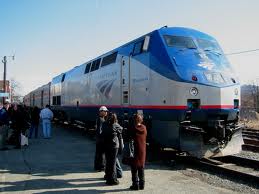 Fans of rail travel in Virginia are heaving a sigh of relief, now that the state has come up with the cash for trains running from Lynchburg, Richmond and Norfolk to Washington, New York and Boston. Lawmakers approved nearly $55 million to support regional service.
It may sound like a lot for intercity train service in Virginia, but advocates of rail travel say that’s what it costs to build a few miles of road. They point out that travel by train is environmentally friendly and helps relieve traffic congestion.
In addition to supporting current services, the latest funding will allow service between Norfolk and Richmond – then on to Washington — beginning at the end of this year. Critics say the state has yet to identify an on-going source of revenue to pay for rail service. Possible sources include a new tax on rental cars, higher license plate fees, automobile sales tax and fees charged to truckers, based on the weight of their vehicles.
Amtrak ridership in Virginia exceeded 1.3 million trips for the first time last year, and Virginia had the best performing state supported route in Amtrak’s system. On a few days, more than 20,000 people rode the rails, and the state added a connector bus between Lynchburg’s train station and downtown Roanoke with demand far exceeding expectation.
–Sandy Hasuman
Sustainability Practice in Business
Posted in Daily Capitol News Updates on April 27, 2012
 Virginia businesses celebrated Earth Week by sharing ideas to make their companies more eco-friendly. The entrepreneurs say they would like to save money and also please customers at the same time.
Business leaders gathered in Richmond to talk sustainable practices. Smithfield Foods was among the participants. The company was once a serious polluter but over the past decade, it has incorporated sustainable practices from the board room to its processing plants. Dennis Treacy leads the meat processor’s efforts and says the changes can improve a company’s bottom line.
“Projects that both make the environment better and save our company money. I’m pleased to say that we have done an extraordinary job there and saved the company more than $200 million over eight years,” says Treacy.
Environmentalists like Bill Street with the James River Association say that just holding the business roundtable is evidence that going green has gone mainstream.
“And now we see it moving into the mainstream. It’s really being driven by the public and by customers and consumers. These issues are really getting a lot more attention and focus. And I think that’s really a positive thing,” says Smith.
Business leaders who attended the roundtable also said that more regulations aren’t the answer.
–Amanda Iacone
Epinephrine Law
Posted in Daily Capitol News Updates on April 26, 2012
 The mother who pushed for the passage of a school epinephrine law signed by Governor McDonnell says her work is not complete. Laura Pendleton says that although her daughter Ammaria was only seven years old when she died from an allergic reaction in school, she had a plan for each stage of her life. Pendleton still mourns her daughter’s death but plans to honor her life by advocating for better emergency planning in schools.
She says that while school officials scrambled to assist her daughter in January after another child gave her a peanut, a simple epipen would have saved time—and Ammaria’s life. Pendleton had provided an emergency plan for school officials to administer Benadryl if Ammaria came in contact with peanuts since school policy prevented them from using an epipen. Sixteen to 18% of children with KNOWN food allergies have reactions while in school. But 25% of reactions in schools occur in students who are previously undiagnosed. For this reason, Pendleton wants national legislation passed to address this.
“So no mother has to go through what I went through. And even children who don’t know they have allergies, or not even necessarily a food allergy, it could be a bee sting or anything, any type of allergy. They will be prepared,” says Pendleton.
The new law signed by Governor McDonnell requires epipens to be stocked in each school, while the budget provides funds to pay for them. New guidelines must be implemented for the 2012-2013 school year.
–Tommie McNeil
Electric Car Leads NASCAR Event
Posted in Daily Capitol News Updates on April 25, 2012
 Virginia leaders are using this weekend’s NASCAR race in Richmond to promote environmental stewardship and to say that the state is on board with using alternatives to help cut costs.
The event also confirms that the technology to create more fuel-efficient vehicles for the consumer market is more advanced than some may have thought.
Millions will witness the first ever fully electric pace car in a NASCAR race. Lt. Governor Bill Bolling helped unveil two vehicles at the State Capitol just before delivering them to the Richmond International Raceway.
A NASCAR official says the electric Ford Focus, which is priced at nearly $40,000 , meets all the rigorous specs of other pace cars, but it’s fuel efficiency is the equivalent of 110 miles per gallon. While Bolling says this cross-promotion adds to the already successful race, which brings millions in revenue to the state, it signals new technology and savings.
“You know one of the reasons that we’re trying to move in state government to have more environmentally-conscious requirements in construction of buildings and conversion in our own state fleet is in large part, those two things: it saves money on fuel but there is also an environmental consciousness that is a part of it that is important. And I think we’re going to see as these technologies improve, that the cost of the products over time will be coming down,” says Bolling.
The vehicle does not appear to be ready for broad consumer purchase. A Ford spokesperson says the cars are primarily commercial vehicles.
-by Tommie McNeil
Public Broadcasting Cuts
Posted in Virginia's News on April 24, 2012
 It’s official. The state has cut all funding for public broadcasting, and Virginia’s stations are trying to figure out how they’ll pay for programming and operations. As Sandy Hausman reports, those hardest hit will not be viewers or listeners but kids in public schools.
Gangs & Prostitution
Posted in Virginia's News on April 24, 2012
 Criminal street gangs have reached a new low, targeting children to join their very lucrative underground sex-trafficking trade. Recent charges have been filed and arrests made. But as Virginia Public Radio’s Tommie McNeil reports, officials say they’ve just scratched the surface of a new agonizing war on crime for law enforcement—and a traumatizing truth for families.
Governor’s Bowl Food Drive
Posted in Daily Capitol News Updates on April 23, 2012
 A first-in-the nation statewide drive to collect food donations through local Chambers of Commerce will kick off on Memorial Day.
The “Governor’s Bowl” will allow businesses and state agencies to compete for special awards given to the organizations that collect the greatest amount of food and cash donations.
Governor McDonnell said in the last six years, demand at Virginia’s food banks has increased by 54%, while there’s been a 50% decline in contributions statewide.
“Too many times we hear that businesses are only interested in profit and not interested in people. But I assure you that the CEOs and the business people that I know—small and large businesses across this Commonwealth—are interested in the lives of those people who work directly for them and those in the community who are less fortunate,” said Virginia Chamber of Commerce President Barry DuVal.
The awards will be based on each organization’s size. The food drive will continue through the Fourth of July. –Anne Marie Morgan
Computing for Sustainable Water
Posted in Virginia's News on April 19, 2012

Professor Gerard Learmonth
Scientists know that an excess of nitrogen and phosphorous is damagin the Chesapeake Bay – and they know it’s coming from sewage treatment plants, farms and urban runoff. What they don’t know is how changes in human behavior and climate will impact the bay.
The University of Virginia came up with a computer simulation to answer those questions – but there are so many possible scenarios that it would take decades for the university to crunch all the numbers.
Virginia scientists and engineers would like to forecast the environmental and economic effects of possible changes to agriculture, commerce and industry over the next twenty years for the nation’s largest estuary, the Chesapeake Bay, and IBM says it’s willing to help. The company oversees a network of volunteers in 80 countries around the world – people who lend their computers’ down time for use in solving community problems. Using about 2 million of those PCs, the university hopes to reach conclusions in a single year.
“What we’re trying to do is determine via the simulation model which practices individual persons can adopt that will help reduce the flow of nutrients to the bay, so that we can not only restore the bay but sustain it for future generations,” says Systems Engineering Professor Gerad Learmonth.
He points out the the findings could guide policymakers and the public – assuring that we do the most effective things in the years to come, and he says, this could help about 400 other waterways. The Computing for Sustainable Water Project relies on a mathematical model that simulates the actions of the 16.7 million people living in the Chesapeake Bay watershed. UVA hopes many of them will join the World Community Grid by downloading a free app to their personal computers.
IBM says calculations are done automatically when systems are not in use. The process requires no time from volunteers, resists viruses, uses little additional energy, and does not affect computer speeds.
–Sandy Hausman
Law School Reform
Posted in Virginia's News on April 19, 2012
 As laws and government regulations get more complicated, you might expect law schools to be adding courses or making students study longer, but one Virginia school is taking a very different approach – doing away with a third year of classes. Sandy Hausman reports on how Washington and Lee is reshaping education for young lawyers – and why.
State Pension Update
Posted in Daily Capitol News Updates on April 19, 2012
 The Virginia Retirement System will be undergoing major changes. Despite some objections to requiring local employees to contribute five-percent toward their retirement, lawmakers this week supported amendments by Governor McDonnell to fine-tune the plan. The reforms will replenish funds borrowed from the VRS and hold the state more accountable.
Both the House and Senate passed the amendments overwhelmingly. Senator John Watkins says one big change allows local governments to phase in contributions made by their employees one year at a time—up to five years with an offsetting raise:
“We had already included that provision in that same bill for teachers but had not included it for local government employees,” said Watkins.
The new hybrid plan to combine defined benefits and defined contributions for new hires will take effect in 2014. It had mostly technical amendments. “The primary ones dealt with local governments and the availability of the disability plans and if the employees went on the hybrid plan, and even if the local government had their own disability plans that they would be commensurate in terms of the benefits with state plans,” said Watkins.
Another change prevents those who already have an optional retirement plan from joining the hybrid system. Watkins says the law now requires the state to make contributions at VRS Board-recommended rates, which should have been done all along.
Energy Bills
Posted in Daily Capitol News Updates on April 17, 2012
 As the Virginia General Assembly began working in its special budget session, Governor McDonnell showcased 13 energy-related bills that state lawmakers recently passed. The Governor and legislation sponsors gathered in the Science Museum of Virginia for a bill-signing ceremony.
The bills were signed in front of a real-time electronic indicator changing by the second to depict the world’s growing energy demands. They include measures to allow more natural gas infrastructure expansion for economic development projects, promote development of renewable thermal energy, and include landfill gas in the state definition of renewable energy.
Delegate Jackson Miller said renewable energy must become more reliable and affordable, so his bill incentivizes investor-owned electric utilities to invest in such progress.
“Our public utilities can spend money for their renewable energy credits on research and development either with universities or the private sector. Not only will this help bring renewable energy up to speed—to the affordability and reliability that we need out of renewables—but it will also promote jobs—hi-tech jobs—in the Commonwealth of Virginia. It will also help promote and build our universities as some of these projects occur within our higher institutions of education,” says Miller.
Yet another bill creates a fund to help convert the state fleet to alternative fuels.
–Anne Marie Morgan
Political Fundraising
Posted in Daily Capitol News Updates on April 16, 2012
 Republican presidential front-runner Mitt Romney has raised $2.7 million in Virginia so far in donations of at least $200—more than any other candidate.
President Obama came closest, raising $2.2 million, according to federal election data and the Virginia Public Access Project. The close totals foreshadow an intensive season of fundraising and spending ahead of the November election.
Four years ago, Mr. Obama won Virginia in part by outspending John McCain, especially in the Northern Virginia media market. Political scientist Bob Hollsworth says it will be critical for Romney to raise enough money to stay competitive in Virginia. Outside spending will also play a big roll in wooing voters this November.
“So my sense is that the Romney campaign will not only raise a significant amount for the candidate personally, but that the super PACs that are not officially affiliated with the campaign are going to raise a ton of money. At the end of the day my sense is that a good portion of those dollars are going to be spent in Virginia as well. Virginia is going to be one of the five, six, or seven battleground states in this campaign. And for financial expenditures, we’ll be pretty close to what you might consider political ground zero,” said Holsworth.
Presidential campaign spending will also affect Virginia’s competitive U.S. Senate race. Hollsworth says heavy spending by Romney would help out the Republican primary-winner who faces Democrat Tim Kaine.
-by Amanda Iacone
Behind the Wheel
Posted in Daily Capitol News Updates on April 13, 2012
 For many Virginians, the day will come where they will have to evaluate whether or not their loved one’s driving habits are a risk to themselves and other motorists. But it’s not easy to make that assessment, especially when the senior driver doesn’t think it’s time to put the license away and rely on someone else. AAA Mid-Atlantic is providing a free way for older Virginians to test their skills at home—and without fear that their license will be revoked if they perform poorly.
AAA cites data revealing that for the next 20-years, more than 10,000 “Baby Boomers” will turn 65 each day. Other statistics indicate that Virginia is the 16th highest in traffic fatalities where a driver was 65 or older—with 134 of those fatal crashes in 2010 alone. But AAA-Mid-Atlantic spokesperson Windy VanCuren says those numbers are declining, and she attributes some of that to the tools on the Senior Driving website.
“So you’ve got tools for the Seniors to test their reaction time, their flexibility, things that tend to deteriorate as you get a little bit older, and then you’ve got tools for the family members on how to approach their parents or loved ones when it might be time to change some of the driving habit,” says VanCuren.
She says it’s very interactive, and can also be a proactive tool for those who aren’t quite Baby Boomers but may need to brush up on their skills and new laws.
The link to the website is: www.aaa.com/seniordriving
–Tommie McNeil
Cats at UVA Med School
Posted in Virginia's News on April 12, 2012
 About 40 people rallied at the University of Virginia today to demand that the medical school stop using live cats to teach young physicians and paramedics how to insert a breathing tube into newborn infants.
Dr. Ulka Agarwal stood outside the Rotunda talking with reporters about the campaign mounted by her employer – the Physicians’ Committee for Responsible Medicine. That group says the University of Virginia should adopt state-of-the-art technology to train doctors and first responders who may someday have to help a newborn baby, struggling to breathe.
“They’re using cats to train the residents to treat humans, and you don’t have to be a doctor to know that the anatomy of a cat or kitten is very different from that of a newborn human, and now that there are lifelike simulators that simulate a newborn, there is just no excuse for still using cats and kittens,” said Agarwal.
She was surrounded by about three dozen people who agreed. “I wanted to be there to show my support for the cats who have no voice, who are being mistreated and brutalized at the medical school,” said Stanardsville resident and cat owner Carol Bratton.
From inside UVA’s Rotunda, pediatrician John Kattwinkel told the media that only three cats are involved, and they’re actually an excellent model for learning to intubate infants. He said the university uses two mannequins for preliminary training, but they’re not ideal. “The reflexes are not there, the feeling the tissues is not there, and it’s a tricky task and it has to be done in 30 seconds, and the mannequin certainly is not an adequate model,” said Kattwinkel.
He says most universities had caved to public pressure rather than stand up for the best teaching techniques, and UVA’s staff veterinarian, Sandy Feldman, insisted the three cats used in training – Alley, Kiki and Fiddle — are anesthetized and do not suffer. “The day after they have this, we give them analgesics for pain, and we give them soft food to eat in case their throat is sore, and then this procedure is not done again for almost a year. These are three cats that we take very good care of, and we like to think that they’re helping us take care of innocent children that are in trouble. Some of these people come into this class. When they have to do this to a live animal, they can’t do it. They freeze up because they’re worried they’re going to do harm. Can you afford to have them freeze up when they’re treating an infant that’s in trouble?” asked Feldman.
Feldman added that several inspectors had certified the humane treatment of the animals, which are purchased from a laboratory supply breeder and are retired after ten years of service.“They live in about 440 square feet of space these three cats, which is substantially larger than my office. They have all kinds of toys. We groom them every day and give them treats. We’ve been visited by the state veterinarian, by the Commonwealth Attorney of Albemarle County, the USDA inspector. They all met the cats. They interacted with the cats. They find absolutely no problem. I’ve worked on racetracks and seen a lot of things. I’ve been in the food animal industry. Let me tell you something. This is nice. If I was a cat, this is the program to be in.”
He said 500 people had trained on the cats since they were acquired in 2004, and he asked the public to put this situation in perspective. “What’s more important – three cats that are very well cared for, or your daughters and sons, your grandchildren?” He suggested animal lovers consider the plight of 7 million feral cats in this country – or the 3.5 million shelter animals euthanized each year, and Kattwinkel proposed they help raise money for development of virtual reality training, which would give health care professionals the real feel of inserting a breathing tube and allow for the permanent retirement of training cats.
— Sandy Hausman
Rich States, Poor States
Posted in Daily Capitol News Updates on April 12, 2012
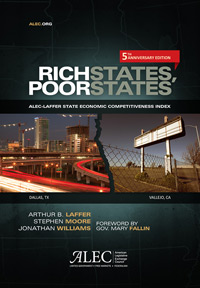 A new American Legislative Exchange Council study puts Virginia ahead of most other states on economic competitiveness and related policies. While some studies suggest the Commonwealth’s emphasis on budget cuts hurts its residents, it’s that very approach that gives Virginia the number three ranking in the “Rich States, Poor States” analysis.
Jonathan Williams, director of ALEC’S Center for State Fiscal Reform, says the study used 15 different policy variables, and how each state dealt with fiscal crises weighed heavily. He said 20th-ranked Maryland raised taxes and targeted businesses to fix its budget shortfall—and as a result, one wealthy county lost a billion dollars when a company pulled out to find a better business climate. Delegate Riley Ingram said Virginia, in contrast, cut spending but improved its business relations—which were some reasons why Rolls Royce decided to move here:
“The reason they chose Virginia was the education system, the K -12, the Higher Ed—all that played a part in it. Virginia Tech, the University of Virginia–all of our higher education schools, the community college system–John Tyler, Richard Bland is right there–the two year only junior college in Virginia, but the big thing—the big thing, was Virginia Right-to-Work,” said Ingram.
The ranks of neighboring states ranged from 12th to 39th. Only Utah and South Dakota ranked higher than Virginia.
–Tommie McNeil
Tech Transfer
Posted in Virginia's News on April 12, 2012
 As federal and state funds for higher education dry up, many universities are putting new emphasis on what’s called Tech Transfer – patenting and licensing the inventions of faculty members. Sandy Hausman reports that these inventions can be profitable, but critics warn there are pitfalls on the way to wealth.
Virginia’s Black Legislative Caucus
Posted in Daily Capitol News Updates on April 11, 2012
 Minorities comprise only a small portion of Virginia’s legislature—including 18 members of the Legislative Black Caucus—but the Minority Political Leadership Institute is now grooming its class of 2012 for public office. There to greet them and provide motivation during a luncheon was Lieutenant Governor Bill Bolling, who advised them to avoid the type of political discord that’s part of Washington politics. But the Republican Lieutenant Governor also addressed the lack of diversity within his own caucus.
Bolling told the group that regardless of ethnicity or affiliation, political leaders cannot be effective if their goal is to create divisiveness and polarize issues based on their own personal views and ideology. He says his concern is that Virginia is moving in that direction and if it is to continue to be great state, elected officials must learn to focus on what they can agree on rather than how they disagree. But he believes that also means having diverse views and broader representation, including within his own party:
“The face of Virginia has changed dramatically over the course of the past couple of decades. So, as party, we’re always looking for ways to get our conservative principles and values in front of different ethnic groups and folks of different backgrounds and walks of life and encourage them to come into our party and hopefully make them feel at home in our party. And there are efforts where we’ve done a good job at that and there are efforts where we’ve not done such a good job at that,” said Bolling.
There are more women in the current 2012 Minority Political Leadership Institute. Although GOP women serve in the General Assembly, Bolling would like a greater number to be elected.
–Tommie McNeil
“Family of Heroes” Program
Posted in Daily Capitol News Updates on April 10, 2012
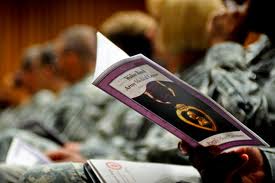 Virginia’s Wounded Warrior Program has launched an online pilot project to teach families of veterans how to help their loved ones adjust to civilian life. The “Family of Heroes” interactive simulation will also help relatives recognize and respond to post-traumatic stress disorder and other mental health challenges.
The resiliency training was prepared in collaboration with the Virginia Department of Health. The initial project targets the families of 280,000 veterans in the state’s northwest region. But the Virginia Wounded Warrior Program’s Executive Director, Catherine Wilson, says plans are to expand it if the results are beneficial.
“The program actually allows the family member to choose an avatar or a character and to engage in practice conversations with a family member who is a combat veteran, for example, that maybe experienced post-traumatic stress or some kind of post-deployment stress. And they give various different situations where the family member can learn to communicate with the military member that is just coming off of deployment. So it’s sort of a real-time, interactive conversation that without really being aware, it’s teaching new skills on how to communicate,” said Wilson.
The simulation also teaches signs and symptoms, how to motivate the veteran to seek help, and where to go for assistance. The free online training can be accessed at: familyofheroes.com.
–Anne Marie Morgan
Election Fraud
Posted in Daily Capitol News Updates on April 9, 2012
 At least one group of Virginians is opposed to an obscure provision in state legislation passed last month to change the Commonwealth’s voter identification law. Other citizens have called the entire measure “voter suppression” and asked for a gubernatorial veto. But as Virginia Public Radio’s Anne Marie Morgan reports, while the Virginia Voters Alliance supports the bill, it also called on the Governor to revise it.
Tentative Deal
Posted in Daily Capitol News Updates on April 8, 2012
 Before reaching a budget deal, General Assembly members say they made concessions on both sides, to make the negotiations work.
But they could not come to an agreement on transportation issues, which will now have to be tackled during the next session.
The $85-billion budget gives state employees bonuses in December and raises next year if revenues hit targeted goals. It also adds $214-million to public education, and Prince William Senator Chuck Colgan says they fought for cost-to-compete funding, which is essential for his region.
“We finally settled it for $28-million the first year subsidized and the second year $12-million however, the $12 million would be subject to an increase next year—we don’t know yet how much,” said Colgan.
House Majority Leader Kirk Cox says they discussed it, but there was limited progress on toll mitigation for Hampton Roads and Northern Virginia. “Our position in the end was that we had great compromises in the big areas of K-12, Health, Higher Ed. We felt like it was sort of a last minute add-on. It simply buys down the tolls for a limited period of time, it really doesn’t take much money off the projects,” saids Cox.
The budget also adds $44-million for Health and Human Services and $141-million for Higher Education. The full legislature will likely vote on the budget April 17th.
—Tommie McNeil
Operation Phalanx
Posted in Daily Capitol News Updates on April 6, 2012
 Tired of Internet sexual predators slipping through the cracks, Virginia’s law enforcement agencies have united for Operation Phalanx, a first-of-its-kind effort that has resulted in the arrests of 20 suspects and nearly two dozen search warrants.
Those arrested hail from all over Virginia and some have ties to international websites. Attorney General Ken Cuccinelli provided legal counsel during the week-long sting operation and says the difficult work was less tedious once the state’s two Internet Crimes Against Children Task Forces and other agencies collaborated for the first time.
Cuccinelli says despite budgetary constraints, the Virginia ICAC units are among the most aggressive and advanced in the U.S… and show why funding should continue.
Chesapeake bay Restoration Plan
Posted in Daily Capitol News Updates on April 4, 2012
 Virginia is moving into Phase Two of its Chesapeake restoration plan—as mandated by the federal government. This means that localities along the Chesapeake Bay watershed must have their own plans in place as required by the Environmental Protection Agency.
Deputy Secretary Anthony Moore says the six states and District of Columbia in the Bay restoration project have been working on this for years. The EPA first mandated that they develop nitrogen, phosphorous, and sediment reduction goals. In Phase Two, localities must develop their own plans and will assess their progress in five years—when they must have achieved 60% of their goals. Virginia has provided tens of millions of dollars each year for this, and Moore was asked if Washington was doing its part.
“We have made it clear that this is an unfunded mandate by the Federal Government and the Federal Government needs to continue to help us fund this program,” said Moore, who added that localities have also contributed for their regional benefits.
“Nitrogen and phosphorus levels have gone down, our oyster population is coming back, the crab population is doing better than expected—rockfish, bald eagles–we’ve seen lots of improvement but we still understand that we still have a little ways to go.”
Moore says soon they will conduct an analysis to determine the state’s return on its investment. He also says volunteer cleanup efforts contribute significantly and help mitigate costs to the state.
–Tommie McNeil
Budget Work Continues in Richmond
Posted in Daily Capitol News Updates on April 2, 2012
 In Richmond, House of Delegates and Senate budget conferees have resumed negotiations on their competing budgets and say they are actually close to agreement on many programs, such as higher education funding.
Both budgets are in the $85-billion range. But House conferee Kirk Cox says the totals differ, and his team opposes the hundreds of millions in toll-relief for Northern Virginia and Hampton Roads. “They spend a lot more money than we have. From a macro-level, we have a lot less debt in our budget that they have. They have a lot more bonding. We just really feel like that’s a lot of bond money to buy down tolls—doesn’t make a lot of sense, the details of what other projects suffer because of that,” says Cox.
Senators say the relief is badly needed and especially fitting for Hampton Roads, where tolls will begin before the construction does. They’ve also insisted on their restored safety net and cost of competing funds for both Medicaid and school support personnel.
–Anne Marie Morgan
Virginia is for Lovers
Posted in Virginia's News on March 30, 2012
 Alaska has “Beyond Your Dreams, Within Your Reach.” Indiana has “Restart Your Engines.” Massachusetts has “Make It Yours.”
But the most famous state slogan of all time — indeed, one of the most famous tourism slogans of all time — belongs to us, right here in Virginia.
Rebecca Sheir gives us the inside scoop on “Virginia Is For Lovers,” from the true story of how it was born…. to whether the Commonwealth really does make more people’s hearts go pitter-patter.
Another Candidate Profile: Delegate Bob Marshall
Posted in Candidate Profiles, Daily Capitol News Updates, Virginia's News on March 30, 2012
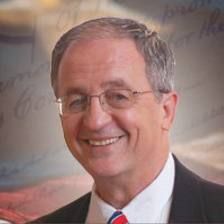
Delegate Bob Marshall has joined the campaign for U.S. Senate much later than his Republican rivals. But as Virginia Public Radio’s Tommie McNeil reports, Marshall believes he has a better chance of beating Kaine than the current front-runner, former Governor George Allen.
‘Virginia Pension Protection Coalition’
Posted in Daily Capitol News Updates on March 29, 2012
 With a stroke of his pen, Governor McDonnell will sign into law Virginia Retirement System reforms that will significantly change how much public employees contribute and receive. Bill supporters say the revisions are needed to fix a looming multibillion-dollar shortfall in the pension fund.
Teachers and public safety employees are especially concerned about the extra 5% they must invest in their retirement. Localities are asked to offset that increase with raises, but Virginia Education Association President Kitty Boitnott says the long-term impact is smaller pensions.
“A future teacher who makes the minimum contribution to the hybrid pension plan as outlined in the conference report would see their meager retirement benefit fall by about one-third. In the case of a teacher who earned the average final salary of $55,560, they would receive a benefit of $19,207 versus $28,336,” said Boitnott.
She says most teachers can’t make the maximum contribution. Delegate Jennifer McClellan agreed, saying delegates did not have an opportunity to review the bill—and it’s a disservice to those who dedicated their careers to Virginia.
–Tommie McNeil
Education Funding Formula
Posted in Daily Capitol News Updates on March 28, 2012
 As one lawmaker observes, negotiating the state budget and determining how well talks are going is like answering the question, “How high is up?” But overall, conferees say talks are moving along, after working long hours this week. Some of their differences have little to do with party lines.
One is the Governor’s plan to eliminate Cost of Competing Adjustment funding for school support staff.
The COCA formula helps determine how much each area receives to help fund education. Senator Emmett Hangar says there is some consensus between members of both chambers and parties to provide this funding. But they have not determined how much due to limited resources –and the changing dynamic with the school composite index greatly impacts how funds are divided:
“It’s shifting in a way that’s favorable to some of these communities and localities that have had the higher composite index so that they’re actually going to get additional funds through the composite index at the same time that many of the rural localities around the state are seeing their composite index go up in a way that would cause them to receive less funding from the state,” says Hangar.
Northern Virginia lawmakers argue that an estimated $65-million loss would impact their school districts the most. They say their districts need the funds to help them compete with Maryland and the District of Columbia to attract and maintain the best school personnel … and that the cuts would result in fewer raises and the loss of that competitive edge.
–Tommie McNeil
SCOTUS Considers Health Insurance Mandate
Posted in Daily Capitol News Updates on March 27, 2012
 Virginia’s elected officials are closely monitoring the oral arguments taking place in the nation’s high court over the constitutionality of the federal mandate that most Americans buy health insurance or pay a penalty. Although Virginia’s case was not heard, the constitutionality of the Commonwealth’s Health Care Freedom Act that prohibits such mandates is also at stake. Virginia Public Radio’s Anne Marie Morgan reports, state officials are just as divided as the nation.
Health Care Law
Posted in Virginia's News on March 27, 2012
 Virginia lawmakers are watching as the Supreme Court takes up the health care law this week. Democrats passed the law, and Republicans despise it and are resting their political fortunes on overturning it. Matt Laslo reports on what the region’s lawmakers are looking for from the high court.
State Budget Update
Posted in Daily Capitol News Updates on March 27, 2012
 State lawmakers have jump-started Virginia’s stalled budget-making process. The state Senate returned to vote on an amended version of the state budget. The chamber’s Finance Committee added some spending items that the House of Delegates may—or may not—approve. But as Virginia Public Radio’s Anne Marie Morgan reports, Senate passage of the budget means the conferees can soon pick up the pace of their negotiations.
Senate Democrats had killed two previous budget measures, but Democratic Leader Dick Saslaw says the new amendments proposed by his caucus greatly improve the spending bill, including money for Northern Virginia mass transit and suspending new tolls in Hampton Roads.
“We’ve not had a situation where they’ve collected tolls four years in advance of the road opening. You usually start collecting tolls the day that you open the facility. So that’s why we added money there. In addition to that, we added about 50 to 60 million dollars more in public school money,” said Saslaw.
Senate Majority Leader Tommie Norment added that many revisions won bipartisan approval. “We increased some of the money that will keep some of our most vulnerable citizens from going off of Medicaid. We added some reimbursements there. We also put some money into higher education and public education with the cost of competing,” said Norment.
Most expect the House to reject the changes and formally send the bill to the conferees.
–Anne Marie Morgan
Financing Transportation Costs
Posted in Daily Capitol News Updates on March 23, 2012
 Some state lawmakers say when it comes to paying for transportation and infrastructure, Virginia is almost tapped out … and unless they act quickly and raise additional revenue, there will be no way to finance the costly road projects by the year 2017. But Governor McDonnell and the House GOP majority have vowed not to raise taxes during a tough economy.
Republican Senator John Watkins, who proposed indexing the gas tax for transportation, supported an amendment by Democratic Senator Louise Lucas to postpone collecting new tunnel tolls in South Hampton Roads for two years. The tolls were to pay for an upgrade that has not yet occurred, which Watkins says is wrong but indicates what will happen throughout the state.
“The problem is we’re not putting up enough toll facilities in enough parts of the state to make enough people mad to give the legislators and the Governor the nerve to do what they have to do and that is raise the revenue to build the infrastructure. And when we get to that point, we’ll solve the problem—not before,” said Watkins.
Lucas says people in her region oppose having to pay nearly two-dollars for rush-hour tolls, and had they been made aware of the state’s crisis and their options they, too, may support indexing the gas tax. “It’s either this way or that way—there’s only two—we do the sales tax–gasoline tax or you pay the tolls. We they understand that, I think we’re on the road to some improvements,” said Lucas.
The House budget bill proposed phasing-in a small portion of the sales tax for transportation.
–Tommie McNeil
Eagle Cam
Posted in Virginia's News on March 22, 2012
 Thousands of people worldwide are watching two newly hatched bald eagles in a Richmond nest. The camera’s presence reflects the eagles’ dramatic recovery in Virginia. . .and as Evan Jones reports, it hopes to document the resulting challenges the resurgent population presents to each other.
Progress Virginia
Posted in Daily Capitol News Updates on March 22, 2012
 While a group of conferees attempt to draft a compromise state budget, a progressive coalition is reminding them not to forget about the 99% of Virginians—whom the group says have been left out of the House spending bill. ‘Progress Virginia’ claims that while lawmakers have proposed tax incentives that aid corporations and private school students, they have not included funding for services that benefit the majority of Virginians.
The coalition argues that while the McDonnell administration says Public Broadcasting should compete in the free market — although it educates millions of children — it also set aside millions of dollars to enable private school scholarships. And while it gives tax breaks for the coal, nuclear, natural gas, and oil industries, it’s against unions and healthcare for workers exposed to toxins. Fredericksburg senior citizen Shirley Johnson says older Virginians helped build this state, but they’re left without someone to care for them.
“I’ve lost my parents, four siblings, my husband, and one of my sons with inadequate Healthcare. Both of my parents and so many others in my family were left behind by our government, and this new budget that they’re proposing will leave even more Virginians like my parents–even a sibling. No matter what heights human suffering reaches in Virginia, our government just keeps on cutting,” said Johnson.
Coalition members say they’re not part of the group of Democrats who are holding out for committee assignments, but they do support taking a stand to find the money or raise taxes instead of a cuts-only approach.
–Tommie McNeil
Public Safety
Posted in Daily Capitol News Updates on March 21, 2012


 Among the hundreds of bills awaiting action by Governor McDonnell are measures to expand mandatory reporting requirements for child abuse or neglect and other public safety legislation. Many passed as this year’s General Assembly session was winding down. But as Virginia Public Radio’s Anne Marie Morgan reports, their goal is to increase the number of tools available to prosecutors and law enforcement to curtail future criminal acts.
AARP “You’ve Earned a Say” Campaign
Posted in Daily Capitol News Updates on March 20, 2012
 The AARP has launched a national outreach to engage Americans in an ongoing discussion about the future of Social Security and Medicare. The “You’ve Earned a Say” campaign is soliciting input on what people think about the programs and options to strengthen them. But as Virginia Public Radio’s Anne Marie Morgan reports, AARP leaders also plan to press political leaders to take action that will mitigate huge projected shortfalls sooner rather than later.
PolitiFact & The Economy
Posted in Daily Capitol News Updates on March 18, 2012
 Former governors George Allen and Tim Kaine are talking quite a bit about job creation in their campaign for the US Senate. Allen recently said his record as a tax-cutter proves he knows how get government out of the way and allow markets to work. One of his claims caught the attention of Politifact Virginia, as Fred Echols reports.
The General Assembly & Cancer Treatments
Posted in Daily Capitol News Updates on March 18, 2012
 While there was lots of news coverage this General Assembly session of bills that established rules for abortion-related procedures, another health care bill passed relatively unnoticed. As Virginia Public Radio’s Tommie McNeil reports, both the House and Senate overwhelmingly passed similar measures that make it possible for cancer patients to undergo more convenient chemotherapy treatments.
‘New Majority’ Coalition
Posted in Daily Capitol News Updates on March 15, 2012
 The regular Virginia legislative session may be over, but it hasn’t stopped debates that began during the session from continuing long afterward. One pertains to bills now before Governor McDonnell that change some of the state’s voting laws.
A grassroots coalition delivered more than 6,000 petition signatures asking Governor McDonnell to veto Senate Bill 1 and House Bill 63—which the group calls voter suppression bills.
Under Senate Bill 1, voters can no longer sign an affidavit to prove their identity if they don’t bring a proper ID. But they can cast a provisional ballot that must be verified after the election. House Bill 63 limits who can be present when the ballots are verified. The Virginia New Majority’s Janice “Jay” Johnson says it took decades of passing new laws so that women and blacks could vote, and the bills are an eerily familiar reminder of attempts to deny those rights.
“Do you realize that you were given the privilege to vote in the 15th Amendment in 1870 and this country is still taking actions?” For what? Everything else that has been approved constitutionally happens. What doesn’t happen? Me being able to just go down and say ‘My name is Janice Johnson, I live at this address, and I’m here to vote,” said Johnson.
Bill supporters say voters will have more identification options, including government checks, paychecks, student IDs, and utility bills. But the coalition says minorities, seniors, and college students may be unable to acquire the proper forms in time … and that simply forgetting one’s I.D would cause an unnecessary burden.
–Tommie McNeil
FlamencoFest 2012
Posted in Virginia's News on March 15, 2012

Lovers of Spanish culture are in for a double treat this month – Flamenco Fest begins March 23rd, and this weekend, horse lovers will find flamenco in the ring, as one of Spain’s premiere horsemen demonstrates an amazing style of riding. Sandy Hausman has details.
Virginia Tech: After the Verdict
Posted in Virginia's News on March 15, 2012
 Virginia Tech says it may appeal a jury’s decision that found the university contributed to the deaths of two students in the April 16, 2007 shootings. After an 8-day trial, the jury awarded the families who sued $8 million in damages. But even if there are no appeals, there’s a good chance that award would not hold up, as we hear from Joe Staniunas.
Assembly Conversations: Legislative Wrapup
Posted in Assembly Conversations on March 14, 2012
 It’s been a contentious legislative session at the Virginia General Assembly this year. On this edition of Assembly Conversations, a roundtable discussion with journalists who’ve been covering the session. Anita Kumar of the Washington Post and Chelyen Davis of the Fredericksburg Freelance Star join host Bob Gibson.
Part One:
Part Two:
Agriculture Growth
Posted in Daily Capitol News Updates on March 13, 2012
 Virginia’s unemployment rate has dropped to a three-year low to 5.8%. Governor McDonnell unveiled the federal jobs data on Tuesday — shortly before making another big announcement at a statewide conference on agricultural trade. As Virginia Public Radio’s Anne Marie Morgan reports, the Commonwealth’s agricultural exports set an all-time record last year—and they went far beyond the traditional exports of tobacco.
Business Initiatives
Posted in Daily Capitol News Updates on March 12, 2012
 They didn’t make many headlines, but bills to provide business incentives, promote hiring, and other economic growth initiatives sailed through both houses of the General Assembly. As Virginia Public Radio’s Anne Marie Morgan reports, business leaders say the bills extend a much-needed helping hand in a tough economic climate.
Posted in Daily Capitol News Updates on March 12, 2012
 Education associations are not happy about the final-hour agreement made by the General Assembly over the weekend that requires teachers and local employees to contribute to the Virginia Retirement System.
But the plan’s supporters say the pension system is underfunded by 24 billion dollars, reform is long overdue, and no one should feel like the late compromise was a backroom deal.
The bill that now heads to the Governor requires local and school employees to contribute five percent of their pay to the state retirement system. It also requires localities and school boards to give employees a raise that offsets those contributions. School boards are allowed to phase in the five percent contribution over five years. The bill combines provisions from both chambers and the Governor applauds the compromise, including the commitment to increase state funds:
Lawmakers also agreed to refrain from deferring state VRS payments. Educators say they’ve already suffered small or no pay raises and tougher mandates—and now must absorb forced pension contributions.
-by Tommie McNeil
Virginia’s Hard Cider Industry
Posted in Daily Capitol News Updates on March 12, 2012
 Virginia’s wine industry has grown dramatically over the past decade, and there are now about 200 vineyards in the state, but another industry hopes to nip at the heels of wine production.
With a $30,000 grant from the U.S. Department of Agriculture, Nelson County, Virginia set out to study the market for hard cider. Tommy Bruguere was especially interested. He and his brother have about 25,000 apple trees on 100 acres of land. “This is a land grant farm since 1752, and we can document we’ve had apples on the farm since around 1832. My brother and I here are seventh generation,” says Bruguere.
Dickie Brothers’ orchard already sells winesaps and Albemarle Pippins to a couple neighboring cideries, and Bruguere says they may add some new varieties. But they’ll have to get an early start if, in fact, the cider market is going to grow. “We can get an apple in three years, but it’s closer to five before they’re into good production. An apple tree is a long-term investment,” he says.
So Nelson County surveyed Virginia growers, and 16 of them met earlier this month to discuss their findings with a Professor of Horticulture at Virginia Tech. This fall, the county will issue a feasibility study expected to show that demand is strong enough to support three times as many cideries in Nelson and Albemarle counties over the next ten years.
–Sandy Hausman
Gridlock at the Capitol
Posted in Daily Capitol News Updates on March 9, 2012
 Many state lawmakers headed back to their home turf this weekend, but others are sticking around to continue the most pressing business of the General Assembly: hashing out a budget. A hard-lined approach by Senate Democrats created the stalemate which the Governor and the GOP caucus are criticizing, but Democratic leaders say there are concessions to be made on both sides, and if takes a special or extended session to reach a compromise—then so be it. Virginia Public Radio’s Tommie McNeil has more from the State Capitol.
Made in Virginia
Posted in Virginia's News on March 8, 2012
 Professors and administrators are getting ready for a big powwow near Petersbug Friday, March 9. President Obama will be there to show off a state partnership with Rolls Royce – the kind of collaboration that brings new money for research and new opportunities for students. Sandy Hausman has details:
Education Legislation Update
Posted in Daily Capitol News Updates on March 8, 2012
 A major piece of Governor McDonnell’s education reform initiative has been sent back to committee, which kills it for this legislative session. Under the plan dubbed by some educators and lawmakers as the “Fire the teacher” bill, new teachers would have been eligible for three-year contracts instead of the current practice of continuing contracts
The bill required evaluations certifying that teachers met certain standards in order to retain their jobs. Educators denounced the bill as soon as it was unveiled. They’ve argued it’s an assault on teachers—and moments before its defeat, an insult, when one of the bill’s supporters, Senator Mark Obenshain, referred to poorly performing teachers as “lemons.” Senate Minority Leader Dick Saslaw said the state should help teachers improve instead of just firing them:
“We don’t have lemons, and it is pretty insulting. I just don’t see where this is going to add anything. I’ve not gotten a request from my Superintendent and if he wanted this, he certainly didn’t convey it to me,” said Saslaw.
Obenshain recanted slightly, but said he still believed the measure was needed to improve education. “What this bill is about is restoring balance in our education system. Balance in the employment relationship—incentives for teachers to continue to try and achieve and do a better job,” said Obenshain.
The bill was sent back to committee on a 23-17 bipartisan vote.
–Tommie McNeil
Budget Stalemate?
Posted in Daily Capitol News Updates on March 7, 2012
 While a coalition of business leaders urged the state Senate to approve a budget, House negotiators have been bit more optimistic about the progress they’re making with their counterparts from the other chamber. But Virginia Public Radio’s Tommie McNeil reports that a Senate floor debate was no indicator —at least publicly—that a budget would be ready by the scheduled General Assembly adjournment on Saturday.
Assembly Conversations: Education
Posted in Assembly Conversations on March 6, 2012
There’s been a flurry of bills in the Virginia legislature this session affecting public schools — some have died, some survived. Still unsettled is the level of funding those schools will receive for the next biennium, which now hangs in the balance until the Senate and House can agree on a budget. Join host Libby Fitzgerald and her guests Kitty Boitnott, President of the Virginia Education Association and Javaid Siddiqi, Virginia’s Deputy Secretary of Education for a discussion of education funding and other issues.
Part One:
Part Two:

Subscribe to our RSS Feed
 From NPR News
- Months after the ICE shootings in Minnesota, a federal probe remains elusive
- Shortlisted for an Oscar, 'Homebound' is a daring movie about two dear friends
- Five things to know about Hungary's election
- 'How are you using AI?' Your therapist should ask you that question, experts argue
- Inflation surges to highest level in nearly 2 years as energy costs spike
- VP Vance to lead U.S. team in Iran peace talks. And, Artemis II to return to Earth
- China's Xi meets Taiwan opposition leader ahead of key summit with Trump
- Trump says Iran is 'doing a very poor job' in reopening the Strait of Hormuz
- Vance heads to Pakistan for talks to end the war between Iran, the US and Israel
- Communities are waiting on billions in disaster funding from the Trump administration
- From BBC News
- The five big sticking points in US-Iran talks
- British man, 77, dies after tourist bus crashes in Canary Islands
- Man arrested after baby girl dies from dog bite
- Prince Harry sued for defamation by charity Sentebale he co-founded
- Parents' fury at Army's delay to report missing son
- Great at gaming? US air traffic control wants you to apply
- Man jailed for killing abused wife who jumped from bridge
- EU fingerprint and photo travel rules come into force
- Mandelson faces £300 fine for urinating in street
- 500 Irish petrol stations could have no fuel 'by the end of the day'


 Virginia Public Radio